
This post contains affiliate links. As an Amazon Associate, PawGuidely earns from qualifying purchases at no extra cost to you. See our affiliate disclosure for details.
Bringing a new puppy home is exciting, and a little overwhelming. This new puppy checklist covers everything you need before day one, grouped by what it’s for: sleeping, eating, playing, walking, grooming and cleaning up. We’ve kept it to genuine essentials, flagged the few things worth spending more on, and linked to our detailed guides where choosing the right product really matters.
The New Puppy Checklist at a Glance
| Category | Essentials |
|---|---|
| Sleep and safety | Crate with divider, crate pad, baby gate or playpen, puppy-proofing supplies |
| Eating | Food and water bowls, slow feeder (for fast eaters), puppy food recommended by your vet, treats |
| Walking | Collar, ID tag, harness, 6-foot leash, poop bags, car restraint |
| Play and chewing | Chew toys in several textures, a stuffable toy, a tug toy, a puzzle toy |
| Grooming | Brush suited to the coat, nail clippers or grinder, dog toothbrush and toothpaste, puppy shampoo |
| Cleaning | Enzyme cleaner, paper towels, puppy pads (if using), washable bedding |
Sleep and Safety
1. A crate with a divider
A crate gives your puppy a safe den and is the single most useful house-training tool. Buy the size your dog will need as an adult and use a divider panel so it grows with your puppy. The MidWest LifeStages wire crate includes a divider in every size. Use our dog crate size chart to pick the size, and our best dog crates guide to compare styles.
2. A washable crate pad
Accidents will happen, so choose a pad that goes straight in the washing machine, and buy two. For puppies that shred bedding, go without a bed for a while or use a chew-resistant pad. See our crate pad guide.
3. A gate or playpen
A gate keeps your puppy out of rooms and off stairs, while a playpen creates a safe zone bigger than a crate for supervised play and short stretches alone. Many owners use both. Compare options in our guides to dog gates and dog playpens.
4. Puppy-proofing supplies
Cord covers, cabinet latches and a trash can with a lid will save your cables, shoes and sanity. Get down to puppy height and look for anything chewable, swallowable or toxic: shoes, socks, houseplants, medications and cleaning products.
Eating
5. Food and water bowls
Stainless steel bowls are durable, dishwasher safe and don’t hold odors. Choose a heavy or non-slip bowl for water so it doesn’t get tipped over.
6. A slow feeder (for fast eaters)
Many puppies inhale their food. A slow feeder bowl makes meals last longer and adds a little mental work. Our slow feeder guide covers maze bowls, lick mats and puzzle toys.
7. Puppy food
Start with the food your puppy has been eating, then ask your vet about the best diet and portions for your puppy’s breed and expected adult size. Change foods gradually over a week or so to avoid an upset stomach.
8. Training treats
Small, soft treats that your puppy can eat quickly are ideal for training. Count them as part of the daily food allowance.
Walking and Travel
9. A collar and ID tag
Your puppy should wear an ID tag with your phone number from day one. Check the collar fit weekly, since puppies grow fast; you should be able to slide two fingers underneath. Ask your vet about microchipping, and keep your contact details up to date with the chip registry.
10. A harness
A harness is more comfortable than a collar for walking a puppy that pulls. A front-clip, no-pull harness like the rabbitgoo or Ruffwear Front Range helps you start loose-leash training early. See our no-pull harness guide.
11. A 6-foot leash
A standard 6-foot leash is best for training. Skip retractable leashes while your puppy is learning to walk nicely.
12. Poop bags and a holder
Clip a roll to the leash so you’re never caught without one.
13. A car restraint
For the drive home and every trip after, use a secured crate or a crash-tested car harness. Our car harness guide explains what “crash tested” really means, and a seat cover protects your car.
Play and Chewing
14. Chew toys in several textures
Puppies chew constantly, especially while teething. Offer a variety of safe chews so your puppy isn’t tempted by furniture. Choose sizes too big to swallow. Our guide to tough chew toys explains how to choose safe ones.
15. A stuffable toy
A rubber toy you can fill with kibble and freeze keeps a puppy busy in the crate or playpen and soothes sore gums.
16. A tug toy and a ball
Interactive play builds your bond and burns energy. Keep tug games calm and teach a “drop it” cue from the start.
17. A puzzle toy or snuffle mat
Mental work tires puppies out as much as physical play. Food puzzles are a great rainy-day activity.
Grooming
18. A brush suited to the coat
Short coats need a rubber curry brush; long, curly and double coats need a slicker brush and later a deshedding tool. Start brushing gently from day one so your puppy learns to enjoy it. See our deshedding tools guide for coat-by-coat advice.
19. Nail clippers or a grinder
Handle your puppy’s paws daily and trim nails little and often. A quiet grinder makes it easier to avoid the quick. Our nail grinder guide includes a step-by-step method.
20. A dog toothbrush and dog toothpaste
Never use human toothpaste. Getting your puppy used to tooth brushing early makes it much easier for life.
21. Puppy shampoo and towels
Bath only when needed, with a gentle, dog-specific shampoo.
Cleaning Up
22. Enzyme cleaner
Enzyme cleaners break down the odor compounds in urine, so your puppy isn’t drawn back to the same spot. Regular household cleaners, especially ammonia-based ones, can make the smell more attractive to a puppy.
23. Paper towels and old towels
You’ll use more than you expect.
24. Puppy pads or an indoor potty (optional)
Useful for apartments or very young puppies, but many trainers prefer going straight to outdoor potty training where possible.
25. Spare washable bedding
Keep a second set of bedding so there’s always a clean one while the other is in the wash.
What You Don’t Need Yet
- An expensive bed. Many puppies chew beds. Wait until chewing settles before buying an orthopedic bed.
- A retractable leash. It teaches pulling and gives you less control.
- Lots of clothes and accessories. Most puppies don’t need them, and they outgrow them fast.
- A huge supply of food. Buy a small bag until you know the food suits your puppy.
Your First Week: Quick Tips
- Book a vet check within the first few days, and ask about vaccinations, parasite prevention and diet.
- Start a routine immediately: potty breaks after sleeping, eating and playing. Our crate training schedule includes a sample day for an 8-week-old puppy.
- Keep the first days calm, with short introductions to new people and places.
- Reward the behavior you want, and redirect chewing to toys rather than scolding.
Our Verdict
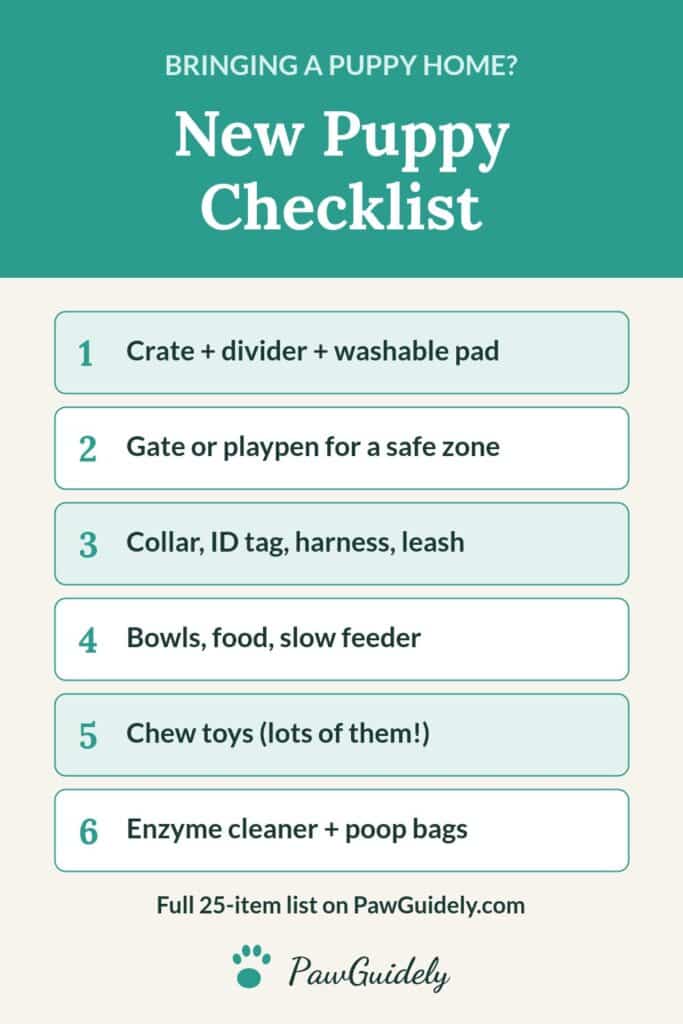
If you only buy a few things before day one, make them a correctly sized crate with a divider, a washable pad, a gate or playpen, a collar with ID tag, a harness and leash, bowls, a handful of safe chew toys and enzyme cleaner. Everything else can follow in the first few weeks as you learn what your puppy needs.
Here are the core picks we recommend most often:
- MidWest LifeStages crate (choose your size) with divider included
- MidWest QuietTime bolster bed, machine washable
- MidWest exercise pen with door
- Carlson walk-through gate
- rabbitgoo no-pull harness
- Outward Hound Fun Feeder slow bowl
- Dremel 7350-PET nail grinder
Related Guides
- Crate Training Schedule by Age: A Puppy Plan From 8 Weeks to Adult
- 5 Best Dog Crates in 2026: Wire, Plastic, Soft-Sided, and Modular Picks Compared
- 5 Best Dog Puzzle Toys in 2026, From Beginner to Genius Level
- 4 Best Dog Brushes in 2026: Which Brush for Which Coat?
- 5 Best Dog Leashes for Everyday Walks, Running and Training
- Dog Harness vs Collar: Which Is Better for Your Dog?
- 4 Best Dog Crate Covers for a Calmer, Den-Like Crate
- 4 Best Dog Treat Pouches for Training and Walks
- 4 Best Dog Poop Bag Holders (Dispensers and Used-Bag Carriers)
Frequently Asked Questions
What do I need for a puppy the first night?
A crate with a soft, washable pad, water, a couple of safe chew toys, and a plan for night-time potty breaks. Keep the crate near your bed for the first weeks.
How much does it cost to buy puppy essentials?
It varies widely with your choices, but the biggest costs are usually the crate, gate or playpen and first vet visits. Buying an adult-size crate with a divider saves money later.
Should I buy a crate or a playpen?
Many owners use both: a crate for sleeping and short stretches, and a playpen for a larger safe area during the day.
When should I start grooming my puppy?
Right away, with short, gentle sessions. Handling paws, ears and mouth daily makes nail trims, brushing and vet visits much easier later.
What should I avoid buying for a new puppy?
Retractable leashes, expensive beds before chewing settles, and toys small enough to swallow.