
This post contains affiliate links. As an Amazon Associate, PawGuidely earns from qualifying purchases at no extra cost to you. See our affiliate disclosure for details.
Regular brushing removes loose hair before it lands on your sofa, prevents painful mats, spreads natural oils through the coat and lets you check your dog’s skin. But the best dog brush depends entirely on your dog’s coat: a brush that works wonders on a Golden Retriever is useless on a Beagle. Below we match four popular, affordable brushes on Amazon to the coats they suit, based on manufacturer details and hands-on reviews.
Best Dog Brushes Compared
| Brush | Type | Best Coat Types |
|---|---|---|
| Safari Self-Cleaning Slicker Brush | Slicker | Long, curly, double and medium coats |
| Safari 2-in-1 Pin and Bristle Brush | Pin + bristle combo | Medium and long coats, finishing |
| Hartz Groomer’s Best Combo Brush | Pin + bristle combo | Budget, everyday brushing |
| KONG ZoomGroom | Rubber curry | Short, smooth coats |
1. Safari Self-Cleaning Slicker Brush — Best Overall
A slicker brush has fine, bent wire pins that remove loose hair and work through tangles before they turn into mats. It’s the workhorse brush for most long, curly and double-coated dogs. Safari’s version has a self-cleaning button that retracts the pins so the collected hair slides off in one piece. The linked large size is 8 by 4.5 inches.
- Removes loose hair and light tangles
- Self-cleaning retracting pins
- Suits most coat types
- Affordable
Worth knowing: slicker pins can scratch if you press too hard. Use light, short strokes, especially on thin-coated dogs.
2. Safari 2-in-1 Pin and Bristle Brush — Best Combo Brush
Two brushes in one: the wire pin side works through medium and long coats, and the bristle side smooths the coat and spreads natural oils for shine. It’s a good all-purpose brush for owners who want one tool for daily brushing on short- and long-haired dogs.
- Pin side for medium and long coats
- Bristle side for shine and short coats
- One tool for daily use
- Comfortable handle
Worth knowing: it won’t remove heavy undercoat like a deshedding tool or rake.
3. Hartz Groomer’s Best Combo Brush — Best Budget
Hartz’s combo brush pairs pins with bristles on opposite sides at a very low price. It’s a solid starter brush for puppies and for quick daily touch-ups on most coats.
- Very affordable
- Pins and bristles in one brush
- Good for puppies and quick grooming
- Widely available
Worth knowing: budget pins may bend over time, and it’s not designed for thick or matted coats.
4. KONG ZoomGroom — Best for Short Coats
Short, smooth coats don’t need pins at all. The ZoomGroom’s soft rubber fingers loosen dead hair and massage the skin, and it works dry or in the bath to lather shampoo. Most dogs love the feel.
- Ideal for short, smooth coats
- Gentle massaging rubber
- Works wet or dry
- Durable
Worth knowing: it doesn’t hold hair, and it’s not effective on long coats.
How We Chose These Brushes
We picked one strong, affordable brush for each main brush type rather than several versions of the same tool, and compared pin quality, comfort and ease of cleaning using manufacturer details and owner reviews. For heavy shedders with thick undercoats, we cover dedicated tools in our deshedding tools guide.
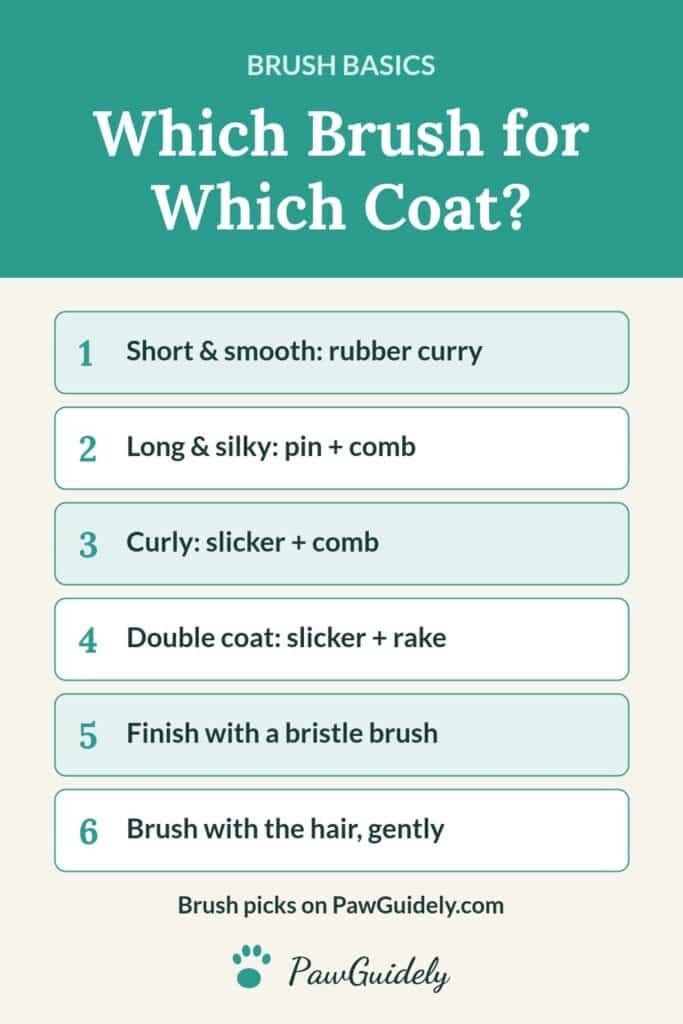
Which Brush for Which Coat?
| Coat Type | Example Breeds | Main Brush | Add |
|---|---|---|---|
| Short and smooth | Labrador, Beagle, Boxer, Pit Bull | Rubber curry (ZoomGroom) | Bristle brush for shine |
| Double coat | Husky, German Shepherd, Golden Retriever | Slicker brush | Undercoat rake or deshedder |
| Long and silky | Yorkshire Terrier, Shih Tzu, Maltese | Pin brush | Metal comb |
| Curly or wavy | Poodle, Doodles, Bichon | Slicker brush | Metal comb, regular professional grooming |
| Wire coat | Schnauzer, Terriers | Slicker brush | Hand stripping by a groomer |
| Hairless or very short | Chinese Crested, Whippet | Soft cloth or rubber mitt | Sun protection |
How to Brush Your Dog
- Start with a calm dog, ideally after a walk, and keep early sessions short with lots of treats.
- Brush in the direction the hair grows, working in small sections from head to tail.
- Use light pressure. Let the brush do the work, especially with slicker brushes.
- Check for mats behind the ears, in the armpits and on the back legs, where they form first.
- Finish with a comb on long and curly coats. If the comb glides through to the skin, you’re done.
- Reward and finish on a good note.
How Often Should You Brush Your Dog?
- Short coats: once a week.
- Double coats: two to three times a week, and daily during seasonal shedding.
- Long and curly coats: daily or every other day to prevent mats.
Pair brushing with regular nail care. See our guides to dog nail clippers and nail grinders.
Dealing With Mats
Small tangles can often be worked out with a slicker brush and comb, holding the hair near the skin so you don’t pull. Large, tight mats close to the skin are painful to brush out and easy to cut into the skin by accident. Leave those to a professional groomer, and prevent them with regular brushing.
Our Verdict
For most dogs with medium, long, curly or double coats, the Safari Self-Cleaning Slicker Brush is the best dog brush to start with. Add the Safari 2-in-1 Pin and Bristle Brush for finishing and shine, choose the Hartz Combo on a budget, and use the KONG ZoomGroom for short, smooth coats.
Brush Types Explained
- Slicker brush: fine, bent wire pins close together. Removes loose hair and small tangles from most medium, long and curly coats.
- Pin brush: widely spaced straight pins, often with rounded tips. Gentle on long, silky coats and for fluffing out.
- Bristle brush: natural or nylon bristles. Smooths the coat, removes dust and spreads natural oils for shine; great for short coats and finishing.
- Rubber curry brush: soft rubber nubs or fingers. Loosens dead hair from short coats and massages the skin.
- Undercoat rake and deshedding tool: reach deep into thick double coats to remove loose undercoat.
- Metal comb: the final check on long and curly coats, finding any tangles the brush missed.
Cleaning Your Brushes
Remove hair after every session. Once a week, wash brushes in warm, soapy water, rinse well and let them dry bristle-side down. Clean brushes work better and don’t spread dirt or skin oils back into the coat.
Related Guides
- 6 Best Deshedding Tools for Dogs in 2026, Matched to Coat Type
- 4 Best Dog Nail Clippers in 2026 (and How to Trim Without Hitting the Quick)
- 4 Best Dog Nail Grinders in 2026 (Plus How to Grind Without Hitting the Quick)
- 5 Best Vacuums for Pet Hair: Uprights and Handhelds
Frequently Asked Questions
What kind of brush is best for my dog?
It depends on the coat. Short coats do best with a rubber curry brush; long, curly and double coats need a slicker brush, often with a comb or rake as well.
Do slicker brushes hurt dogs?
Not when used with light pressure. Pressing hard or brushing the same spot repeatedly can irritate the skin, so use gentle, short strokes.
How do I brush a dog that hates being brushed?
Keep sessions very short, use a soft brush or grooming glove first, and pair brushing with treats. Build up gradually over days.
Should I brush my dog wet or dry?
Brush a dry coat to remove tangles and loose hair, ideally before a bath. Rubber curry brushes also work well during bathing.
Can I use a human brush on my dog?
Human brushes aren’t designed for dog coats and won’t remove undercoat or prevent mats as well as a dog-specific brush.