
This post contains affiliate links. As an Amazon Associate, PawGuidely earns from qualifying purchases at no extra cost to you. See our affiliate disclosure for details.
For most cats, the carrier is the worst part of a vet visit. The right one makes it easier to get your cat in and out, keeps them secure in the car, and, if you fly, fits under the airplane seat. We compared five popular carriers on Amazon using manufacturer specs and hands-on reviews from experienced testers. The best cat carrier depends on whether you mostly need it for the vet, the car or flights.
Our Quick Picks
- Best OverallSleepypod AirCheck Price on Amazon
- Best Budget Airline CarrierSherpa Original DeluxeCheck Price on Amazon
- Best for Vet VisitsPetmate Two Door Top Load KennelCheck Price on Amazon
Short on time? These are our top choices. Full reviews and comparisons are below.
Best Cat Carriers Compared
| Carrier | Best For | Type | Loading |
|---|---|---|---|
| Sleepypod Air | Best overall, flights | Soft, crash-tested | Front |
| Petmate Two Door Top Load | Vet visits | Hard plastic | Top and front |
| Sherpa Original Deluxe | Airline travel on a budget | Soft | Top and side |
| K&H Travel Safety Carrier | Car rides | Soft, seat-belt compatible | Multiple entrances |
| Pet Gear No-Zip View 360 | Easy access, no zippers | Soft car seat carrier | Push-button entry |
1. Sleepypod Air — Best Overall
The Sleepypod Air is the carrier reviewers most often rank first, largely because it has been crash-tested and certified by the Center for Pet Safety, which few carriers can claim. It’s designed to meet in-cabin requirements for many airlines, and its ends compress to fit under smaller seats. A privacy panel helps nervous cats settle.
- Crash-tested and certified
- Designed for in-cabin air travel
- Compressible ends for tight under-seat spaces
- Privacy panel for anxious cats
Worth knowing: it’s one of the most expensive carriers, and it loads from the front only. Always check your airline’s size rules before you fly.
2. Petmate Two Door Top Load Kennel — Best for Vet Visits
The simplest way to make vet trips easier is a carrier that opens from the top. Instead of tipping your cat out or pulling it through a front door, you lower it in and lift it out. This Petmate kennel has both a top and front door, is made in the USA from recycled plastic, and is easy to wipe clean after accidents.
- Top and front doors
- Hard shell is easy to clean
- Made in the USA from recycled plastic
- Affordable
Worth knowing: it’s not designed for in-cabin air travel, and a hard carrier is bulkier to store than a soft one.
3. Sherpa Original Deluxe — Best Budget Airline Carrier
Sherpa has been making airline-friendly soft carriers for decades. The Original Deluxe has a flexible frame that squeezes under seats, mesh panels for airflow, and top and side entry. Sherpa’s Guaranteed On Board program covers you if a participating airline refuses the carrier despite meeting its rules.
- Designed to meet airline in-cabin rules
- Flexible frame fits under seats
- Top and side entry
- Guaranteed On Board program
Worth knowing: some owners report durability issues over years of use, and it isn’t crash-tested.
4. K&H Travel Safety Carrier — Best for Car Rides
Built with the car in mind, this soft carrier secures with the seat belt and gives your cat plenty of room with multiple entrances and mesh windows. The pad inside is washable, and the carrier folds flat for storage between trips.
- Secures with the car seat belt
- Roomy with multiple entrances
- Mesh windows for airflow and visibility
- Washable pad, folds flat
Worth knowing: it’s bulky to carry long distances and isn’t meant for flights.
5. Pet Gear No-Zip View 360 — Best No-Zipper Design
Zippers can snag, and some cats learn to push them open. The View 360 uses a push-button entry instead, with mesh on all sides for ventilation and a booster frame that doubles as a car seat. The link goes to the 15-inch size for small cats.
- Push-button entry, no zippers
- 360-degree mesh ventilation
- Works as a car seat
- No tools required to set up
Worth knowing: mesh panels can be vulnerable to determined scratchers, and it’s not designed for air travel.
How to Choose a Cat Carrier
- Size: your cat should be able to stand, turn around and lie down comfortably.
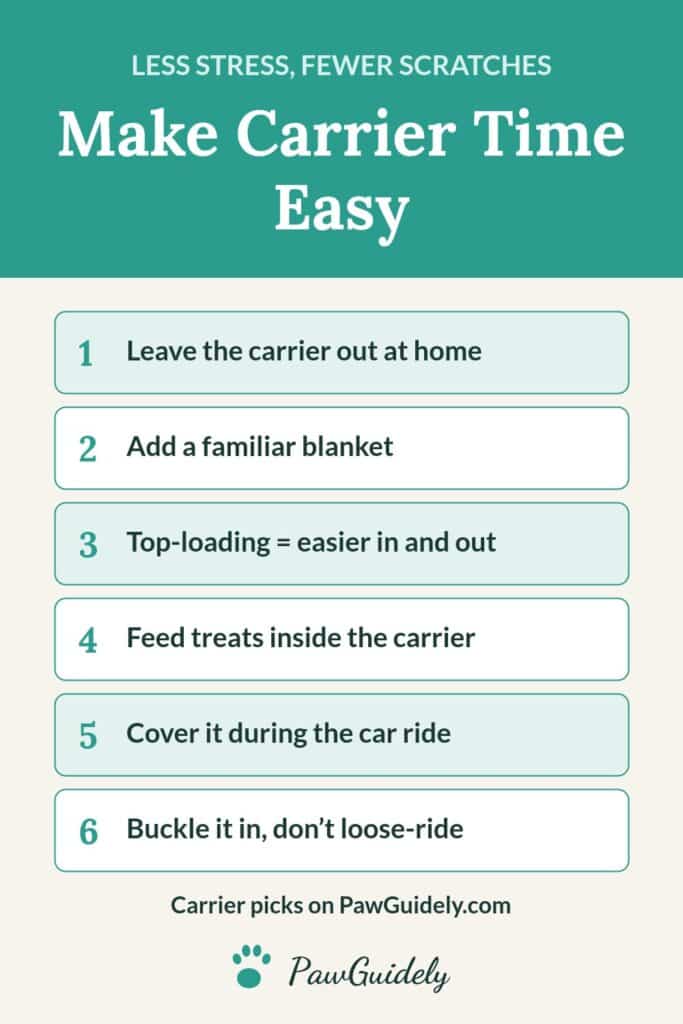
- Top loading: by far the easiest option for getting a reluctant cat in and out at the vet.
- Hard vs soft: hard carriers are sturdier and easy to clean; soft carriers are lighter and usually the choice for in-cabin flights.
- Flying: each airline sets its own size limits. Check them before you buy, and remember most count the carrier as your personal item.
- Car safety: secure the carrier with the seat belt or place it in the footwell behind a front seat, never loose on a seat.
How to Get Your Cat Into a Carrier Without a Fight
Leave the carrier out at home all the time, door open, with a familiar blanket inside, so it becomes furniture rather than a warning sign. Toss treats inside and feed occasional meals near it. On the day, stay calm, lower your cat in from the top if you can, and cover the carrier with a light towel during the ride. Heading out with a dog too? See our guide to dog car seat covers.
How We Chose These Carriers
We compared loading options, airline friendliness, car safety features, ventilation and ease of cleaning, and checked testing reports and owner reviews for broken latches, zippers cats could push open, and carriers that were too small for average adult cats. We included one pick for each of the main jobs a carrier does: vet visits, car rides and flights.
Hard vs Soft Carriers
| Hard Carrier | Soft Carrier | |
|---|---|---|
| Cleaning | Very easy to wipe or hose down | Removable pads; fabric needs washing |
| Vet visits | Top-loading models are easiest | Top-opening zips help |
| Flights | Mainly for cargo | Usually required for in-cabin travel |
| Storage | Bulky | Many fold flat |
| Weight | Heavier | Lighter to carry |
| Escape risk | Low | Zippers can be pushed by some cats |
Flying With Your Cat: Checklist
- Check your airline’s pet policy and under-seat carrier dimensions before booking, and reserve your cat’s spot early.
- Get your cat used to the carrier at home for several weeks.
- Line the carrier with a puppy pad and a familiar blanket.
- Bring a harness and leash for security screening, where you may need to carry your cat.
- Ask your vet about travel documents and anything else your destination requires.
Our Verdict
The Sleepypod Air is the best carrier if you fly or want crash-tested protection. For everyday vet visits, the top-loading Petmate Two Door kennel is hard to beat. The Sherpa Original Deluxe is a budget airline option, the K&H Travel Safety Carrier is built for car rides, and the Pet Gear View 360 is great if your cat has learned to push zippers open.
Related Guides
- New Cat Checklist: 20 Essentials to Buy Before You Bring Your Cat Home
- 5 Best Automatic Cat Feeders in 2026: Timed, WiFi, Wet Food and Microchip
- Best Crash-Tested Dog Car Harnesses in 2026: 3 Safer Ways to Travel
- 5 Best Airline Approved Dog Carriers for In-Cabin and Cargo Travel
- 4 Best Cat Carriers for Two Cats (Double and Divided Carriers)
- How to Get Your Cat Used to a Carrier (Stress-Free Vet Visits)
Frequently Asked Questions
Is a hard or soft cat carrier better?
Hard carriers are best for vet visits and car rides, especially top-loading ones. Soft carriers are lighter and usually required for in-cabin flights.
What size carrier does my cat need?
One that lets your cat stand up, turn around and lie down. For flights, the airline’s under-seat size limit comes first, so check it before buying.
Are cat carriers airline approved?
Airlines don’t officially approve specific carriers; they publish size and material requirements. Carriers marketed as airline approved are designed to meet common requirements, but always check your airline.
How do I stop my cat from crying in the carrier?
Practice short trips, cover the carrier with a light towel, and keep the car quiet and calm. Getting your cat used to the carrier at home makes the biggest difference.