
This post contains affiliate links. As an Amazon Associate, PawGuidely earns from qualifying purchases at no extra cost to you. See our affiliate disclosure for details.
Some dogs finish a bowl of kibble in under a minute, then cough, gag or bring it straight back up. A slow feeder breaks the food up with ridges or puzzles so your dog has to work for each bite, which slows mealtime down and adds a bit of mental exercise. We compared four popular styles on Amazon using manufacturer details and hands-on reviews. The best slow feeder dog bowl is the one that matches your dog’s food, size and eating style.
Best Slow Feeder Dog Bowls Compared
| Slow Feeder | Type | Material | Best For |
|---|---|---|---|
| Outward Hound Fun Feeder Slo Bowl | Maze bowl | BPA-free plastic | Best overall, everyday meals |
| Outward Hound Stainless Steel Slo Bowl | Ridged bowl | Stainless steel | Dogs that chew plastic |
| KONG Wobbler | Treat-dispensing toy | Durable plastic | Bored, high-energy dogs |
| LickiMat Wobble | Lick bowl | Rubber | Wet food, soft food, calming |
1. Outward Hound Fun Feeder Slo Bowl — Best Overall
The Fun Feeder is the slow feeder most people start with, and many never need anything else. Maze-like ridges spread the food out so your dog has to eat around them, and it comes in several patterns and sizes, from small bowls for toy breeds to the 4-cup large version linked here (a 2-cup medium is also available). It has a non-slip base and is top-rack dishwasher safe.
- Multiple sizes and maze difficulty levels
- Non-slip base
- BPA-free and dishwasher safe (top rack)
- Very affordable
Worth knowing: it’s plastic, so dogs that chew their bowls can damage it, and a bowl that’s too small may get flipped. Match the size to your dog.
2. Outward Hound Stainless Steel Slo Bowl — Best for Bowl Chewers
If your dog treats plastic bowls as chew toys, a stainless steel slow feeder is the durable alternative. Raised shapes in the base slow eating down, and stainless steel doesn’t hold odors and is easy to keep clean.
- Chew-proof stainless steel
- Easy to clean, doesn’t hold odors
- Slows eating with raised shapes
- Dishwasher safe
Worth knowing: metal bowls usually have simpler shapes than plastic mazes, so they slow very determined eaters less.
3. KONG Wobbler — Best for Mental Stimulation
The Wobbler turns a meal into a game. Fill it with kibble, and your dog has to nudge and paw it so pieces drop out as it wobbles. It’s a favorite for high-energy or bored dogs, and it can replace a bowl entirely for dry food. The link goes to the medium/large size.
- Turns mealtime into enrichment
- Works with a full meal of kibble
- Durable KONG construction
- Unscrews for cleaning
Worth knowing: it’s noisy on hard floors and only works with dry food.
4. LickiMat Wobble — Best for Wet Food
For wet food, soft food or treats like yogurt, a lick bowl works better than ridges. The textured surface means your dog has to lick food out slowly, and licking can have a calming effect, which is why many owners use it during grooming or thunderstorms.
- Great for wet and soft foods
- Licking is calming for many dogs
- Wobbly base adds challenge
- Easy to use
Worth knowing: it’s not practical for dry kibble, and heavy chewers should be supervised with rubber toys.
How to Choose a Slow Feeder
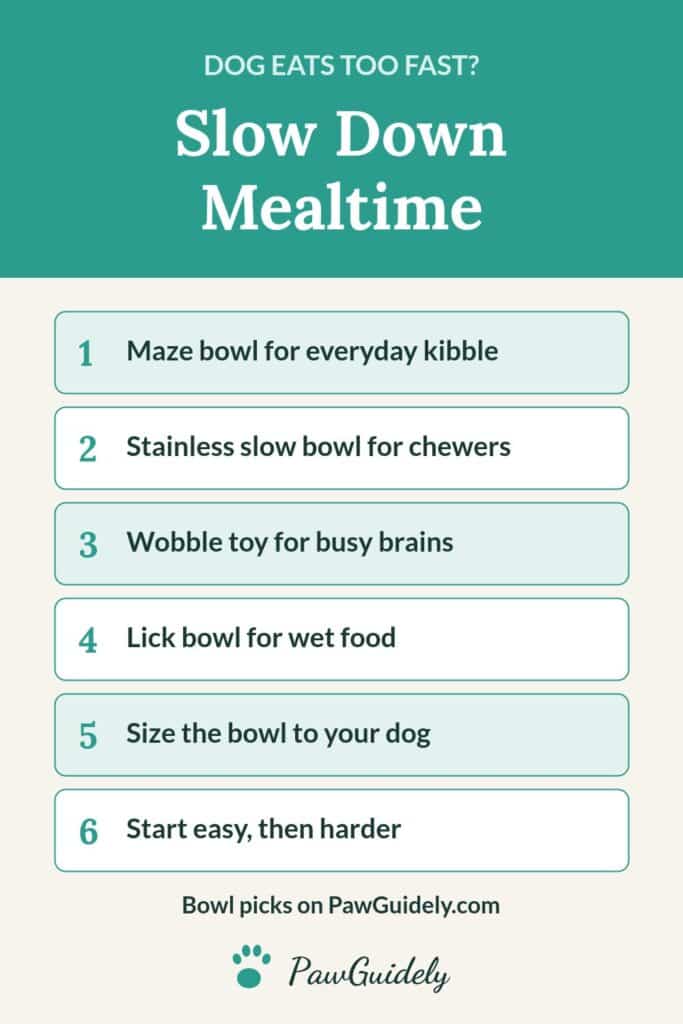
- Match the food: maze bowls and wobble toys suit kibble; lick bowls suit wet and soft food.
- Match the size: the bowl should hold a full meal with room to spare, and be wide enough for your dog’s muzzle. Flat-faced breeds do better with shallow ridges.
- Chewers: choose stainless steel or a heavy-duty toy.
- Start easy: begin with a simple pattern so your dog doesn’t get frustrated, then move to harder mazes.
- Cleaning: dishwasher-safe bowls make daily cleaning much easier.
Eating too fast is mostly a comfort and manners issue, but if your dog regularly vomits after eating, or its belly looks swollen and it seems restless or in pain after a meal, contact your vet right away. For more everyday gear, see our Grooming & Care guides.
How We Chose These Slow Feeders
We looked for slow feeders that genuinely slow dogs down without frustrating them, are easy to keep clean, and are durable enough for everyday use. We compared materials, sizes and cleaning instructions from manufacturers against patterns in owner reviews and testing reports, and made sure to cover the main styles: maze bowls, stainless steel bowls, treat-dispensing toys and lick bowls.
Types of Slow Feeders Explained
| Type | How It Works | Pros | Cons |
|---|---|---|---|
| Maze bowl | Ridges split food into channels | Cheap, simple, works for most dogs | Plastic can be chewed |
| Stainless slow bowl | Raised shapes in a metal bowl | Durable and hygienic | Usually less challenging |
| Wobble or puzzle toy | Food drops out as the dog nudges it | Great mental enrichment | Noisy, dry food only |
| Lick mat or lick bowl | Textured surface for licking | Ideal for wet food, calming | Not for kibble |
| Snuffle mat | Kibble hidden in fabric strips | Uses the dog’s nose, very slow | Needs washing, not for chewers |
| Ball insert | Ball placed in a regular bowl | Works with any bowl | Mixed results for fast eaters |
How to Introduce a Slow Feeder
- Start with the easiest pattern, or put a little food on top of the ridges so early meals are quick wins.
- Stay nearby for the first few meals so your dog doesn’t give up or start chewing the bowl.
- Once your dog finishes calmly, increase difficulty with a more complex pattern.
- For multi-dog homes, feed dogs apart so no one rushes out of competition.
Cleaning and Care
Ridges and grooves trap food, so slow feeders need more cleaning than flat bowls. Rinse right after meals so food doesn’t dry on, wash daily with hot soapy water or on the top rack of the dishwasher if the maker allows it, and use a bottle brush for deep channels. Replace plastic bowls that become deeply scratched or chewed, since those grooves are hard to clean.
Our Verdict
Most dogs do well with the Outward Hound Fun Feeder, which is cheap, effective and available in sizes and difficulty levels for every dog. Choose the stainless steel Slo Bowl for dogs that chew plastic, the KONG Wobbler for bored, high-energy dogs, and the LickiMat Wobble for wet food.
Related Guides
- 4 Best Elevated Dog Bowls in 2026 (and Whether Your Dog Needs One)
- 5 Best Chew Toys for Aggressive Chewers in 2026 (Tough but Tooth-Safe)
- 4 Best Dog Nail Grinders in 2026 (Plus How to Grind Without Hitting the Quick)
Frequently Asked Questions
Do slow feeder bowls actually work?
Yes, most dogs take noticeably longer to finish a meal from a slow feeder than from a flat bowl. How much slower depends on the pattern and how determined your dog is.
Can puppies use slow feeder bowls?
Yes, and it’s a good habit to build early. Choose a small bowl with a simple pattern so your puppy doesn’t get frustrated.
Are plastic slow feeders safe?
Look for BPA-free plastic, replace bowls that get deeply scratched or chewed, and wash them regularly. Stainless steel is the most durable option.
Can I use a slow feeder for wet food?
Maze bowls work with wet food but are harder to clean. A lick bowl like the LickiMat is usually easier for wet and soft food.