
This post contains affiliate links. As an Amazon Associate, PawGuidely earns from qualifying purchases at no extra cost to you. See our affiliate disclosure for details.
Cats are famously independent, but a new cat or kitten still needs a surprising amount of gear, and having it ready before day one makes the move far less stressful. This new cat checklist covers 20 essentials grouped by what they’re for: litter, food and water, scratching, play, rest and travel. We’ve flagged the few items worth spending more on and linked to our detailed guides where choosing the right product matters.
The New Cat Checklist at a Glance
| Category | Essentials |
|---|---|
| Litter | Litter box (one per cat, plus one), unscented clumping litter, scoop, litter mat |
| Food and water | Cat food (ask your vet), food bowl, water bowl or fountain, treats |
| Scratching | Tall sisal scratching post, a horizontal cardboard scratcher |
| Play | Wand toy, small toys, a solo-play toy |
| Rest and climbing | Cat bed or blanket, cat tree, window perch |
| Travel and safety | Carrier, breakaway collar and ID tag, microchip |
Litter Box Essentials
1. A litter box (or two)
The usual rule is one litter box per cat plus one extra, in quiet, easy-to-reach spots. Choose a large box: most cats prefer more room than standard boxes give. If you’d rather not scoop daily, see our self-cleaning litter box guide, but start with a regular box while your cat settles in.
2. Unscented clumping litter
Most cats prefer unscented, sand-like litter. If you know what your cat used before, start with that and switch gradually later. Our cat litter guide explains every type. Dr. Elsey’s Ultra Unscented is our top pick for most cats.
3. A litter scoop and waste bags
A sturdy metal scoop lasts much longer than plastic.
4. A litter mat
A trapping mat at the box exit catches litter before it spreads through the house. See our litter mat guide.
Food and Water
5. Cat food
Start with the food your cat has been eating, then ask your vet about the right diet and portions for your cat’s age and health. Kittens need kitten food. Switch foods gradually over a week or so.
6. Food and water bowls
Wide, shallow bowls suit most cats, who dislike their whiskers touching the sides. Stainless steel or ceramic are easiest to keep clean. Place water away from food, since many cats prefer them apart.
7. A water fountain
Many cats drink more from moving water. A fountain is optional but popular. See our cat water fountain guide.
8. Treats
Useful for building trust, training and carrier practice. Keep them to a small part of the daily diet.
Scratching
9. A tall, sturdy scratching post
Scratching is natural and healthy. A post that’s too short or wobbly will be ignored in favor of your sofa. Choose one at least 30 inches tall with a heavy base, like the SmartCat Ultimate. See our scratching post guide.
10. A horizontal scratcher
Some cats prefer to scratch rugs and carpets. A flat or angled cardboard scratcher gives them an alternative.
Play and Enrichment
11. A wand toy
Interactive play is the best way to bond with a new cat and burn off energy. A feather wand like Da Bird is a favorite. Put wand toys away after play so your cat can’t chew the string.
12. Small toys for solo play
Balls, mice and crinkle toys give your cat something to bat around when you’re busy.
13. A solo-play toy
Track toys and electronic toys keep cats busy while you’re out. See our interactive cat toy guide for a daily play routine.
Rest and Climbing
14. A bed or soft blanket
Many cats ignore expensive beds and nap on a folded blanket or cardboard box. Start simple and see what your cat likes.
15. A cat tree
Cats feel safer up high. A cat tree gives vertical space, a lookout and more scratching surfaces. Large cats need wide perches and a stable base; see our cat tree guide.
16. A window perch
Watching birds is great entertainment for indoor cats. See our cat window perch guide.
Travel, Safety and Health
17. A sturdy carrier
You’ll need one to bring your cat home and for every vet visit. A top-loading hard carrier makes vet trips much easier. See our cat carrier guide.
18. A breakaway collar and ID tag
Even indoor cats sometimes slip out. A breakaway collar releases if it gets caught. Ask your vet about microchipping, and keep your details up to date with the registry.
19. Grooming basics
A brush suited to your cat’s coat and a pair of cat nail clippers. Long-haired cats need daily brushing.
20. A first vet appointment
Book a vet check within the first week to discuss vaccinations, parasite prevention, diet and neutering or spaying.
Set Up a Safe Room
Cats find new homes stressful. Start your cat in one quiet room with its litter box, food, water, bed, a scratcher and somewhere to hide, like a covered bed or a box on its side. Keep the litter box away from food. Let your cat explore the rest of the house gradually over days or weeks, at its own pace. This is especially important in homes with other pets.
Cat-Proofing Your Home
- Secure window screens and keep balcony doors closed.
- Tidy away cords, string, hair ties, rubber bands and small objects cats may swallow.
- Check houseplants: some, like lilies, are highly toxic to cats. Remove them if unsure.
- Keep medications, cleaning products and food like onions and chocolate out of reach.
- Check recliners, washers and dryers before use; cats love to hide in them.
Our Verdict
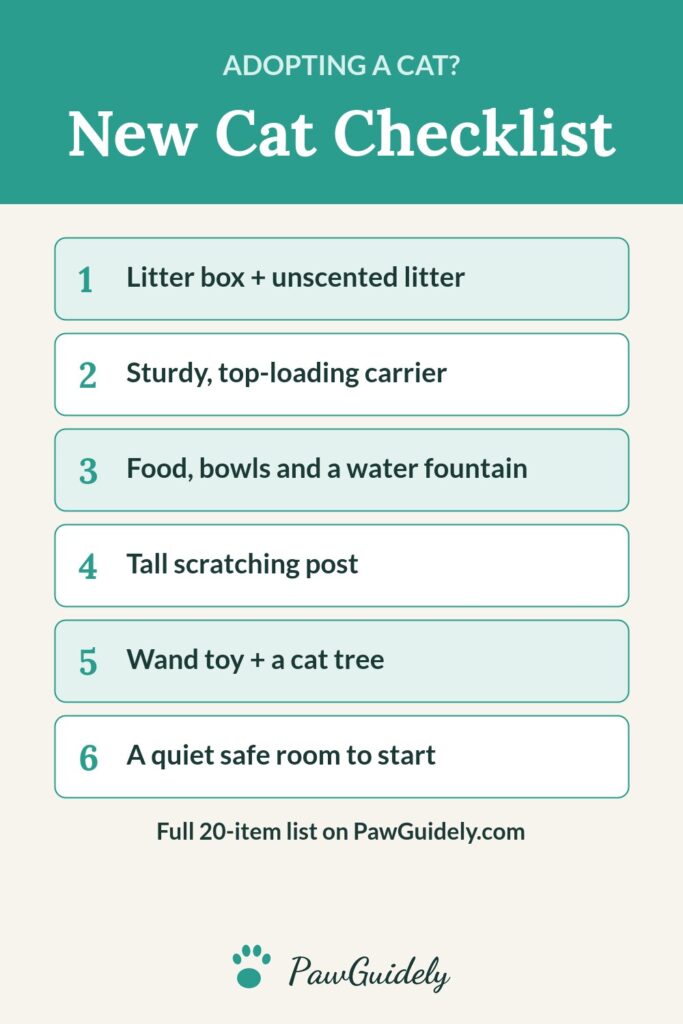
Before day one, make sure you have a large litter box with unscented litter, food and bowls, a tall scratching post, a wand toy, a carrier and a safe room set up. A cat tree, window perch and water fountain can follow as you learn your cat’s personality.
Our most-recommended starter picks:
- Dr. Elsey’s Ultra Unscented litter
- iPrimio Litter Trapper mat
- SmartCat Ultimate Scratching Post
- GoCat Da Bird wand toy
- Petmate Two Door Top Load carrier
- Catit Flower Fountain
- Feandrea compact cat tree
Related Guides
- 5 Best Cat Litter Boxes in 2026: Open, Covered, High-Sided and Top-Entry
- Best Cat Litter in 2026: 5 Picks and Every Litter Type Explained
- Best Cat Scratching Posts and Scratchers in 2026 (Plus How to Save Your Sofa)
- 5 Best Cat Carriers in 2026 for Vet Trips, Car Rides and Flights
- 5 Best Cat Beds Your Cat Will Actually Use
- 4 Best Cat Grass Kits for Indoor Cats (and How to Grow Them)
- 4 Best Cat Carriers for Two Cats (Double and Divided Carriers)
Frequently Asked Questions
What do I need for a new kitten?
The same essentials as an adult cat, plus kitten food, a low-sided litter box that’s easy to climb into, and kitten-safe toys without small parts. Ask your vet about litter for very young kittens.
How many litter boxes do I need?
One per cat plus one extra is the common guideline, placed in different quiet spots.
How long does it take a new cat to settle in?
Some cats settle in days, others take several weeks. A safe room and a calm routine help a lot.
Should I buy a cat bed?
It’s optional. Many cats prefer blankets, boxes or your bed. Watch where your cat likes to nap before buying an expensive bed.
Do indoor cats need a collar?
A breakaway collar with an ID tag is a good backup in case your cat gets out, alongside a microchip.