
This post contains affiliate links. As an Amazon Associate, PawGuidely earns from qualifying purchases at no extra cost to you. See our affiliate disclosure for details.
Scratching isn’t bad behavior. It keeps claws healthy, stretches muscles and marks territory. The trick is giving your cat something better to scratch than the sofa: a post tall and sturdy enough for a full stretch, in the right place, with the right texture. Here are three proven picks on Amazon covering vertical and horizontal scratchers, based on manufacturer details and hands-on reviews. The best cat scratching post is tall, heavy and placed exactly where your cat already scratches.
Our Quick Picks
- Best OverallSmartCat Ultimate Scratching PostCheck Price on Amazon
- Best BudgetCatit Wide Scratcher with CatnipCheck Price on Amazon
- Best Horizontal ScratcherPetFusion Ultimate Cat Scratch LoungeCheck Price on Amazon
Short on time? These are our top choices. Full reviews and comparisons are below.
Best Cat Scratching Posts Compared
| Scratcher | Style | Material | Best For |
|---|---|---|---|
| SmartCat Ultimate Scratching Post | Vertical, 32″ tall | Sisal | Best overall, full-stretch scratching |
| PetFusion Ultimate Cat Scratch Lounge | Curved lounger | Recycled cardboard | Cats that scratch rugs and lounge |
| Catit Wide Scratcher with Catnip | Flat board | Cardboard | Budget, multiple rooms |
1. SmartCat Ultimate Scratching Post — Best Overall
Most scratching posts are too short and too wobbly, so cats ignore them and go back to the sofa. The SmartCat Ultimate is the post reviewers keep recommending because it avoids both problems: it’s about 32 inches tall so cats can stretch out fully, it’s wrapped in durable sisal, and its heavy base keeps it from tipping mid-scratch.
- Tall enough for a full stretch
- Durable sisal fabric
- Heavy, stable base
- Simple design that fits most rooms
Worth knowing: it’s a plain post with no perch or toys, and it costs more than basic carpet posts. For many cats, that’s exactly why it works.
2. PetFusion Ultimate Cat Scratch Lounge — Best Horizontal Scratcher
Some cats prefer to scratch horizontally, which is why they go for rugs and carpet. The Scratch Lounge is a curved, reversible cardboard scratcher that doubles as a bed: cats scratch it, stretch over the curve and nap in it. It’s made from recycled cardboard, and flipping it over doubles its lifespan.
- Curved design for scratching and lounging
- Reversible for longer life
- Made from recycled cardboard
- Satisfies horizontal scratchers
Worth knowing: cardboard sheds bits as it wears, so expect some cleanup, and it will eventually need replacing.
3. Catit Wide Scratcher with Catnip — Best Budget
A cheap, wide cardboard scratch board with catnip included to draw your cat in. At this price you can put one in every room where your cat scratches, which is often more effective than one expensive post.
- Very affordable
- Wide surface
- Catnip included
- Easy to place anywhere
Worth knowing: it’s flat, so it won’t satisfy cats that want to stretch upward. Pair it with a tall post.
How to Stop Your Cat Scratching Furniture
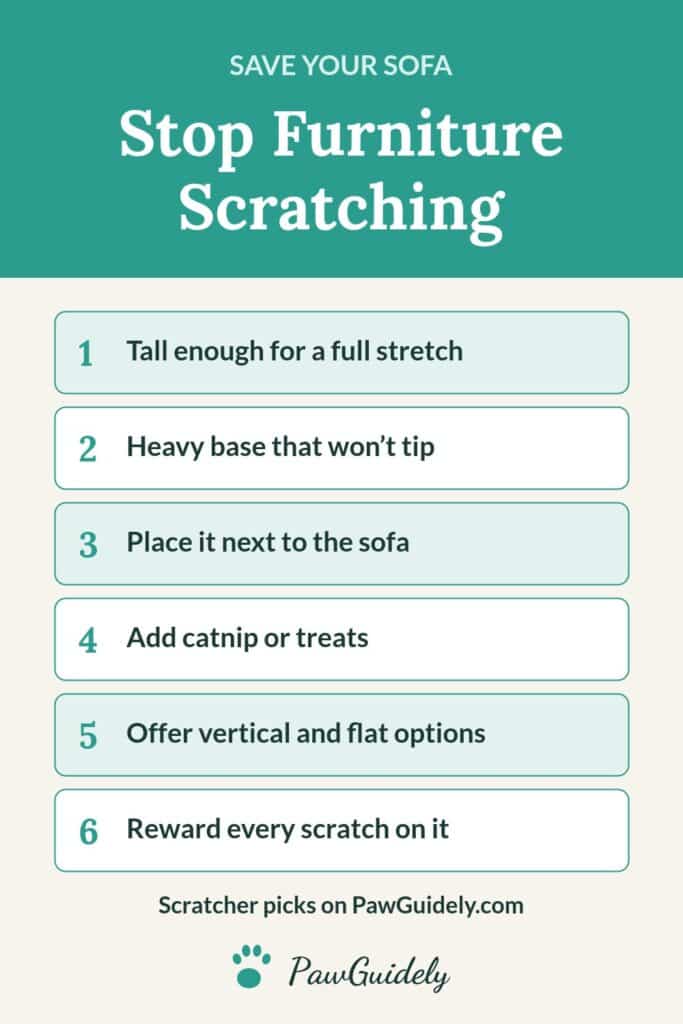
- Place a scratcher right next to the target. If your cat scratches the sofa arm, put a post right there. You can move it gradually later.
- Match the direction. Cats scratching sofa sides want a vertical post; cats scratching rugs want a flat scratcher.
- Make the post attractive. Rub catnip on it, play with a wand toy around it, and give treats when your cat uses it.
- Make the furniture less appealing. Cover favorite spots temporarily with a throw or double-sided tape.
- Keep claws trimmed. Short claws do less damage while your cat learns.
A cat tree with sisal posts adds even more scratching space. See our picks for cat trees for large cats.
How We Chose These Scratchers
We focused on the three things that decide whether a cat actually uses a scratcher: height or length (can your cat fully stretch?), stability (does it stay put when your cat pulls on it?), and surface texture (does it feel satisfying to shred?). We compared manufacturer specs with patterns in owner reviews and hands-on testing reports, looking for recurring complaints like tipping, fast-shedding surfaces, or posts that cats simply ignored. We also picked one strong option for each scratching style, because most cats have a clear preference.
Scratching Surfaces Compared
| Surface | Feels Like | Durability | Best For |
|---|---|---|---|
| Sisal rope | Rough, ropey | Good, can fray over time | Vertical posts, cat trees |
| Sisal fabric | Tight woven weave | Very good | Tall posts for heavy scratchers |
| Corrugated cardboard | Crumbly, satisfying to shred | Weeks to months | Flat and angled scratchers |
| Carpet | Soft, loopy | Moderate | Some cats; can encourage rug scratching |
| Wood or bark | Hard, natural | Very long | Cats that scratch tree trunks or table legs |
If you’re not sure what your cat likes, look at what it already scratches. A cat that shreds the sofa side wants a tall, sturdy vertical surface. A cat that digs at rugs or the stairs usually prefers horizontal cardboard. Many cats enjoy both, and offering two styles is often the quickest way to protect your furniture.
Where to Put a Scratching Post
- Next to the problem spot. Scratching marks territory, so cats scratch in prominent places. A post in a quiet corner will be ignored.
- Near sleeping areas. Cats love a long stretch and scratch right after waking up.
- By entrances and windows. These are natural territory-marking spots, especially in multi-cat homes.
- One per level of your home. Cats rarely walk upstairs just to scratch; they use whatever is closest.
When to Replace a Scratcher
A shredded, fuzzy post is a sign it’s being used, so don’t rush to throw it away. Replace cardboard scratchers when they’re worn flat or falling apart, and sisal posts when the rope is loose or the fabric is torn through to the core. Many posts can be rewrapped with new sisal rope, and reversible cardboard scratchers can be flipped to double their life.
Our Verdict
For most homes, start with the SmartCat Ultimate Scratching Post: it’s tall and heavy enough that cats actually use it instead of the sofa. If your cat scratches rugs or carpet, add the PetFusion Scratch Lounge, and scatter a few inexpensive Catit boards around the house for extra coverage.
Related Guides
- 4 Best Cat Trees for Large Cats in 2026: Sturdy, Tall and Compact Picks
- New Cat Checklist: 20 Essentials to Buy Before You Bring Your Cat Home
- 4 Best Interactive Cat Toys in 2026 for Bored Indoor Cats
- 3 Best Cat Trees for Small Spaces and Apartments
- How to Stop a Cat Scratching Furniture (Without Punishment)
Frequently Asked Questions
How tall should a cat scratching post be?
Tall enough for your cat to stretch fully with front paws high, usually at least 30 inches for an adult cat.
Sisal or cardboard: which is better?
Both work. Sisal is more durable and suits vertical posts; cardboard is cheap, popular with many cats and suits horizontal scratchers. Many cats like having both.
Why won’t my cat use the scratching post?
Usually it’s too short, too wobbly or in the wrong place. Move it next to where your cat already scratches and try a taller, heavier post.
How many scratching posts does a cat need?
At least one per cat, plus one in each area where your cat spends time or tends to scratch.
Can I make my cat stop scratching completely?
No, and you shouldn’t try. Scratching is a natural, healthy behavior. The goal is to redirect it to surfaces you’re happy for your cat to use.
Do cats prefer sisal or carpet posts?
Most cats prefer sisal because it shreds satisfyingly and doesn’t feel like the rugs you don’t want them to scratch.