
This post contains affiliate links. As an Amazon Associate, PawGuidely earns from qualifying purchases at no extra cost to you. See our affiliate disclosure for details.
For many cats, the carrier only appears before a trip to the vet, so they learn that the carrier means stress. The result is a cat that vanishes under the bed the moment the carrier comes out. The fix is to change what the carrier means. With a few weeks of gentle practice, you can get your cat used to a carrier so that it becomes just another cozy spot to nap. Here is a step-by-step plan, tips for getting a reluctant cat inside, and the carrier features that make it easier.
Why Cats Hate Carriers
- Bad associations: the carrier usually leads to the car and the vet.
- Loss of control: being lifted and pushed into a small box is frightening.
- Unfamiliar smells: a carrier stored in the garage smells strange and unsafe.
- Motion and noise: car rides are unpredictable and noisy for cats.
How to Get Your Cat Used to a Carrier: 7 Steps
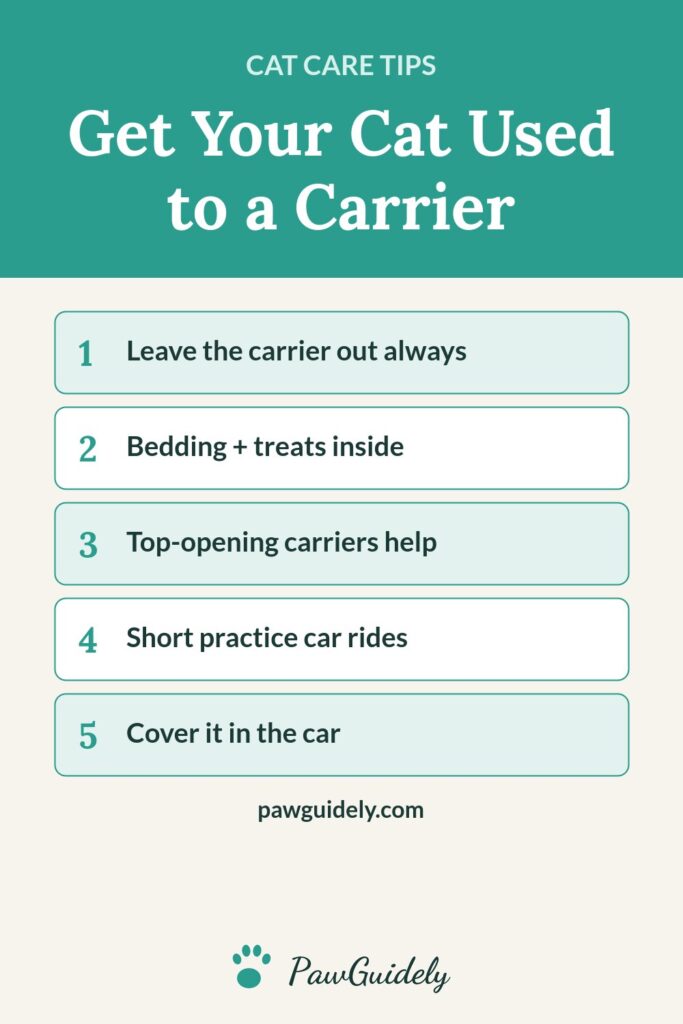
- Leave the carrier out all the time in a room your cat likes, with the door open or removed.
- Make it cozy: add a soft blanket or a piece of your worn clothing so it smells familiar.
- Add treats, catnip or toys inside every day and let your cat discover them on their own.
- Feed meals near, then inside, the carrier, moving the bowl a little further in over several days.
- Close the door briefly while your cat eats, then open it before they notice. Build up to a few minutes.
- Practice lifting: pick up the carrier smoothly, walk a few steps, set it down and reward.
- Take short car trips around the block, ending at home with a treat, so the car doesn’t always mean the vet.
Go at your cat’s pace. Some cats are happily napping in their carrier within a week; nervous cats may need a month or more. Progress is more important than speed.
Getting a Reluctant Cat Into the Carrier
- Use a top-loading carrier and gently lower your cat in, back feet first, rather than pushing them through a small front door.
- Plan ahead: bring the carrier out well before you need it, and keep your cat in a small room without hiding spots on vet day.
- Try the towel wrap: gently wrap your cat in a towel and place them in the carrier.
- Stand the carrier on its end with the opening facing up, and lower your cat in.
- Stay calm and quiet. Cats pick up on our stress.
Car Ride Tips
- Secure the carrier with a seatbelt or place it on the floor behind the front seat.
- Cover it partly with a light towel so your cat feels hidden, leaving ventilation open.
- Keep the car quiet and comfortable, with the radio low.
- Carry the carrier level, with both hands, not swinging by the handle.
- Line it with an absorbent pad in case of accidents.
Ask your vet about calming pheromone sprays or other options if your cat is very anxious. Some vets can also prescribe medication for very stressed cats before visits.
What Makes a Good Cat Carrier
| Feature | Why It Helps |
|---|---|
| Top opening | Lower a reluctant cat in without a struggle |
| Removable top half | Vets can examine your cat in the carrier |
| Sturdy, easy-clean base | Handles accidents and car rides |
| Good ventilation | Keeps your cat comfortable |
| Seatbelt strap | Keeps the carrier secure in the car |
See our full best cat carriers guide, and for households with two cats, carriers for two cats.
Carriers That Make Training Easier
1. Petmate Two Door Top Load Kennel — Top-Loading
The top door makes it far easier to lower a reluctant cat inside, and the hard shell is easy to clean and sturdy in the car. It’s our pick for vet visits.
2. Sleepypod Air — Premium Pick
A well-built soft carrier that many cats treat as a bed at home when left out, which is exactly what carrier training aims for. It is also designed with car safety in mind.
3. Sherpa Original Deluxe Carrier — Budget Soft Carrier
An affordable, comfortable soft carrier with mesh panels and a washable liner. It works well for calm cats and flights.
The Bottom Line
You can get your cat used to a carrier by turning it into a familiar, cozy part of home: leave it out, add bedding and treats, feed meals inside, and practice short trips before the real ones. Choose a top-loading carrier to make handling easier. For more essentials, see our new cat checklist.
Carrier Training a Kitten
Kittens adapt to new things quickly, so the first months are the ideal time to build a positive carrier habit. Leave the carrier out as a play and nap spot from the day your kitten arrives, toss toys inside, and take a few short car rides that end with treats at home. A kitten that grows up napping in its carrier is far easier to take to the vet for vaccinations and check-ups.
What to Do After the Vet Visit
- Let your cat come out of the carrier in their own time in a quiet room.
- Leave the carrier open and in place so it goes back to being a normal resting spot.
- If you have other cats, they may react to the vet smell; keep the returning cat separate for a short while if there is tension.
- Offer a favorite treat or meal to end on a positive note.
- Wash the bedding if it got soiled, and put a familiar-smelling blanket back inside.
Consistent practice between visits is what makes the next trip easier. Keep the carrier out all year, not just before appointments.
Related Guides
- 5 Best Cat Carriers in 2026 for Vet Trips, Car Rides and Flights
- 4 Best Cat Carriers for Two Cats (Double and Divided Carriers)
- 5 Best Airline Approved Dog Carriers for In-Cabin and Cargo Travel
- New Cat Checklist: 20 Essentials to Buy Before You Bring Your Cat Home
Frequently Asked Questions
How long does it take to get a cat used to a carrier?
Some cats relax within a week, while nervous cats may need several weeks. Go at your cat’s pace and keep every experience positive.
Should I leave the carrier out all the time?
Yes. Leaving it out as a bed or hiding spot stops it from predicting vet visits.
What is the easiest carrier for a cat that hates carriers?
A hard carrier with a top opening, and ideally a removable top, lets you lower your cat in gently and allows exams inside the carrier.
Should I cover my cat’s carrier in the car?
A light towel over part of the carrier helps many cats feel safer. Leave some sides uncovered for airflow.
Can I calm my cat before a vet visit?
Practice with the carrier and car, use familiar bedding, and ask your vet about pheromone sprays or other calming options for very anxious cats.