
This post contains affiliate links. As an Amazon Associate I earn from qualifying purchases. This costs you nothing extra. See our affiliate disclosure for details.
Rainy days, heatwaves, icy pavements and busy schedules all mean some days your dog gets less outdoor exercise. A bored dog often finds its own entertainment, usually by chewing, barking or digging into the sofa. The good news is that mental work tires dogs out surprisingly well. These indoor games for dogs use sniffing, problem solving and short bursts of play, so you can tire your dog out in a small space, often in just 15 to 20 minutes.
Indoor Games for Dogs: Sniffing Games
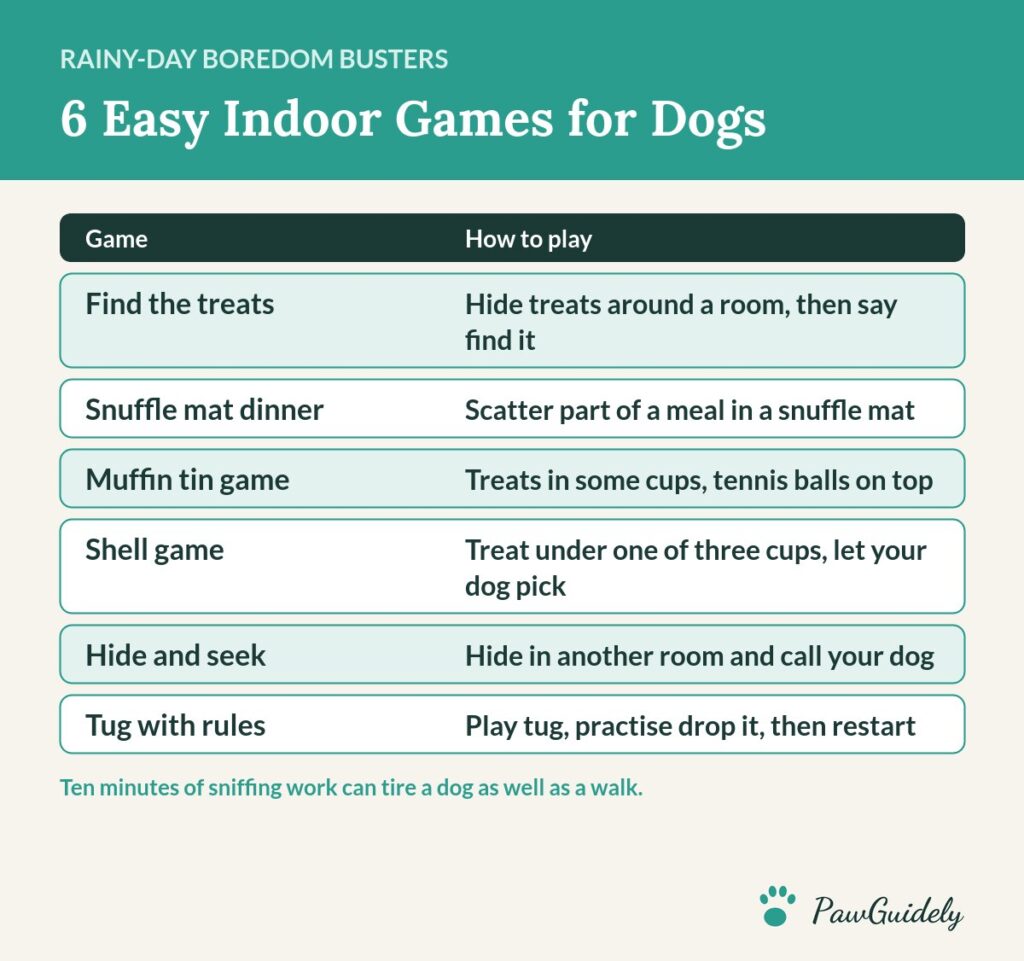
Sniffing is one of the most calming and tiring activities for dogs. Ten minutes of nose work can be as satisfying as a walk.
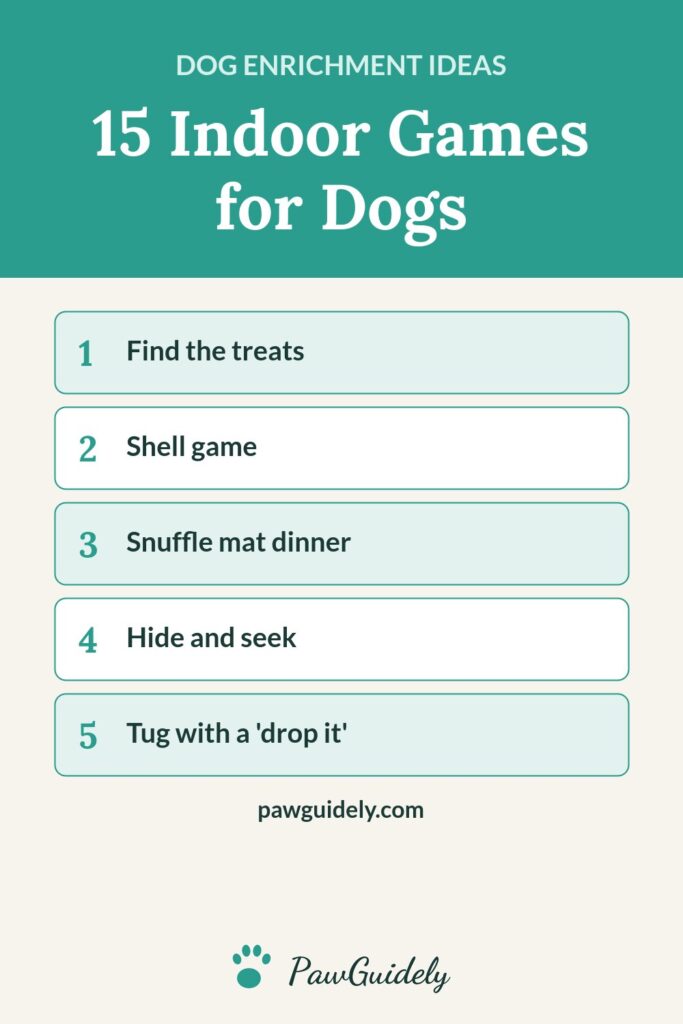
- Find the treats: ask your dog to wait, hide a few treats around one room, then say “find it.” Start easy and make hiding spots harder over time.
- Snuffle mat dinner: scatter part of a meal into a snuffle mat for a slow, calming search.
- Muffin tin game: put treats in some cups of a muffin tin and cover every cup with a tennis ball.
- The shell game: hide a treat under one of three cups, shuffle slowly and let your dog pick.
- Towel roll-up: roll treats up in an old towel and let your dog unroll it.
Brain Games and Puzzles
- Puzzle toys: sliding, flipping and lifting puzzles make dogs work for kibble. Start with beginner levels.
- Treat-dispensing toys: wobbling or rolling toys release food as your dog plays.
- Frozen stuffed toys: stuff a rubber toy with food and freeze it for a long, quiet chew.
- Cardboard box shred: hide treats in a box stuffed with paper and let your dog tear it apart (supervise and remove any tape or staples).
Training Games
- Five-minute trick sessions: teach spin, paw, touch or bow. Learning new things is mentally tiring.
- Name the toy: teach your dog the names of toys and ask them to fetch a specific one.
- Red light, green light: play, then ask for a sit or down, reward, and restart the play. Great for impulse control.
Active Indoor Play
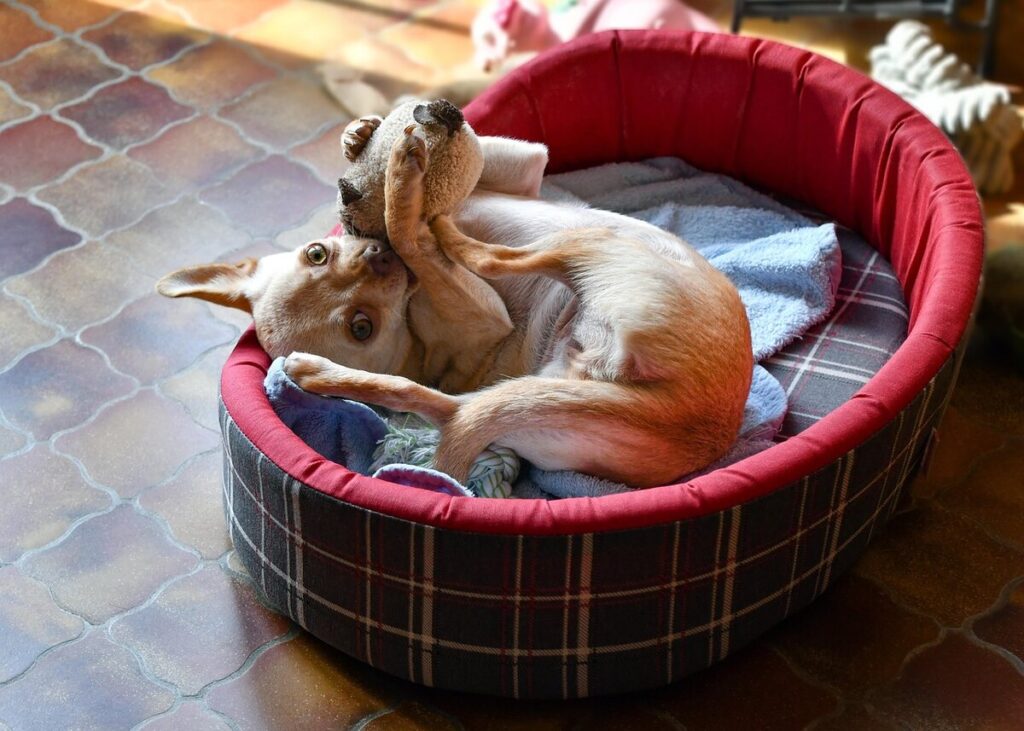
- Hide and seek: ask your dog to stay, hide in another room, then call them and celebrate when they find you.
- Tug with rules: tug is great exercise when paired with a solid “drop it.”
- Stair or hallway fetch: gentle fetch down a hallway with a soft toy, if your dog’s joints are healthy.
How Much Indoor Play Does a Dog Need?
| Dog | Indoor Enrichment on Low-Walk Days |
|---|---|
| Puppy | Several 5-10 minute sessions, plus naps |
| High-energy adult (herding, working breeds) | 30-60 minutes spread through the day |
| Moderate-energy adult | 20-30 minutes |
| Senior dog | Short, gentle sniffing and puzzle sessions |
Mix sniffing, thinking and moving, and keep sessions short. A dog that finishes a game calm and ready to nap has had a good workout.
Safety Tips
- Supervise puzzle toys and chews, and remove broken pieces.
- Count treats and kibble toward your dog’s daily food allowance.
- Clear breakable items and use non-slip rugs for active games.
- Avoid jumping and fast turns on slippery floors, especially for puppies and seniors.
Toys That Make Indoor Games Easy
1. Nina Ottosson Dog Smart Puzzle — Beginner Puzzle
A great first puzzle: your dog lifts cones to find hidden treats. Once they master it, move up to harder puzzles in our dog puzzle toys guide.
2. AWOOF Snuffle Mat — Sniffing Game
A large snuffle mat turns any meal into a 10-minute sniffing game that calms and tires dogs out. See our snuffle mats guide.
3. KONG Wobbler — Treat Dispenser
Fill the Wobbler with kibble and your dog has to nudge and paw it to release food, turning mealtime into play. It’s sturdy and easy to clean.
The Bottom Line
Indoor games for dogs don’t need much space or equipment. Rotate sniffing games, puzzles, short training sessions and gentle active play, and your dog will be calmer and happier even on days without long walks. For tough chewers, see our chew toys for aggressive chewers.
Signs Your Dog Needs More Enrichment
- Chewing furniture, shoes or walls.
- Barking or whining at nothing in particular.
- Pacing, restlessness or following you everywhere.
- Digging at carpets or cushions.
- Getting overexcited and mouthy in the evening.
- Stealing items to start a chase game.
These behaviors are often a dog’s way of saying they have energy and brainpower with nowhere to go. Adding two or three short enrichment sessions a day often reduces them within a week. If problem behaviors appear suddenly, or your dog seems anxious rather than bored, talk to your vet or a certified trainer.
A Sample Rainy-Day Schedule
| Time | Activity | Duration |
|---|---|---|
| Morning | Short potty walk, then breakfast in a snuffle mat | 10-15 min |
| Mid-morning | Trick training session | 5-10 min |
| Lunchtime | Find-the-treats game around the house | 10 min |
| Afternoon | Frozen stuffed toy while you work | 20-30 min |
| Evening | Tug with rules, then hide and seek | 10-15 min |
| Before bed | Calm sniffing game, then potty break | 5-10 min |
Adjust the schedule to your dog’s age and energy. Puppies need more naps between sessions, while working breeds may need extra puzzle time.
Indoor Games for Puppies
Puppies have short attention spans and growing joints, so the best indoor puppy games are short, gentle and full of easy wins. Two or three five-minute sessions a day will tire a young puppy out far better than one long one.
- Find the treat: hide a treat under one of three cups or in an obvious spot on the floor, then make it a little harder as your puppy gets the idea.
- Name game: say your puppy’s name and reward the moment they look at you. It builds focus and makes later training easier.
- Gentle tug: play softly with a soft toy, let your puppy win often, and pause the game if teeth touch skin.
- Hide and seek: step into another room and call your puppy, then celebrate when they find you. It doubles as early recall practice.
- Snuffle mat time: scatter part of a meal in a snuffle mat for calm, tiring sniffing work.
Skip jumping, stairs and long rough play with young puppies, and stop before your puppy gets overexcited. A tired puppy that has had a short game often settles straight into a nap.
Indoor Games for Small Spaces
You don’t need a big house for any of these games. In a small apartment, focus on sniffing and thinking games, which need almost no room: a snuffle mat on the kitchen floor, the shell game on a rug, or a frozen stuffed toy on a mat. Use a hallway for short, gentle fetch with a soft toy, and put a non-slip rug down so your dog doesn’t skid. Rotating toys, putting some away and bringing them back a week later, makes old toys feel new again and keeps your dog interested without buying more.
Related Guides
- 5 Best Dog Puzzle Toys in 2026, From Beginner to Genius Level
- 4 Best Snuffle Mats for Dogs (and How to Use Them)
- 5 Best Chew Toys for Aggressive Chewers in 2026 (Tough but Tooth-Safe)
- 3 Best Puppy Teething Toys (and How to Soothe Sore Gums)
- Furbo vs Petcube: Which Treat-Tossing Pet Camera Should You Buy?
- How to Stop a Dog Chewing Furniture: Causes and Fixes That Work
- How to Teach a Dog to Sit: Lure, Capture and Fix Common Problems
- 5 Best Dog Training Clickers for Quiet, Loud and Hands-Free Marking
Frequently Asked Questions
How can I tire my dog out indoors?
Combine sniffing games, puzzle toys, short training sessions and brief active play. Mental work tires dogs out quickly.
Is mental stimulation as good as a walk?
It can be very tiring, and ten minutes of sniffing or training can equal a longer walk for many dogs. Most dogs still need regular outdoor exercise too.
What are good indoor games for puppies?
Short find-the-treat games, snuffle mats, gentle tug, and training games like name recognition and sit.
How long should indoor play sessions last?
Five to fifteen minutes per game works well. Several short sessions are better than one long one.
Are puzzle toys safe for dogs?
Yes, when used with supervision and matched to your dog’s size and chewing strength. Remove damaged toys.