
This post contains affiliate links. As an Amazon Associate, PawGuidely earns from qualifying purchases at no extra cost to you. See our affiliate disclosure for details.
If your puppy is chewing your hands, shoes and furniture legs, teething is probably part of the reason. Puppies lose their baby teeth and grow adult teeth over several months, and chewing eases the discomfort. The best puppy teething toys are softer than adult chew toys to protect developing teeth, tough enough not to break into pieces, and appealing enough to beat your shoes. Below are three trusted toys on Amazon, a teething timeline, and safe ways to soothe sore gums.
Our Quick Picks
- Best OverallKONG PuppyCheck Price on Amazon
- Best for Sore GumsKONG Puppy Teething StickCheck Price on Amazon
- Best Flavored ChewNylabone Puppy X-BoneCheck Price on Amazon
Short on time? These are our top choices. Full reviews and comparisons are below.
Best Puppy Teething Toys Compared
| Toy | Material | Stuffable | Best For |
|---|---|---|---|
| KONG Puppy | Soft puppy rubber | Yes | Best overall, freezing |
| KONG Puppy Teething Stick | Soft rubber with ridges | Yes, treat grooves | Gum massage |
| Nylabone Puppy X-Bone | Softer puppy nylon, flavored | No | Easy-to-hold chewing |
1. KONG Puppy — Best Overall
The KONG Puppy is made from a softer rubber formula than the classic adult KONG, designed for developing teeth and gums. You can stuff it with a little puppy food or a spread of wet food and freeze it, which gives teething puppies a long, soothing chew. It bounces unpredictably, so it doubles as a fetch toy. The small size suits most puppies; the medium fits larger breeds.
- Softer rubber for puppy teeth
- Stuffable and freezable
- Durable and easy to clean
- Several sizes
Worth knowing: Move up to an adult KONG once your dog’s adult teeth are in, around six to seven months.
2. KONG Puppy Teething Stick — Best for Sore Gums
This soft rubber stick has ridges that massage gums and grooves you can fill with a little puppy-safe paste or soft food. Its long shape is easy for small mouths to hold and chew along the length, which many teething puppies love.
- Ridges massage gums
- Treat grooves keep puppies interested
- Easy to hold
- Gentle puppy rubber
Worth knowing: Choose the size that is too large to swallow for your puppy.
3. Nylabone Puppy X-Bone — Best Flavored Chew
Nylabone’s puppy chews are made from a softer material than their adult bones and flavored to hold interest. The X shape is easy for puppies to grip with their paws and chew from different angles. It is a good option for puppies that are not motivated by food-stuffed toys.
- Softer than adult nylon bones
- Flavor keeps puppies interested
- X shape is easy to grip
- Affordable
Worth knowing: Replace it when the ends become rough or small pieces start to wear away.
How We Chose These Toys
We focused on toys made specifically for puppies, from brands with long track records, and avoided very hard chews that can damage baby teeth. We compared material, durability, size options and how engaging each toy is. Prices change often, so we do not list them. For older dogs that chew hard, see our chew toys for aggressive chewers.
Puppy Teething Timeline
| Age | What Happens | What Helps |
|---|---|---|
| 3-6 weeks | Baby teeth come in | Nothing needed yet |
| 12-16 weeks | Baby teeth start falling out | Soft rubber toys, frozen stuffed toys |
| 4-6 months | Adult teeth erupt; chewing peaks | Rotate toys, chilled chews, supervision |
| 6-7 months | Most adult teeth are in | Move to adult-strength chew toys |
Timing varies by breed and individual. If you notice baby teeth that have not fallen out after adult teeth come in, bleeding that does not stop, or your puppy refusing food, ask your vet.
Safe Ways to Soothe a Teething Puppy
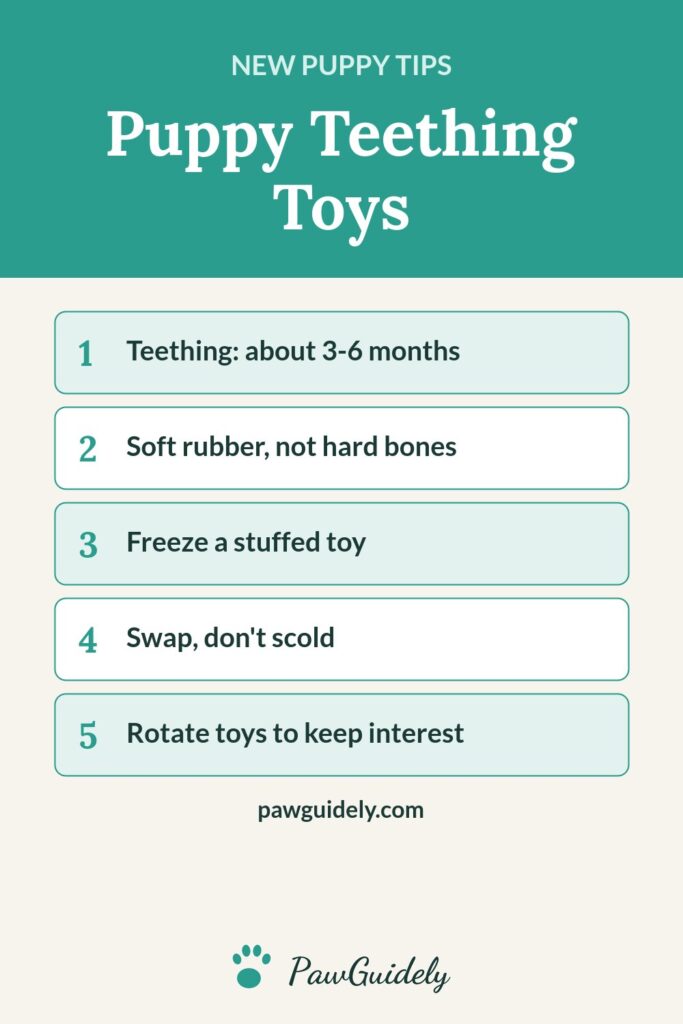
- Freeze a stuffed toy: fill a KONG Puppy with part of a meal and freeze it for a cooling chew.
- Chill a wet washcloth: twist and freeze a damp cloth and let your puppy chew it under supervision.
- Rotate toys: keep a few out and swap them every couple of days so they stay interesting.
- Redirect, don’t scold: when your puppy chews something off-limits, calmly swap it for a toy and praise them.
- Puppy-proof: move shoes, cables and cushions out of reach, and use a crate or pen when you cannot watch. See our best crates for puppies.
What to Avoid During Teething
- Very hard chews such as antlers, bones and hard nylon, which can fracture puppy teeth.
- Toys small enough to swallow, and toys breaking into pieces.
- Cooked bones, which can splinter.
- Rope toys that shed long strands if your puppy swallows threads; supervise closely.
Care and Cleaning
Wash rubber toys in warm, soapy water after food-stuffed sessions, or on the top rack of the dishwasher if the maker allows. Inspect toys often and throw away any that are cracked, chewed into small pieces or worn down to a swallowable size.
Our Verdict
The KONG Puppy is the best puppy teething toy: soft enough for baby teeth, stuffable and freezable. Add the KONG Puppy Teething Stick for gum massage and the Nylabone Puppy X-Bone for puppies that prefer flavored chews. For everything else a new puppy needs, see our new puppy checklist.
Teething vs Normal Puppy Chewing
Not all chewing is teething. Puppies explore the world with their mouths, and chewing also relieves boredom and excess energy. Teething chewing tends to peak between four and six months and focuses on anything cool or soft. Boredom chewing often happens when a puppy is left alone or under-exercised. Both respond to the same approach: give appropriate toys, supervise, and make sure your puppy gets enough play, training and rest.
- Signs of teething: drooling, small spots of blood on toys, baby teeth found on the floor, chewing on cold surfaces.
- Signs of boredom: chewing when left alone, destructive bursts late in the day, chewing that eases after exercise.
- Helpful for both: short training sessions, sniff walks and puzzle feeders; see our dog puzzle toys and snuffle mats.
Related Guides
- New Puppy Checklist: 25 Essentials to Buy Before You Bring Your Puppy Home
- 5 Best Chew Toys for Aggressive Chewers in 2026 (Tough but Tooth-Safe)
- 5 Best Dog Puzzle Toys in 2026, From Beginner to Genius Level
- 4 Best Dog Crates for Puppies (That Grow With Them)
Frequently Asked Questions
When do puppies start teething?
Most puppies start losing baby teeth around 12 to 16 weeks, with chewing peaking between four and six months.
What can I give my puppy for teething pain?
Soft rubber toys, a frozen stuffed KONG or a chilled damp washcloth under supervision. Ask your vet before giving any medication.
Are frozen toys safe for puppies?
Yes, frozen stuffed rubber toys are a popular way to soothe gums. Avoid giving ice cubes to very young puppies that may gulp them.
How long does puppy teething last?
Most puppies have their adult teeth by six to seven months, though chewing can continue as they explore.
Are rawhides or bones good for teething puppies?
Hard chews can damage developing teeth and some pose choking risks. Stick to toys designed for puppies.