
This post contains affiliate links. As an Amazon Associate I earn from qualifying purchases. This costs you nothing extra. See our affiliate disclosure for details.
Almost every new puppy owner goes through the sharp-teeth phase. Puppies explore the world with their mouths, play-bite their littermates, and chew to soothe teething gums. It is normal behavior, but it needs guiding so your puppy grows into a dog with a gentle mouth. This guide explains how to stop a puppy biting using calm, positive methods that work.
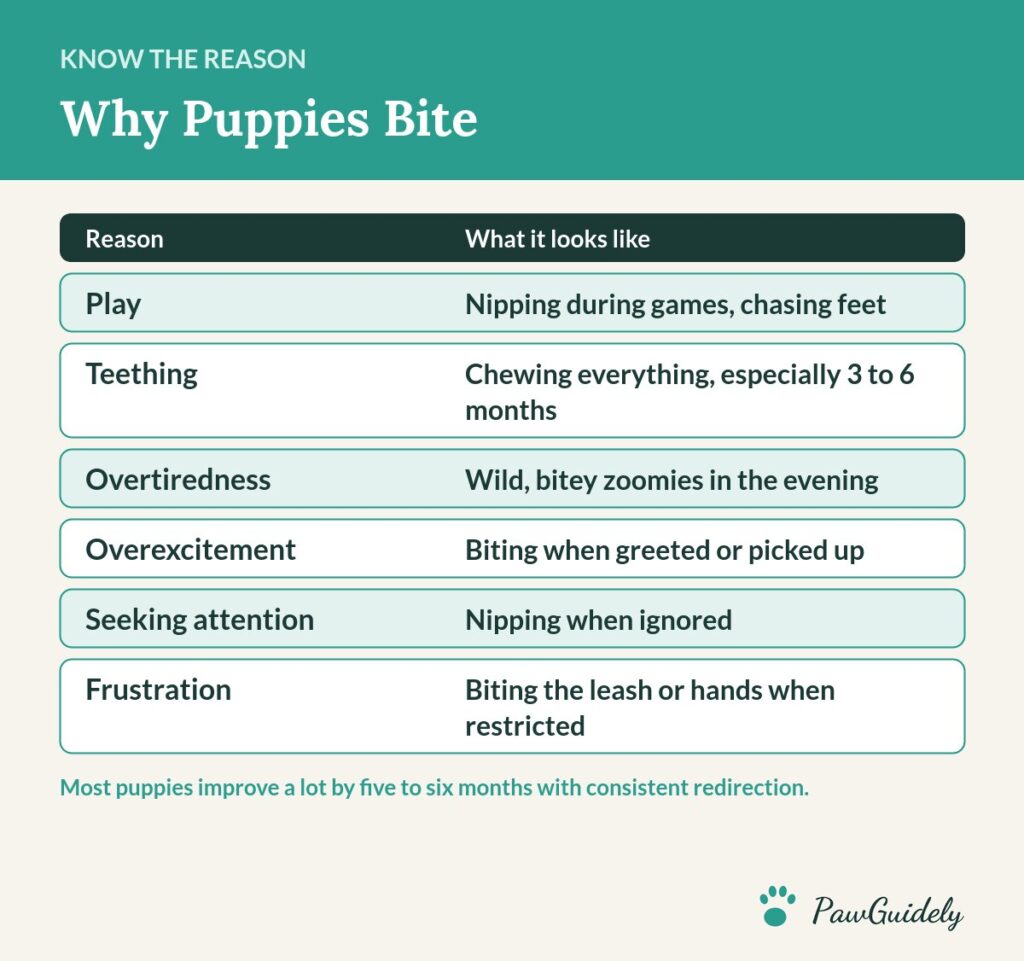
Why Puppies Bite
| Reason | What it looks like |
|---|---|
| Play | Nipping during games, chasing feet |
| Teething | Chewing everything, especially 3 to 6 months |
| Overtiredness | Wild, bitey ‘zoomies’ in the evening |
| Overexcitement | Biting when greeted or picked up |
| Seeking attention | Nipping when ignored |
| Frustration | Biting the leash or hands when restricted |
How to Stop a Puppy Biting in 8 Steps
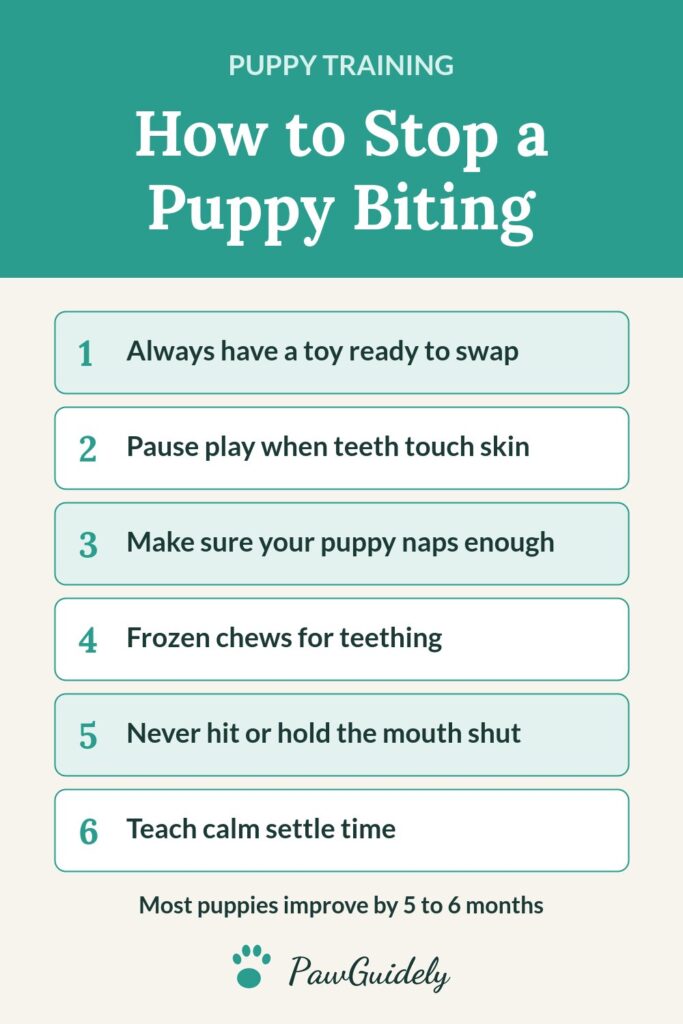
- Keep toys everywhere. Have a tug toy or chew within reach in every room so you can offer an alternative immediately.
- Redirect, don’t react. When teeth land on skin, calmly swap your hand for a toy and praise your puppy for biting that instead.
- Pause play when teeth touch skin. If redirection does not work, stand up, fold your arms and look away for 10 to 20 seconds. Fun stops when teeth hit people.
- Use short time-outs. If your puppy keeps biting, calmly move them to a pen or crate with a chew for a few minutes. This is a calm-down break, not a punishment.
- Protect nap time. Young puppies need 18 to 20 hours of sleep a day. Many bitey puppies are simply overtired. Build in regular naps in a quiet space.
- Soothe teething gums. Offer frozen puppy chews or a frozen, stuffed puppy KONG.
- Reward calm behavior. Praise and treat your puppy when they lie calmly next to you, not only when they misbehave.
- Teach children the rules. Kids should avoid running and flapping hands, which triggers chasing, and play with toys, not hands.
What Not to Do
- Do not hit, flick the nose or hold the mouth shut. It can cause fear and make biting worse.
- Do not play rough hand games that encourage biting hands.
- Do not scream loudly, which excites some puppies more.
- Do not rely on bitter sprays on your hands. Teach an alternative instead.
How Long Does Puppy Biting Last?
Most puppies improve a lot by five to six months, once adult teeth are in and they have learned what to bite. Consistency is the key. If everyone in the house responds the same way, progress is much faster.
When to Get Help
Normal puppy play-biting comes with a loose, wiggly body. Talk to a qualified trainer or your vet if biting comes with growling and a stiff body, guarding food or toys, biting hard enough to break skin repeatedly, or biting that gets worse instead of better after six months.
A Sample Puppy Day to Reduce Biting
| Time | Activity |
|---|---|
| Morning | Potty, breakfast in a puzzle toy, short play, nap |
| Midday | Short training session, chew time, nap |
| Afternoon | Sniff walk or garden play, nap |
| Evening | Calm play with toys, frozen chew, early bedtime routine |
Notice the pattern: short bursts of activity followed by rest. Puppies who skip naps are much more likely to become bitey.
Gear That Helps
1. KONG Puppy — Best Teething Toy
Made from a softer rubber designed for puppy teeth. Stuff it with puppy food and freeze it for a soothing chew.
- Softer rubber for baby teeth
- Stuffable and freezable
Worth knowing: Choose a size too big to swallow and switch to an adult KONG later.
2. Nylabone Puppy X-Bone — Best Chew Alternative
A textured puppy chew shaped for small mouths to grip, useful for redirecting teeth away from hands.
- Easy for puppies to hold
- Textured surface
Worth knowing: Supervise and replace when worn down.
3. KONG Puppy Teething Stick — Great for Sore Gums
A ridged teething stick you can fill with a little spread to keep puppies chewing on the right thing.
- Ridges massage gums
- Can be filled
Worth knowing: Use xylitol-free fillings only.
The Bottom Line
To stop a puppy biting, redirect to toys, pause play when teeth touch skin, make sure your puppy gets enough sleep, and soothe teething gums with frozen chews. Stay calm and consistent, and your puppy will learn that people are for cuddles, not chewing.
Teaching a Soft Mouth
Puppies learn bite inhibition, meaning how hard they can bite without hurting, mostly through play with littermates and people. When play stays gentle, keep going. When teeth press hard, pause for a moment, then resume. Over time, your puppy learns that gentle mouths keep the game going. Short training games also help: ask for a sit before each tug session, and teach a “drop” cue by swapping the toy for a treat. These games burn energy and give your puppy a clear, rewarding way to use their mouth.
Tug Rules for Bitey Puppies
- You start the game and you end it.
- Use a long toy so hands stay away from teeth.
- Teeth on skin means the game pauses.
- Practice “drop” with a treat trade every few tugs.
- End with a calm chew so your puppy can settle.
Further reading: Further reading from a trusted animal-welfare source: ASPCA: Mouthing, Nipping and Biting in Puppies. This guide is general information, not veterinary advice, so ask your vet about your own pet.
Related Guides
- 3 Best Puppy Teething Toys (and How to Soothe Sore Gums)
- New Puppy Checklist: 25 Essentials to Buy Before You Bring Your Puppy Home
- How to Potty Train a Puppy: A Simple Schedule That Works
- How to Leash Train a Puppy: From First Harness to Loose-Leash Walks
Frequently Asked Questions
At what age do puppies stop biting?
Most puppies improve a lot by five to six months, once adult teeth are in, if biting has been redirected consistently.
Is it normal for a puppy to bite a lot?
Yes. Mouthing and play-biting are normal. The goal is to teach a softer mouth and appropriate things to bite.
Should I yelp when my puppy bites?
It helps some puppies but excites others. If yelping makes your puppy bite more, pause play and redirect instead.
Why does my puppy bite more in the evening?
Overtiredness is a common cause. Build in naps and a calm evening routine.
How do I stop my puppy biting my feet?
Stop moving, redirect to a tug toy, and reward your puppy for playing with the toy instead of your feet.