
This post contains affiliate links. As an Amazon Associate I earn from qualifying purchases. This costs you nothing extra. See our affiliate disclosure for details.
Puppies are not born knowing how to walk on a leash. To them, a leash is a strange thing that stops them from going where the interesting smells are. The good news is that puppies learn fast, and the earlier you start, the easier it is. This guide shows you how to leash train a puppy step by step, starting inside your home long before the first walk around the block.
What You Need
| Item | Why |
|---|---|
| Lightweight harness | Spreads pressure across the chest, not the delicate neck |
| 4 to 6 ft leash | Easy to control. Avoid retractable leashes for training |
| Small, soft treats | Quick to eat so you can reward often |
| Treat pouch | Keeps rewards ready at your side |
| Patience | Short, happy sessions work best |
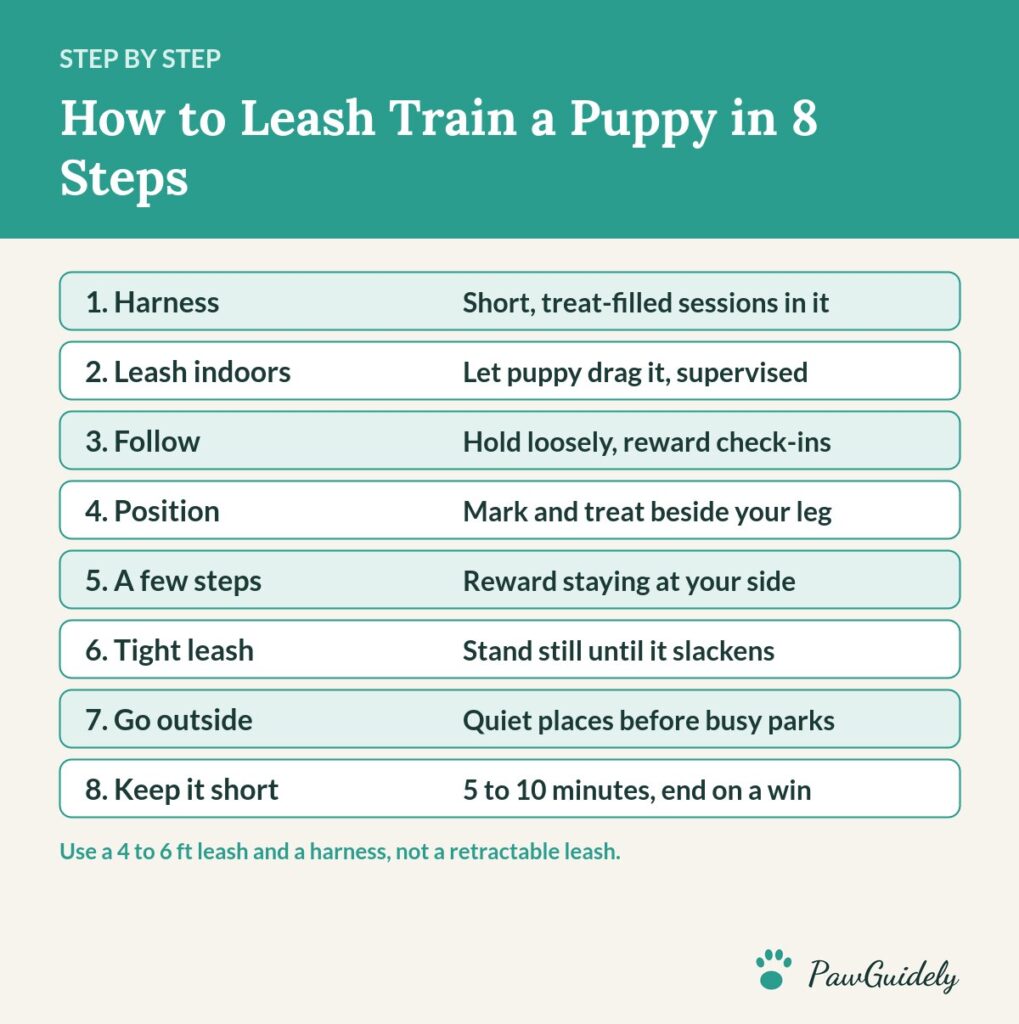
How to Leash Train a Puppy in 8 Steps
- Get your puppy used to the harness. Let them sniff it, give a treat, then put it on for a few minutes during play or meals. Increase the time over a few days.
- Attach the leash indoors. Clip on the leash and let your puppy drag it around under supervision so they get used to the feel.
- Pick up the leash and follow. Hold the leash loosely and follow your puppy around the room. Reward when they look at you or come toward you.
- Teach a position. Choose one side. Every time your puppy is at your side, mark it with a word like “yes” and give a treat right next to your leg.
- Take a few steps. Walk a few steps and reward your puppy for staying beside you. Gradually add more steps between rewards.
- Stop when the leash goes tight. If your puppy pulls, stand still. When the leash slackens or they look back, reward and move on. Pulling should never get them where they want to go.
- Move to a quiet outdoor space. Practice in your yard or a quiet street before busy parks. Expect to go back a step when there are new distractions.
- Keep sessions short. Five to ten minutes is plenty for young puppies. End while your puppy is still enjoying it.
Puppy Walk Length by Age
A common guideline is about five minutes of structured walking per month of age, up to twice a day, plus free play. For example, a four-month-old puppy might do two twenty-minute walks. Breeds and individual puppies differ, so ask your vet what suits your puppy, especially for large breeds whose joints are still developing. Before vaccinations are complete, follow your vet’s advice about where it is safe to walk.
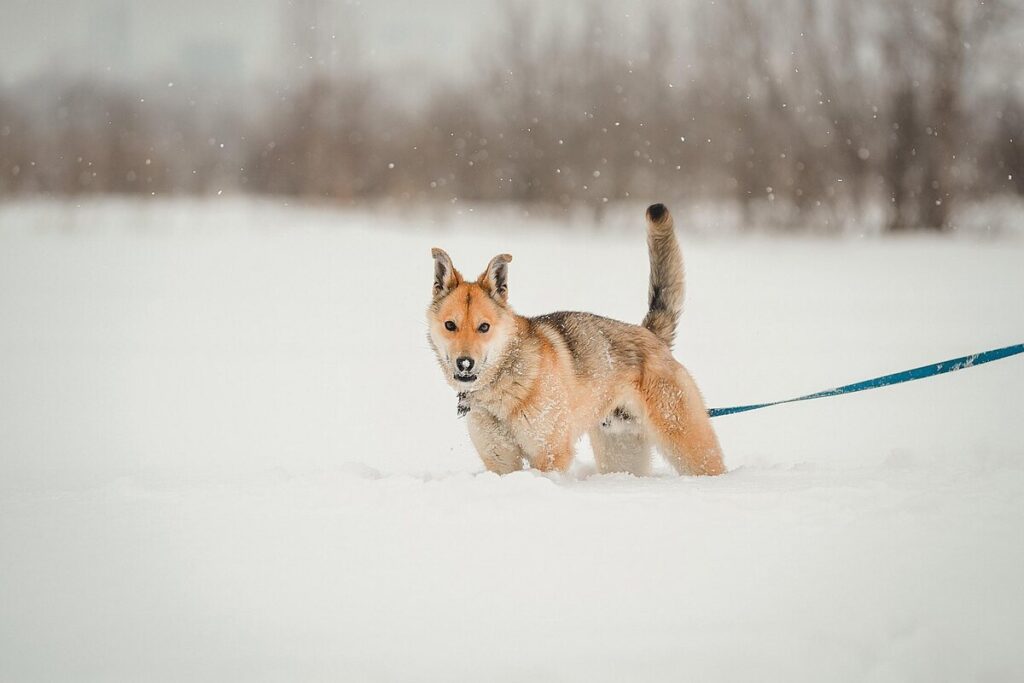
Common Leash Training Problems
| Problem | Try this |
|---|---|
| Puppy sits and refuses to move | Crouch down, call cheerfully, reward any step toward you. Never drag |
| Biting the leash | Swap the leash for a toy, then try again. Some owners use a chain or rope leash briefly |
| Zigzagging | Reward more often at your side and walk with purpose |
| Pulling toward everything | Stop still, reward slack, and let them sniff as a reward for good walking |
| Jumping on people | Ask for a sit before greetings and reward calm behavior |
Mistakes to Avoid
- Using a collar for a strong puller. A harness is kinder to the neck.
- Yanking or jerking the leash.
- Long walks too early, which can overwhelm a young puppy.
- Using a retractable leash, which teaches puppies that pulling earns more distance.
- Expecting perfect heelwork. A relaxed, loose leash is the goal.
Gear That Helps
1. PetSafe Easy Walk Harness — Best Training Harness
A front-clip harness that gently turns your puppy toward you when they pull. Lightweight and quick to fit, it is a helpful tool while you teach loose-leash walking.
- Front clip reduces pulling
- Lightweight for puppies
Worth knowing: Recheck the fit often as your puppy grows.
2. BAAPET Padded Leash — Best Everyday Leash
A standard-length leash with a padded handle and reflective stitching, comfortable for training walks.
- Padded handle
- Reflective threads
Worth knowing: Choose a lighter width for small puppies.
3. PetSafe Treat Pouch Sport — Best Treat Pouch
A clip-on pouch that opens and closes quickly, so you can reward the moment your puppy gets it right.
- Quick-open hinge
- Clips to belt or waistband
Worth knowing: Empty and wash it regularly.
The Bottom Line
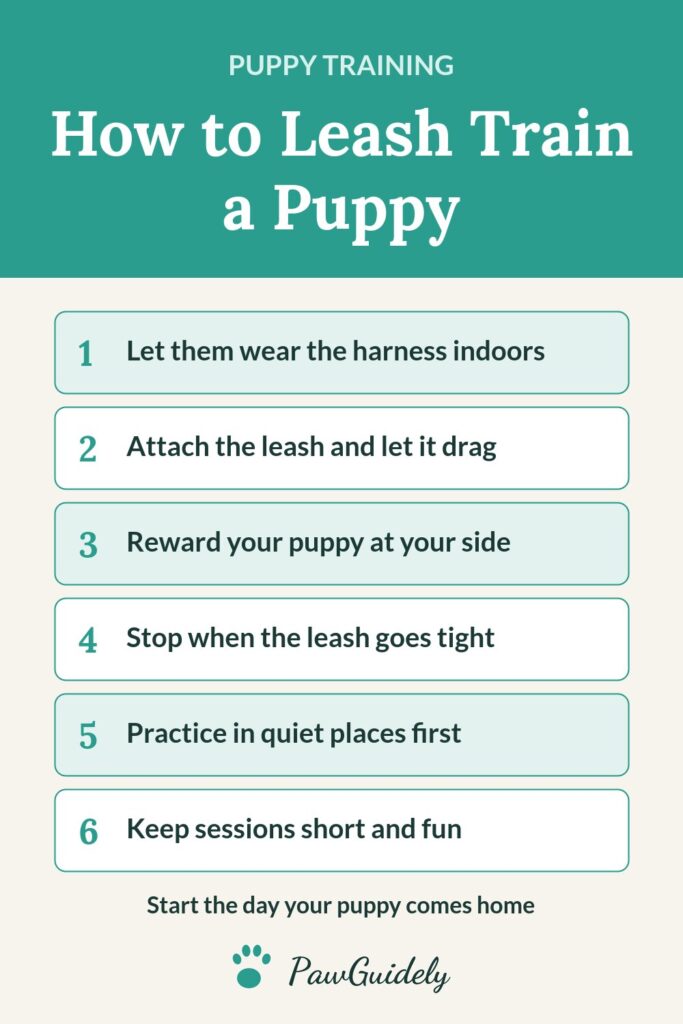
Start indoors, reward your puppy for being at your side, stop whenever the leash tightens, and keep sessions short and fun. With consistent practice, most puppies are walking nicely on a loose leash within a few weeks, and the habits you build now last for life.
Turning Walks Into Training Time
- Use sniffing as a reward. After a stretch of nice walking, say “go sniff” and let your puppy explore.
- Practice name games. Say your puppy’s name and reward when they look up at you.
- Change direction. Turning often keeps your puppy paying attention to where you are going.
- Add short sits. Ask for a sit at curbs and before crossing roads.
- End on a win. Finish with something your puppy does well, then head home.
Related Guides
- How to Stop Your Dog Pulling on the Leash (Loose-Leash Walking Guide)
- New Puppy Checklist: 25 Essentials to Buy Before You Bring Your Puppy Home
- How to Measure a Dog for a Harness (With Size Chart)
- How to Potty Train a Puppy: A Simple Schedule That Works
Frequently Asked Questions
When should I start leash training my puppy?
You can start as soon as your puppy comes home, beginning indoors with the harness and leash.
Should I use a collar or harness for a puppy?
A harness is usually better for training because it protects the neck. Keep an ID tag on a collar as well.
How long does it take to leash train a puppy?
Most puppies learn the basics in a few weeks of short daily practice, but polishing loose-leash walking around distractions takes longer.
Why does my puppy refuse to walk on a leash?
They may be unsure or overwhelmed. Go back to a quieter place, use high-value treats and never drag them.
How do I stop my puppy biting the leash?
Redirect to a toy, keep the leash still and boring, and reward your puppy for walking without mouthing it.