
The right dog collar size is your dog’s neck measurement plus about 2 inches. Measure around the neck where the collar sits, then choose a collar whose adjustable range puts that number near the middle, not at the very end. This dog collar size chart gives typical neck sizes by breed and collar size, explains how to measure, and shows how to check the fit so the collar is snug enough to stay on but never tight.
Dog Collar Size Chart
Most collar brands use letter sizes, but the neck range behind each letter varies from brand to brand. The ranges below are typical for adjustable flat collars and are a starting point. The size chart on the collar you are buying always wins.
| Collar Size | Typical Neck Range | Typical Width | Example Dogs |
|---|---|---|---|
| XS | 8–12″ | 3/8″–1/2″ | Chihuahua, Yorkie, Toy Poodle |
| S | 10–14″ | 1/2″–5/8″ | Shih Tzu, Dachshund, Jack Russell |
| M | 14–20″ | 3/4″–1″ | Beagle, Cocker Spaniel, Border Collie |
| L | 18–26″ | 1″ | Labrador, Golden Retriever, Boxer |
| XL | 22–30″ | 1″–1.5″ | German Shepherd, Rottweiler, Great Dane |
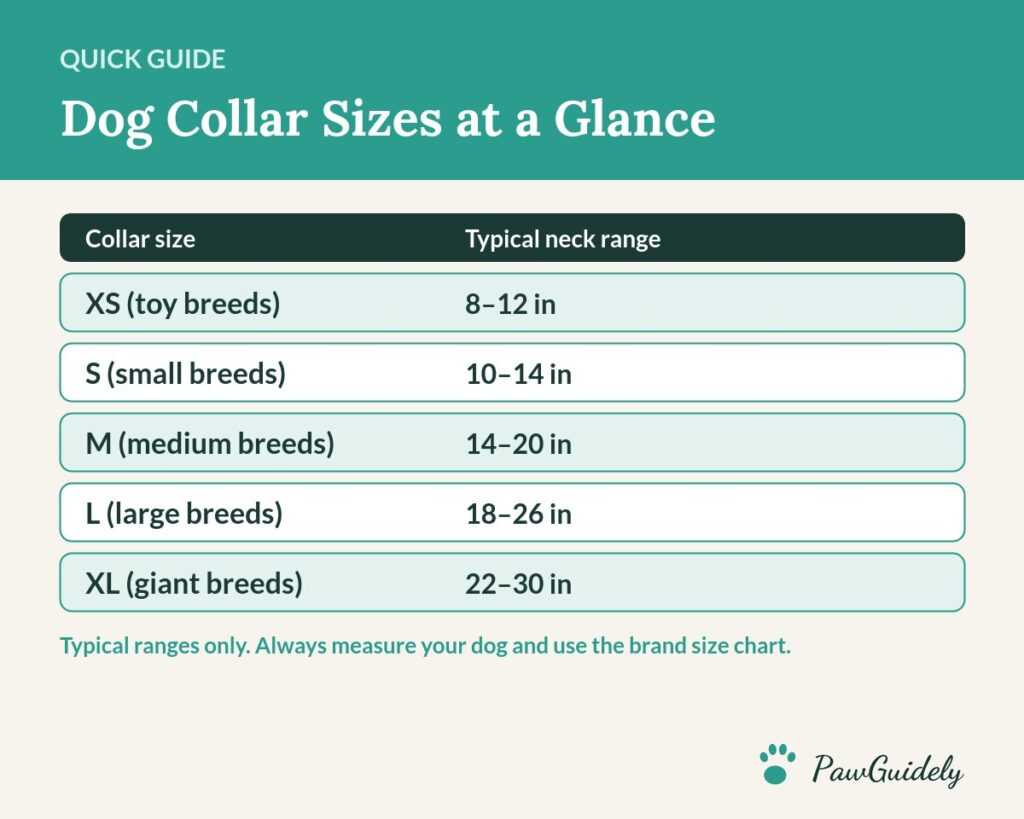
Because the sizes overlap, a dog with a 14″ neck could wear a small or a medium depending on the brand. In that case, pick the size where 14″ sits in the middle of the adjustment range, which leaves room to loosen or tighten later.
How to Measure Your Dog for a Collar
A soft tape measure gives the most accurate number. If you only have a ruler, wrap a piece of string around the neck, mark it, and measure the string flat.
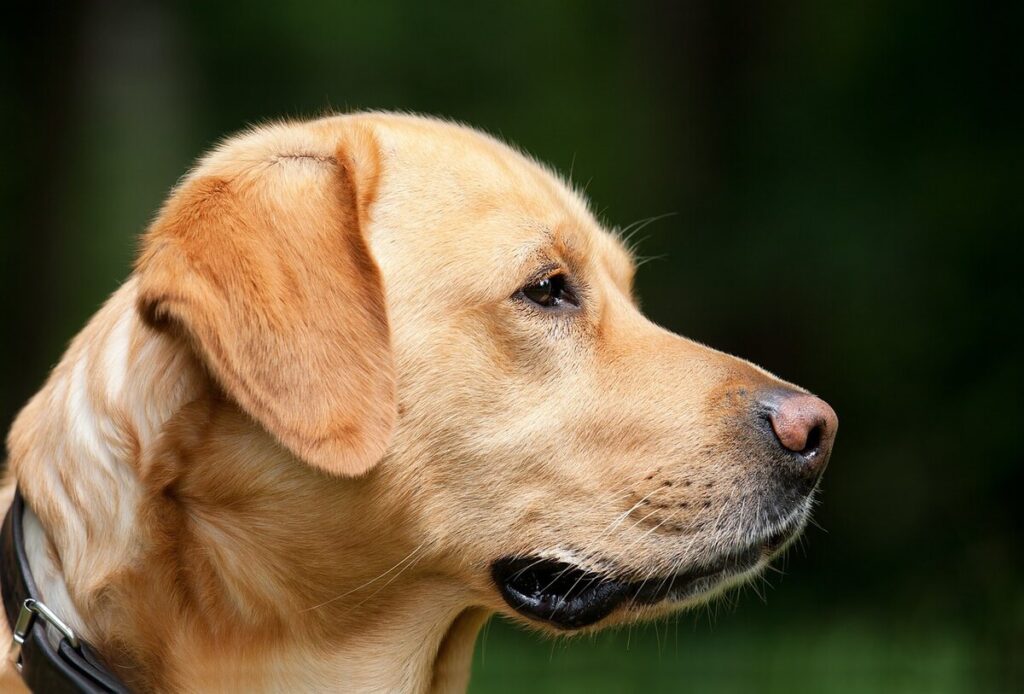
- Find the right spot. Measure around the middle of the neck, where a collar naturally rests, a little below the ears and above the shoulders.
- Keep the tape snug but flat. It should touch the neck all the way around without pressing into the fur.
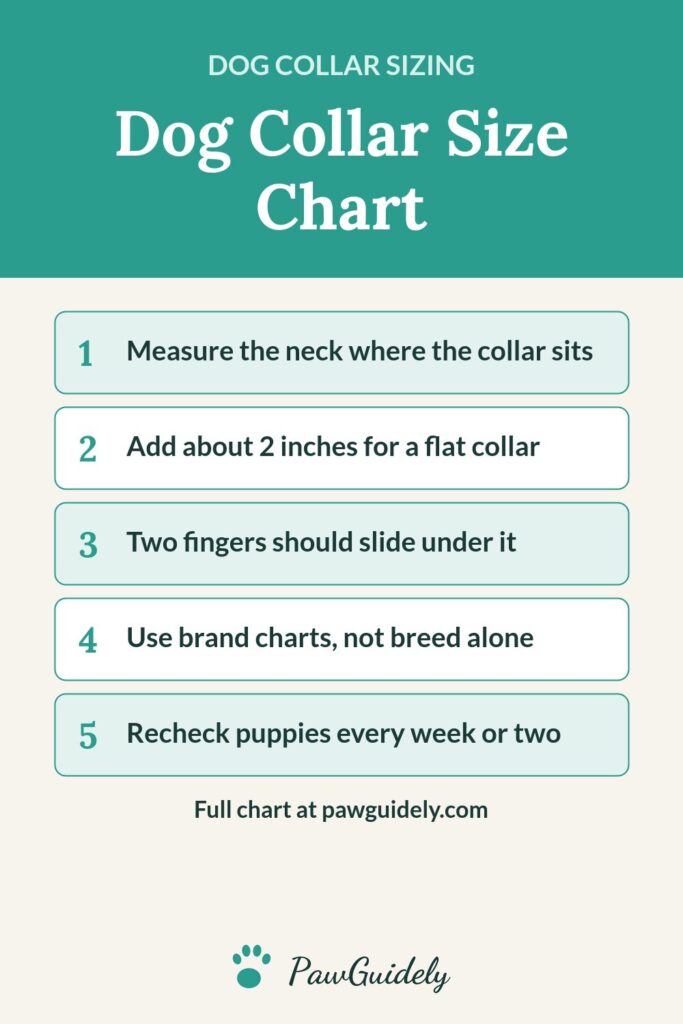
- Add about 2 inches. This is the collar size to look for. For very small dogs under about 10 lbs, 1 inch is often enough.
- Compare with the brand chart. Choose the size where your number falls in the middle of the range.
- Measure twice. If the two numbers differ, use the larger one.
Fluffy or double-coated dogs can measure an inch or more bigger through the fur than at the skin. Press the tape gently through the coat so it rests close to the neck, then add the usual allowance.
Collar Size by Breed
Breed is a rough guide only. Two dogs of the same breed can differ by several inches, and mixed breeds can land anywhere. Use these typical neck ranges to narrow down the size, then measure your own dog.
| Breed | Typical Neck Size |
|---|---|
| Chihuahua, Yorkshire Terrier, Maltese | 8–12″ |
| Pomeranian, Shih Tzu, Dachshund | 10–14″ |
| Pug, French Bulldog, Boston Terrier | 12–18″ |
| Beagle, Cocker Spaniel, Corgi | 12–18″ |
| Border Collie, Australian Shepherd, Siberian Husky | 14–22″ |
| Labrador, Golden Retriever, Boxer | 16–24″ |
| German Shepherd, Doberman | 18–24″ |
| Rottweiler, Bernese Mountain Dog | 20–28″ |
| Great Dane, Mastiff, Saint Bernard | 22–30″+ |
Bulldogs, Pit Bull-type dogs and other thick-necked breeds often need a size larger than their weight suggests. Greyhounds, Whippets and other sighthounds have heads narrower than their necks, which is why they usually wear a martingale collar instead of a flat one.
The Two-Finger Fit Test
Once the collar is on, slide two fingers flat between the collar and your dog’s neck. They should fit comfortably without forcing them in. For small dogs, use one finger; for giant breeds, two fingers stacked is about right.
- Too tight: you can’t get two fingers under it, the fur is flattened, or the skin shows rubbing.
- Too loose: the collar slides over the ears when you pull it gently forward. A loose collar can catch on things or slip off on a walk.
- Just right: two fingers fit, the collar rotates around the neck easily, and it stays put when your dog shakes.
Check the fit again after a bath, a haircut or a change in weight, and look at the skin under the collar now and then for redness or hair loss.
Choosing the Right Collar Width
Width matters as much as length. A collar that is too wide is heavy and stiff on a small dog, while a narrow collar on a large, strong dog concentrates pressure on a thin strip of neck.
- Toy and small dogs: 3/8″ to 5/8″ wide.
- Medium dogs: 3/4″ to 1″.
- Large and giant dogs: 1″ to 1.5″.
- Long or thick coats: a rolled leather or round collar can reduce matting compared with a flat strap.
Sizing Collars for Puppies
Puppies can grow out of a collar in a few weeks. Choose an adjustable nylon collar with plenty of range, start near the smallest setting that passes the two-finger test, and recheck the fit every week or two. Expect to buy two or three collars before your puppy reaches adult size, so there is little point spending a lot on the first one.
If your puppy is learning to walk on a leash, many trainers prefer a harness for walks and a light collar just for ID tags. Our harness vs collar guide explains the trade-offs.
When to Replace a Collar
Even a well-fitted collar wears out. Nylon frays, leather cracks and plastic buckles can weaken after months of sun, water and chewing. Replace the collar if you see any of these:
- Frayed edges or stitching coming loose near the buckle or D-ring.
- A buckle that pops open, slips, or no longer clicks firmly shut.
- A bent or rusted D-ring that the leash or ID tag hangs from.
- Stretching, so the collar no longer holds the setting that passed the two-finger test.
When you replace it, measure your dog again rather than reusing the old size. Adult dogs gain or lose weight, and a thicker winter coat can add a surprising amount around the neck.
Flat, Martingale and Breakaway Collars
The collar style changes how you size it:
- Flat buckle or clip collars are sized by neck measurement plus about 2 inches, as above.
- Martingale collars tighten when your dog pulls back. Size them so the collar slips over the head when fully loose, and when tightened, the two metal rings should not touch.
- Breakaway collars release under pressure and are sized like flat collars. They are mainly for dogs who spend time unsupervised in crates or with other dogs.
- Head halters and harnesses use different measurements entirely, usually the chest girth and sometimes the snout.
Never leave a choke chain or prong collar on an unsupervised dog, and ask a trainer for help fitting training collars correctly.
Related Guides
- Dog Harness vs Collar: Which Is Better for Your Dog?
- 5 Best Dog Leashes for Everyday Walks, Running and Training
- Best No-Pull Dog Harnesses (and How to Fit One Properly)
- Best Harnesses for Small Dogs
- Best Harnesses for Large Dogs
- How to Stop a Dog Pulling on the Leash
- Martingale vs Flat Collar: Which Is Right for Your Dog?
Frequently Asked Questions
What size collar does my dog need?
Measure around the middle of your dog’s neck and add about 2 inches. Then pick the brand size whose adjustment range puts that number near the middle.
How tight should a dog collar be?
You should be able to slide two fingers flat under the collar. If it slips over the ears when pulled gently forward, it is too loose.
What size collar fits a Labrador?
Most adult Labs have necks of roughly 16–24 inches and wear a large collar about 1 inch wide. Measure your own dog, since individual Labs vary a lot.
Should I size up if my dog is between sizes?
Usually yes, as long as the larger collar adjusts down far enough to pass the two-finger test. That leaves room for a thicker winter coat or a bit of growth.
How often should I check my puppy’s collar size?
Every week or two while your puppy is growing. Loosen or replace the collar as soon as two fingers no longer fit underneath.
Neck ranges are typical figures, not breed standards. Measure your dog and use the size chart for the specific collar you buy.