
This post contains affiliate links. As an Amazon Associate, PawGuidely earns from qualifying purchases at no extra cost to you. See our affiliate disclosure for details.
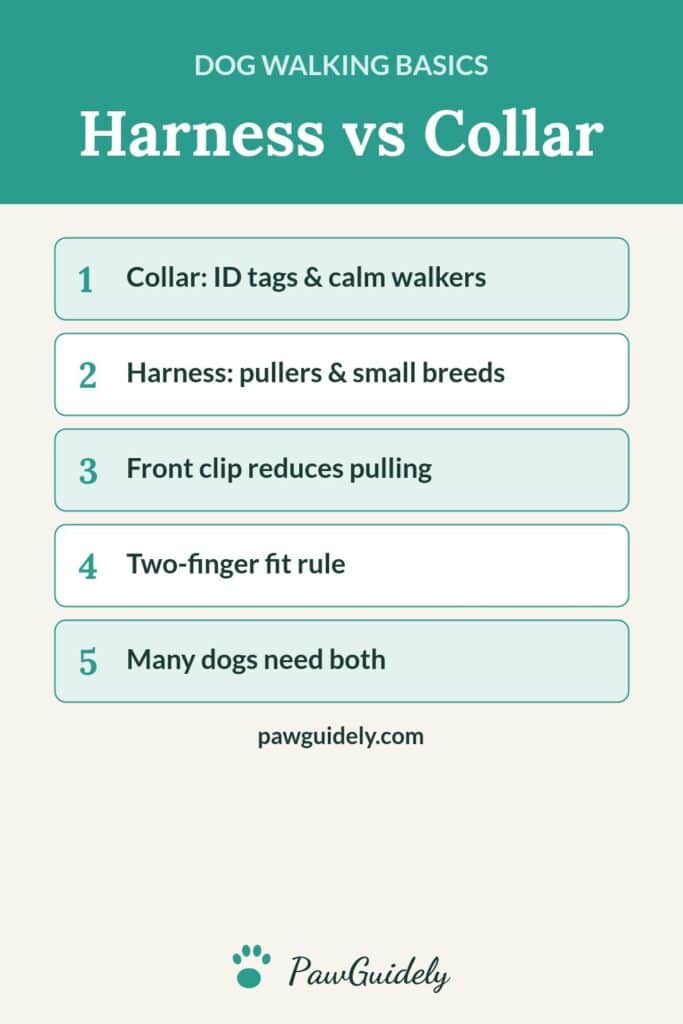
The dog harness vs collar debate comes up with almost every new dog. The short answer: most dogs benefit from both. A flat collar is the best place for ID tags and works well for calm walkers, while a harness spreads pressure across the chest and shoulders, which is kinder for dogs that pull, small breeds and flat-faced breeds. Below we break down the pros and cons of each, show which one suits different dogs, and explain how to fit them correctly.
Dog Harness vs Collar at a Glance
| Flat Collar | Harness | |
|---|---|---|
| Where pressure goes | Neck and throat | Chest and shoulders |
| Control of pulling | Low | Good, especially front-clip |
| ID tags | Ideal, worn all day | Some have ID pockets, not for all-day wear |
| Best for | Calm walkers, ID, quick potty trips | Pullers, puppies, small and flat-faced breeds |
| Ease of use | Very easy, stays on | Takes a few seconds to put on |
| Escape risk | Can slip over the head if loose | Low when fitted well |
Pros and Cons of a Dog Collar
A flat buckle or quick-release collar is simple, light and comfortable for most dogs to wear all day. It holds your dog’s ID tag and rabies tag, which matters if your dog ever slips out the door. For a dog that already walks nicely on a loose leash, a collar is all you need for everyday walks.
- Pros: easy to put on, holds ID all day, inexpensive, fine for calm dogs.
- Cons: leash pressure lands on the neck and throat, which can cause coughing in dogs that pull, and it gives little control over a strong dog.
Martingale collars, which tighten slightly when pulled, are useful for narrow-headed breeds such as greyhounds and whippets that can back out of flat collars. Choke chains and prong collars are not recommended by most modern trainers because they work through discomfort.
Pros and Cons of a Dog Harness
A harness wraps around your dog’s chest and shoulders, so when the leash goes tight, the force spreads across the body instead of the neck. Front-clip harnesses, where the leash attaches at the chest, gently turn a pulling dog back toward you, which makes loose-leash training much easier. Back-clip harnesses are comfortable for calm dogs, small breeds and activities such as hiking.
- Pros: no pressure on the throat, better control of pullers, harder to slip out of, good for small and flat-faced breeds.
- Cons: takes a moment to put on, must be fitted carefully to avoid rubbing, and a poorly fitted harness can restrict shoulder movement.
Two Harnesses We Recommend
From our full guide to the best no-pull dog harnesses, these two are great starting points:
1. Ruffwear Front Range Harness — Best Everyday Harness
The Front Range is padded, adjustable at four points and has both a front and a back leash attachment, so it works for everyday walks and for dogs still learning not to pull. Reflective trim and an ID pocket add everyday practicality. It pairs nicely with the matching Front Range leash.
- Front and back clip points
- Four adjustment points for a good fit
- Foam padding for comfort
- Reflective trim and ID pocket
Worth knowing: Measure your dog’s chest girth before ordering; sizing runs by girth, not weight.
2. PetSafe Easy Walk Harness — Best for Pullers on a Budget
The Easy Walk is a simple, affordable front-clip harness that many trainers use to help dogs that pull. The chest strap sits across the breastbone rather than the throat, and the front clip turns your dog gently toward you when it pulls. It is quick to put on and comes in many sizes.
- Front clip discourages pulling
- Sits across the chest, not the throat
- Easy to put on
- Affordable, many sizes
Worth knowing: Adjust it carefully so the chest strap stays level; if it slides, it can rub behind the front legs.
Which Should You Choose?
| Your Dog | Best Choice | Why |
|---|---|---|
| Pulls on the leash | Front-clip harness | Reduces pulling and protects the neck |
| Puppy learning to walk | Lightweight harness plus collar for ID | Protects a growing neck while learning |
| Small or toy breed | Harness | Small tracheas are more sensitive to pressure |
| Flat-faced breed (Pug, Frenchie) | Harness | Avoids pressure on already-restricted airways |
| Calm, trained adult dog | Collar or harness | Either works; choose what your dog prefers |
| Escape artist or sighthound | Martingale collar or escape-resistant harness | Harder to back out of |
| Running or hiking | Back-clip harness | Comfortable for long distances |
If your dog coughs, gags or has a history of neck, back or breathing problems, ask your vet which option is safest before you choose.
How to Fit a Collar
- Measure around the middle of your dog’s neck with a soft tape measure.
- Adjust the collar so you can slide two fingers flat between the collar and the neck.
- Check that it cannot slip over your dog’s head when you gently pull it forward.
- Recheck the fit monthly on puppies, as they grow quickly.
How to Fit a Harness
- Measure your dog’s chest at the widest point, just behind the front legs.
- Adjust each strap so two fingers fit under the harness at every point.
- Make sure the chest strap sits on the breastbone, not across the throat, and doesn’t rub behind the front legs.
- Watch your dog walk: the shoulders should move freely and the harness should not twist or slide.
- Take the harness off at home, especially on puppies, to prevent rubbing and chewing.
Why Many Dogs Need Both
The most common setup is a lightweight flat collar worn all day with ID tags, plus a harness put on for walks. The collar means your dog can be identified if it ever gets loose, and the harness gives you comfortable control on the walk. Pair the harness with a good leash; our guide to the best dog leashes covers standard, traffic-handle and hands-free options. If you are starting with a new puppy, see our new puppy checklist for everything else you need.
Our Verdict
In the dog harness vs collar question, a harness wins for walks with most dogs, especially pullers, puppies, small breeds and flat-faced breeds, because it keeps pressure off the neck and gives you better control. A flat collar still earns its place for ID tags and calm walkers. For most households, the best answer is a comfortable collar for ID and a well-fitted front-clip harness such as the Ruffwear Front Range or PetSafe Easy Walk for walks.
Related Guides
- 4 Best No-Pull Dog Harnesses in 2026 (and How to Fit One Properly)
- 5 Best Dog Leashes for Everyday Walks, Running and Training
- Best Crash-Tested Dog Car Harnesses in 2026: 3 Safer Ways to Travel
- New Puppy Checklist: 25 Essentials to Buy Before You Bring Your Puppy Home
- Retractable Leash vs Standard Leash: Which Should You Use?
Frequently Asked Questions
Is a harness better than a collar for a dog that pulls?
Yes. A front-clip harness keeps pressure off the throat and turns a pulling dog back toward you, which makes it easier to teach loose-leash walking.
Can a dog wear a harness all the time?
It is best to remove a harness when your dog is resting at home. Wearing it all day can cause rubbing, matting and chewing. Keep a flat collar on for ID instead.
Should a puppy wear a collar or harness?
Most puppies do well with a light harness for walks and a flat collar for ID tags. Let your puppy get used to both indoors with treats before the first walk.
Are collars bad for dogs?
Flat collars are fine for most dogs, especially for ID and calm walking. They are less suitable for dogs that pull hard, small breeds and flat-faced breeds, where a harness is safer.
How do I know if a harness fits properly?
You should be able to slide two fingers under every strap, the chest strap should sit on the breastbone, and your dog should walk with free shoulder movement and no rubbing.