
This post contains affiliate links. As an Amazon Associate, PawGuidely earns from qualifying purchases at no extra cost to you. See our affiliate disclosure for details.
Brushing does more than keep hair off your sofa. It removes loose fur and dirt, prevents painful mats, spreads natural oils through the coat and gives you a chance to check your dog’s skin for lumps, ticks and sore spots. But how often to brush your dog depends almost entirely on the coat. A Beagle and a Golden Retriever have very different needs. Below is a brushing chart by coat type, the right tool for each, and a quick routine that fits into a busy week.
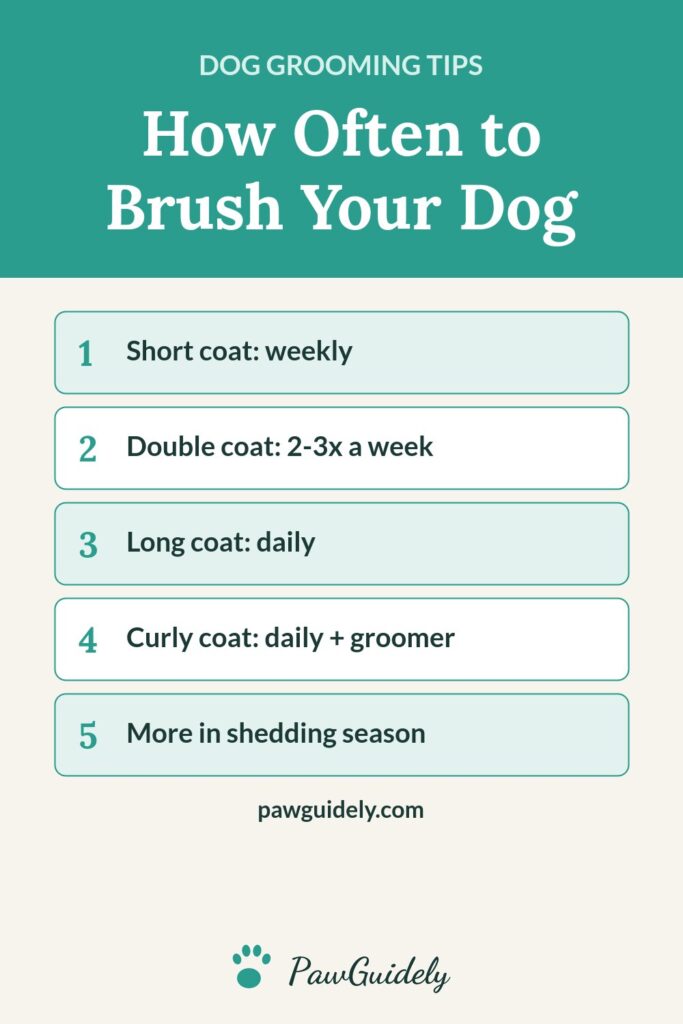
How Often to Brush Your Dog: Chart by Coat Type
| Coat Type | Example Breeds | How Often | Main Tools |
|---|---|---|---|
| Short, smooth | Beagle, Boxer, Labrador (short outer coat) | Once a week | Rubber curry brush, bristle brush |
| Double coat | Golden Retriever, Husky, German Shepherd | 2-3 times a week; daily in shedding season | Slicker brush, undercoat deshedding tool |
| Long, silky | Shih Tzu, Yorkshire Terrier, Maltese | Daily | Pin brush, slicker, metal comb |
| Curly or wavy | Poodle, Doodles, Bichon | Daily or every other day | Slicker brush, metal comb, regular grooming |
| Wire coat | Schnauzer, Wire Fox Terrier | Once or twice a week | Slicker brush, stripping comb |
| Hairless or very short | Chinese Crested, Whippet | Weekly wipe-down | Rubber mitt or soft cloth |
Not sure which brush suits your dog? Our best dog brushes guide matches brushes to coats, and our deshedding tools guide covers heavy shedders.
Why Regular Brushing Matters
- Less shedding around the home: hair ends up in the brush, not on your floor.
- Prevents mats: mats pull on skin, hide irritation and can require shaving.
- Healthier skin and coat: brushing spreads natural oils and removes debris.
- Early health checks: you’ll notice lumps, parasites, hot spots or injuries sooner.
- Bonding: for most dogs, gentle brushing becomes a relaxing routine.
A Simple 5-Minute Brushing Routine
- Start calm: brush after a walk when your dog is relaxed.
- Loosen first: use a rubber curry or your fingers to loosen dead hair and dirt.
- Brush in sections with the direction of hair growth: neck, back, sides, chest, legs, tail.
- Check tangle hotspots: behind the ears, under the collar, armpits, and the back of the legs.
- Use a comb to finish: if a metal comb glides through, you’ve reached the skin and removed tangles.
- Reward: a treat and praise at the end make the next session easier.
Shedding Season: Brush More Often
Double-coated dogs blow their undercoat, usually in spring and autumn. During these weeks, brush daily with a slicker and use an undercoat deshedding tool once or twice a week. A bath with a good dog shampoo followed by thorough drying and brushing can loosen a lot of undercoat at once. Never shave a double-coated dog to stop shedding unless your vet recommends it, as the coat helps regulate temperature and protect the skin.
Dealing With Mats and Tangles
- Work small tangles apart with your fingers, then a comb, holding the hair near the skin to avoid pulling.
- A detangling spray can help loosen knots.
- Never cut mats with scissors close to the skin, as it is very easy to cut your dog.
- Large or tight mats are best handled by a professional groomer, who may clip them out safely.
Brushes We Recommend
1. Safari Self-Cleaning Slicker Brush — Everyday Brush
A slicker brush is the most versatile brush for medium, long, double and curly coats. Safari’s self-cleaning slicker releases collected hair with a button, making daily brushing quick.
2. FURminator Undercoat deShedding Tool — For Double Coats
For heavy shedders like Huskies and Goldens, the FURminator’s fine edge removes loose undercoat efficiently. Use it gently once or twice a week, not daily.
3. KONG ZoomGroom — For Short Coats
The soft rubber ZoomGroom lifts loose hair from short coats and feels like a massage, making it a favorite for dogs that dislike brushing.
The Bottom Line
How often to brush your dog comes down to coat type: weekly for short coats, two to three times a week for double coats, and daily for long and curly coats, with more brushing in shedding season. Keep sessions short and positive, and use the right tool for the coat. For clean-up between sessions, see our vacuums for pet hair guide.
Brushing Puppies and Senior Dogs
Puppies have soft, fine coats that rarely need much brushing, but starting early is the best investment you can make. A few gentle strokes with a soft brush, paired with treats, teaches your puppy that grooming is pleasant. By the time their adult coat grows in, usually between four and twelve months depending on breed, brushing will already be a normal part of life.
Senior dogs often groom themselves less and may develop drier skin, lumps or sore joints. Brush them gently while they lie down, use a softer brush over bony areas, and keep sessions short. Regular brushing is also a good chance to notice changes you should mention to your vet.
Other Grooming Tasks to Add to Your Routine
- Nails: trim every two to four weeks; see how to trim dog nails at home.
- Ears: check weekly for redness, odor or wax buildup.
- Teeth: brushing a few times a week with dog toothpaste helps prevent tartar.
- Paws: check between the toes for burrs, grass seeds and cuts, especially after walks.
- Baths: most dogs only need a bath every few weeks to months, unless they roll in something.
Related Guides
- 4 Best Dog Brushes in 2026: Which Brush for Which Coat?
- 6 Best Deshedding Tools for Dogs in 2026, Matched to Coat Type
- How to Trim Dog Nails at Home (Without Cutting the Quick)
- 5 Best Vacuums for Pet Hair: Uprights and Handhelds
Frequently Asked Questions
Can you brush a dog too much?
Everyday brushing with a suitable brush is fine for most coats, but overusing deshedding tools or pressing too hard can irritate skin. Use gentle pressure and limit deshedding tools to once or twice a week.
How often should I brush a short-haired dog?
Once a week is usually enough, with a rubber curry brush or bristle brush. Brush more often during shedding season.
Should I brush my dog before or after a bath?
Both. Brush before the bath to remove tangles, since water tightens mats, and after drying to remove loosened undercoat.
How do I brush a dog that hates being brushed?
Start with very short sessions, use a soft rubber brush, give treats throughout and focus on areas your dog enjoys. Build up slowly.
Does brushing reduce shedding?
Brushing doesn’t stop natural shedding, but it removes loose hair before it falls around your home.