
This post contains affiliate links. As an Amazon Associate I earn from qualifying purchases. This costs you nothing extra. See our affiliate disclosure for details.
Cats groom themselves, but they still benefit from regular brushing. Brushing removes loose hair before it ends up on your furniture or in your cat’s stomach as hairballs, prevents mats in long coats, and is a good chance to check for lumps, fleas or skin problems. Learning how to brush a cat is mostly about choosing the right tool and keeping sessions short and pleasant.
Choosing the Right Brush
| Coat type | Best tools |
|---|---|
| Short hair | Rubber brush or grooming glove, fine-toothed comb |
| Medium hair | Slicker brush plus comb |
| Long hair (Persian, Maine Coon) | Wide-toothed comb, slicker brush, deshedding tool for undercoat |
| Heavy shedders | Deshedding tool used gently once a week |
| Sensitive cats | Grooming glove or soft rubber brush |
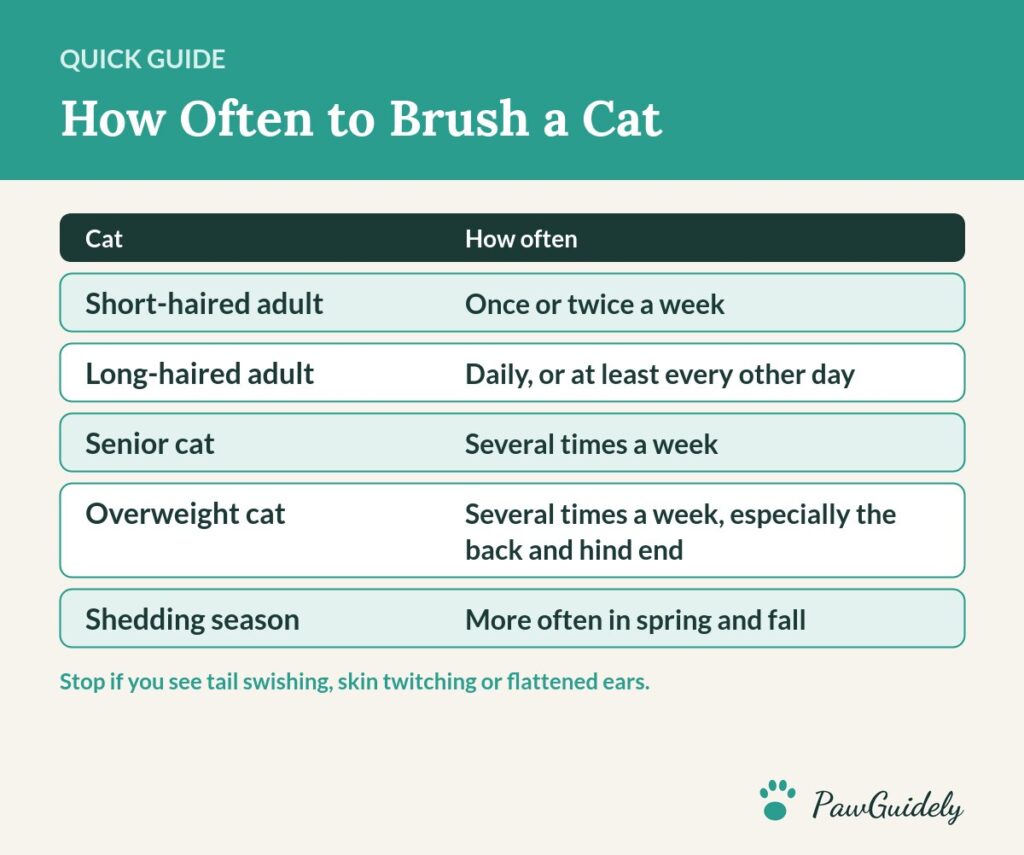
How Often to Brush a Cat
| Cat | How often |
|---|---|
| Short-haired adult | Once or twice a week |
| Long-haired adult | Daily, or at least every other day |
| Senior cat | Several times a week, as older cats groom less |
| Overweight cat | Several times a week, especially the back and hind end |
| Shedding season | More often in spring and fall |
How to Brush a Cat Step by Step
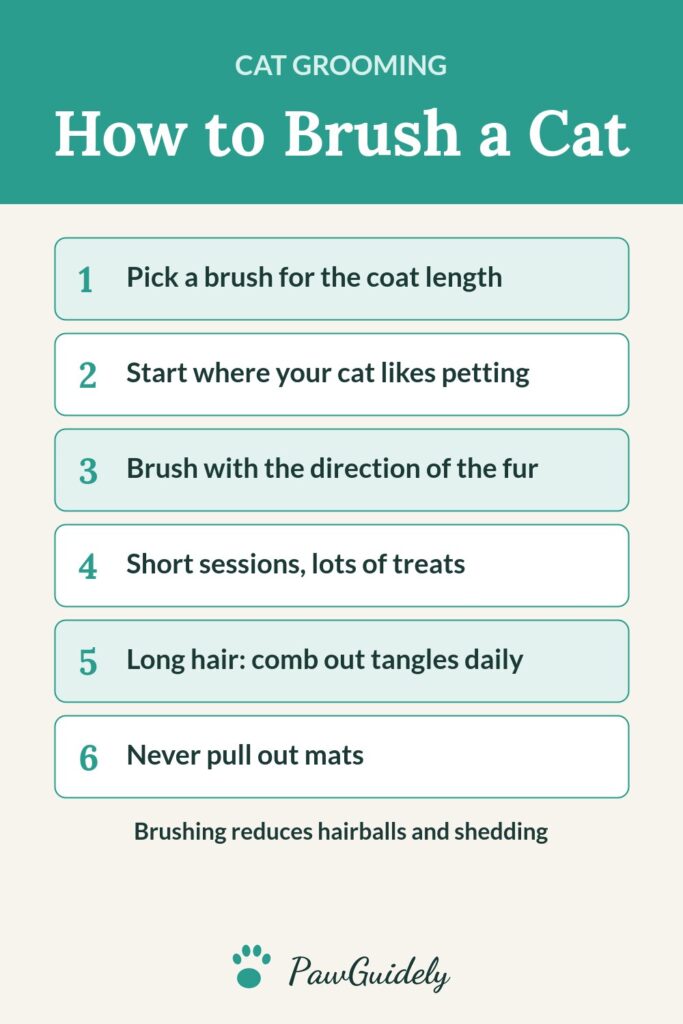
- Choose a calm moment. After a meal or when your cat is relaxed and sleepy works best.
- Start with petting. Begin with gentle strokes on the cheeks, head and back, where most cats enjoy being touched.
- Introduce the brush slowly. Let your cat sniff it, then make a few light strokes on the back and give a treat.
- Brush with the direction of the fur. Use gentle, short strokes from head to tail.
- Work in sections. Move to the sides and chest if your cat is comfortable. Leave the belly, legs and tail for later sessions if they are sensitive.
- For long hair, comb first. Use a wide-toothed comb to find tangles, then a slicker brush.
- Keep it short. Stop before your cat gets irritated, even if you only did a few minutes. End with a treat.
Dealing With Mats
Small tangles can often be teased apart with your fingers and a comb, working from the tip of the hair toward the skin while holding the base so you do not pull. Never cut mats with scissors, as it is very easy to cut a cat’s thin skin. Large or tight mats should be removed by a groomer or your vet, who may clip them safely.
Tips for Cats Who Hate Brushing
- Use a grooming glove, which feels like petting.
- Brush for 30 seconds a day, rewarding with treats, and slowly build up.
- Try brushing during a meal or while your cat licks a lick mat.
- Watch body language: tail swishing, skin twitching or flattened ears mean stop.
- Brush at the same time each day to build a routine.
When to Talk to Your Vet
See your vet if you notice bald patches, scabs, redness, flaky skin, fleas or lumps, or if your cat suddenly stops grooming. Overgrooming or undergrooming can be a sign of pain, skin problems or stress.
Gear That Helps
1. Hertzko Self-Cleaning Slicker Brush — Best Everyday Brush
Fine bristles remove loose hair and tangles, and a button retracts them so the fur wipes off easily. Suitable for medium and long coats.
- Self-cleaning button
- Comfortable handle
Worth knowing: Use a light touch on thin-skinned areas.
2. FURminator Undercoat deShedding Tool for Short Hair Cats — Best for Shedding
Removes loose undercoat on heavy shedders. Used gently once a week, it can noticeably cut down hair around the home.
- Removes loose undercoat
- Hair release button
Worth knowing: Do not overuse or press hard. A long-hair version is available.
3. Pat Your Pet Grooming Gloves — Best for Fussy Cats
Rubber-tipped gloves that let you groom while petting, a great starting point for cats who dislike brushes.
- Feels like petting
- Easy to rinse clean
Worth knowing: Better for short coats than long, tangled fur.
The Bottom Line
Choose a brush that suits your cat’s coat, start with short, positive sessions where your cat enjoys being touched, and build up gradually. Brush short-haired cats weekly and long-haired cats daily, and leave large mats to a professional.
Brushing Long-Haired Cats
Long-haired breeds such as Persians, Maine Coons, Ragdolls and Norwegian Forest Cats need extra attention in the areas where mats form most: behind the ears, under the front legs, the belly, and the back of the hind legs, sometimes called the “britches”. Comb these areas every day with a wide-toothed comb before they tangle. A light dusting of cornstarch on small tangles can help a comb slide through. Some owners of very long-haired cats book a regular professional groom or a hygienic trim around the rear end to keep things clean and comfortable.
Brushing Senior Cats
Older cats often groom less because of stiff joints, dental pain or weight changes, so they rely on you more. Use soft tools, support your cat comfortably on your lap or a towel, and keep sessions short. Pay attention to the lower back and hips, where older cats struggle to reach. Brushing is also a great time to feel for new lumps or weight loss, which are worth mentioning to your vet.
Related Guides
- 3 Best Cat Brushes for Shedding (Long and Short Hair)
- How to Trim Cat Nails at Home Without a Struggle
- 5 Best Vacuums for Pet Hair: Uprights and Handhelds
- How to Keep a Cat Entertained (Even While You're at Work)
Frequently Asked Questions
How often should I brush my cat?
Short-haired cats once or twice a week, long-haired cats daily or every other day.
What is the best brush for a cat?
A slicker brush and comb for most coats, a rubber brush or glove for short hair and sensitive cats, and a deshedding tool for heavy shedders.
Does brushing help with hairballs?
Yes. Removing loose hair means your cat swallows less while grooming.
Why does my cat bite me when I brush them?
They may be overstimulated or sensitive in that area. Keep sessions shorter and avoid the belly and tail at first.
Should I bathe my cat instead of brushing?
Most cats rarely need baths. Regular brushing is usually enough.