
This post contains affiliate links. As an Amazon Associate, PawGuidely earns from qualifying purchases at no extra cost to you. See our affiliate disclosure for details.
Almost every new puppy cries in the crate at first. They have just left their mother and littermates, everything smells new, and being alone is unfamiliar. The good news is that a puppy crying in the crate is usually a phase that passes within a week or two with a consistent, kind routine. Below we explain why puppies cry, give a step-by-step plan for nights and daytime, list the mistakes that make crying worse, and share the gear that helps.
Why Is My Puppy Crying in the Crate?
| Reason | What It Looks Like | What Helps |
|---|---|---|
| Needs the toilet | Sudden crying after settling, especially at night | A quick, boring potty break |
| Lonely or unsettled | Crying as soon as you leave the room | Crate near you, gradual practice |
| Not tired enough | Whining, pawing, restless | Play and a sniff walk before crate time |
| Uncomfortable | Can’t settle, keeps shifting | Right crate size, soft pad, right temperature |
| Learned it works | Crying stops the moment you open the door | Only open when quiet (after potty needs are met) |
How to Stop a Puppy Crying in the Crate: Step by Step
- Make the crate the right size. Your puppy should be able to stand, turn and lie down, no more. Use a divider in a larger crate; see our best crates for puppies.
- Build good feelings first. Feed meals in the crate, toss treats in, and leave the door open during the day so your puppy goes in by choice.
- Start with short, calm sessions. Close the door for a minute while you sit nearby, then open it before your puppy fusses. Build up slowly.
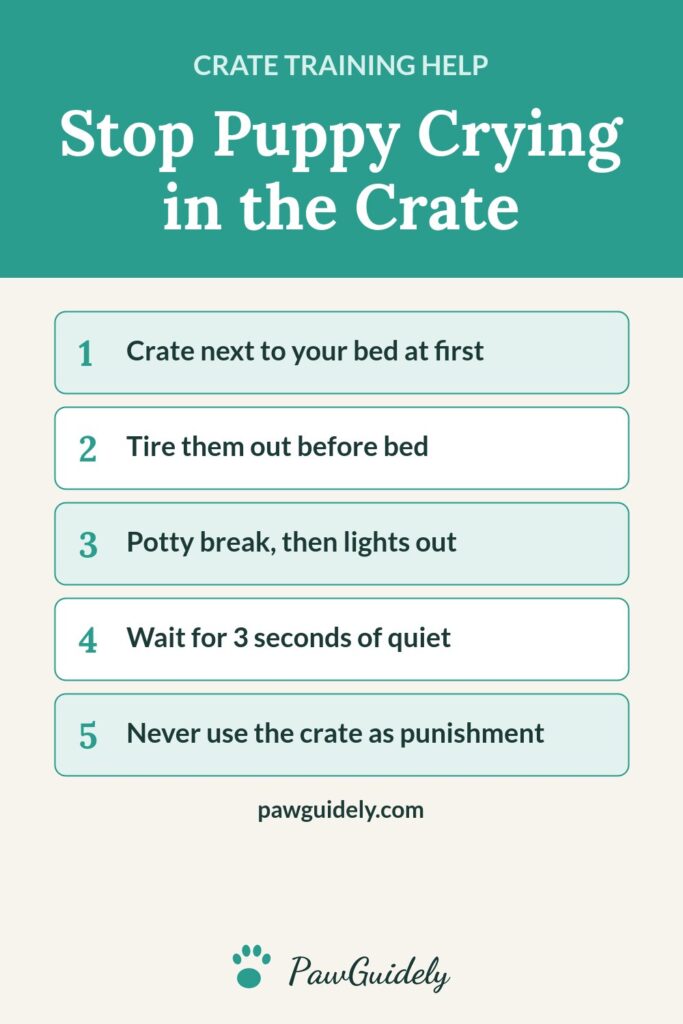
- Put the crate by your bed at night. For the first nights, being able to smell and hear you is very reassuring. You can move it gradually later.
- Tire your puppy out before bed. Ten to fifteen minutes of play and a short sniff around the yard help a puppy sleep.
- Do a last potty break right before bed. Keep it quiet and boring, then straight back to the crate.
- Give something safe to chew. A stuffed, frozen puppy toy keeps them busy while they settle.
- Plan night potty breaks. Young puppies can’t hold it all night. Set an alarm, or take them out when they wake and cry, with no play.
- Reward quiet, not crying. Wait for a few seconds of quiet before opening the door, once you know they don’t need the toilet.
How Long Can a Puppy Stay in a Crate?
As a rough daytime guide, many puppies can manage about one hour for each month of age, up to a few hours. At night most puppies can go longer because they are asleep, but young puppies still usually need one or two potty breaks. Our crate training schedule by age has a day-by-day plan.
| Puppy Age | Daytime Crate Time (approx.) | Night Potty Breaks |
|---|---|---|
| 8-10 weeks | 30-60 minutes | Usually 1-2 |
| 10-12 weeks | 1-2 hours | Usually 1 |
| 3-4 months | 2-3 hours | 0-1 |
| 4-6 months | 3-4 hours | Often none |
Mistakes That Make Crate Crying Worse
- Using the crate as punishment, which teaches your puppy the crate is a bad place.
- Letting the puppy out while it is crying for attention, which teaches that crying works.
- Long stretches in the crate too soon, before your puppy is used to it.
- A crate that is too big, so your puppy can toilet at one end and lie at the other.
- Too much excitement at night: night potty breaks should be dull, dark and quiet.
- Shouting or banging the crate, which frightens puppies and increases stress.
When Crying Is More Than a Phase
Most puppies improve within one to three weeks. Talk to your vet or a certified trainer if your puppy panics in the crate, drools heavily, hurts itself trying to get out, or shows no improvement after a few weeks, as this can be a sign of stress or a health issue. Frequent night-time toilet trips in an older puppy are also worth mentioning to your vet.
Gear That Helps Puppies Settle
1. MidWest iCrate with Divider — Right-Sized Crate
A crate with a divider lets you keep the space puppy-sized so it feels cozy and supports house training, then expand it as your puppy grows. The iCrate comes in every size and folds flat.
2. MidWest Quiet Time Defender Crate Cover — Den-Like Cover
Covering the crate at night blocks light and movement, which helps many puppies settle faster. Keep at least one panel rolled up for airflow. See our crate covers guide.
3. KONG Puppy — Settling Chew
Stuff a KONG Puppy with part of your puppy’s dinner and freeze it. Licking and chewing are calming, and the softer rubber is made for puppy teeth. More ideas in our puppy teething toys guide.
The Bottom Line
A puppy crying in the crate needs patience, not punishment. Keep the crate small and cozy, place it near you at night, tire your puppy out, give a last potty break and a safe chew, and reward quiet. Most puppies settle within a couple of weeks. For everything else your new dog needs, see our new puppy checklist.
Related Guides
- Crate Training Schedule by Age: A Puppy Plan From 8 Weeks to Adult
- 4 Best Dog Crates for Puppies (That Grow With Them)
- 4 Best Dog Crate Covers for a Calmer, Den-Like Crate
- New Puppy Checklist: 25 Essentials to Buy Before You Bring Your Puppy Home
Frequently Asked Questions
Should I ignore my puppy crying in the crate at night?
First rule out a potty need with a quick, boring trip outside. After that, it is usually best to wait for a few seconds of quiet before giving attention, so your puppy learns that calm behavior is rewarded.
How long does puppy crate crying last?
Most puppies improve within a few nights and settle within one to three weeks with a consistent routine.
Should the crate be in my bedroom?
For the first nights, yes. Being near you helps your puppy feel secure and lets you hear when they need the toilet. You can move the crate gradually later.
Should I cover my puppy’s crate?
Many puppies settle better in a covered crate. Leave at least one side open for airflow and remove the cover if your puppy seems more stressed.
Is it cruel to crate a crying puppy?
No, when the crate is introduced gradually and used for reasonable periods. It becomes a safe den. Never use it as punishment, and seek help if your puppy panics.