
To crate train a puppy, first make the crate a pleasant place, then build up time inside in small steps: feed meals there, close the door for a few seconds, then minutes, then while you leave the room. Most puppies will walk into a crate on their own within a few days, and settle in it reliably within a few weeks, as long as you go at their pace and never use it as punishment. Below are the seven steps, a rough timeline, and what to do when progress stalls.
What You Need Before You Start
- A crate sized for your puppy’s adult size, with a divider. The divider keeps the space small enough that your puppy won’t use one end as a toilet. Our dog crate size chart shows which size to buy, and our best crates for puppies guide covers models that grow with them.
- Washable bedding. An old towel works at first, since young puppies often chew or soil bedding. See our picks for dog crate pads once your puppy is past that stage.
- Safe chews. A stuffed rubber toy or a sturdy chew gives your puppy something to do. Our puppy teething toys guide lists options.
- Small, soft treats your puppy loves, cut to pea size.
- A spot in a room where the family spends time, such as the living room or kitchen.
Not sure whether to get a wire or plastic model? Wire crates are easier to see out of and usually come with a divider; plastic crates feel more enclosed. Our comparison of wire vs plastic dog crates explains the trade-offs.
Crate Training Steps at a Glance
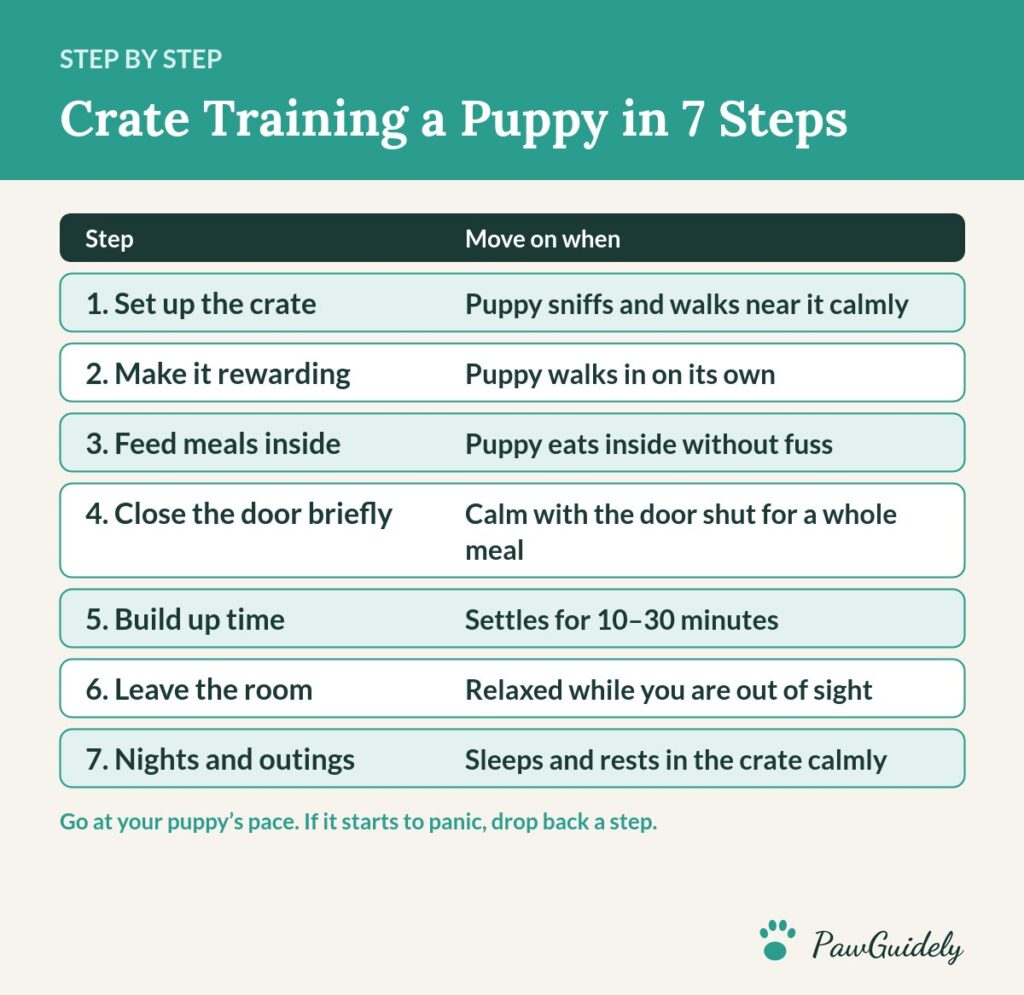
Each step has a simple sign that your puppy is ready for the next one. Some puppies move through a step in a single session; others need a few days. Both are normal.
| Step | What you do | Move on when |
|---|---|---|
| 1. Set up the crate | Door open, soft bedding, in a busy room | Your puppy sniffs and walks near it calmly |
| 2. Make it rewarding | Toss treats and toys inside, praise | Your puppy walks in on its own |
| 3. Feed meals inside | Bowl at the back, door open | Your puppy eats inside without fuss |
| 4. Close the door briefly | A few seconds while eating, open before any fuss | Calm with the door shut for a whole meal |
| 5. Build up time | Add a minute or two at a time, you nearby | Settles for 10–30 minutes |
| 6. Leave the room | Short absences, return calmly | Stays relaxed while you are out of sight |
| 7. Nights and outings | Crate at bedtime and for short trips out | Sleeps and rests in the crate calmly |
Step 1: Set Up the Crate in the Right Place
Put the crate where your puppy can see and hear the household. Puppies are social, and a crate tucked away in a garage or spare room feels like being shut out. Keep it out of direct sun, away from heaters and drafts, and on a floor that is easy to clean.
Prop the door fully open or remove it for now so it can’t swing shut and startle your puppy. Add bedding and a toy. Our guide on where to put a dog crate goes into room-by-room options.
Step 2: Make the Crate the Best Spot in the House
Let your puppy explore the crate on its own terms. Toss a treat just inside the door, then a little farther back. Praise calmly when your puppy steps in, and let it come straight back out. Don’t push or lift your puppy in.
- Hide a treat or a favorite toy in the crate a few times a day for your puppy to discover.
- Give special chews only in the crate, so the crate becomes where good things happen.
- If your puppy chooses to nap in the crate with the door open, leave it be.
Step 3: Feed Meals in the Crate
Meals are the easiest way to build a positive link. Place the food bowl just inside the door at first. Over several meals, move it toward the back so your puppy has to walk fully in to eat. Keep the door open during this step.

If your puppy is hesitant, go back to placing the bowl only as far in as it will go without stress. This step can take a day or a week depending on your puppy.
Step 4: Close the Door for a Few Seconds
Once your puppy is eating happily at the back of the crate, gently close the door while it eats. Open it again as soon as the meal is finished, before your puppy starts to fuss. At each meal, leave the door closed a little longer after eating: 10 seconds, then 30, then a minute or two.
The goal is that the door opens while your puppy is calm. If you open it in response to crying, your puppy learns that crying works. If it does start to whine, wait for a brief pause in the noise, then open the door, and make the next session shorter.
Step 5: Build Up Crate Time Slowly
Now start short crate sessions outside mealtimes. Ask your puppy into the crate with a cue such as “crate” or “bed,” toss a treat in, and close the door. Sit nearby for a few minutes, then let your puppy out. Repeat a few times a day, adding a minute or two at a time.
A stuffed chew toy helps a lot here, because it gives your puppy something calm to focus on. Aim for sessions of 10 to 30 minutes with you in the room before moving on. Always take your puppy outside to potty right after a crate session.
Step 6: Practice Leaving the Room and the House
When your puppy relaxes in the crate with you nearby, step out of sight for a few seconds and come back. Gradually stretch this to a few minutes, then longer. Keep your exits and returns low-key: no long goodbyes or excited greetings.
Next, practice short trips out of the house, starting with a few minutes, such as taking out the trash or checking the mail. Vary how long you’re gone so your puppy doesn’t learn to expect a set time. Keep daytime crate sessions within what a puppy can manage; our guide on how long a dog can stay in a crate lists limits by age.
Step 7: Use the Crate at Night
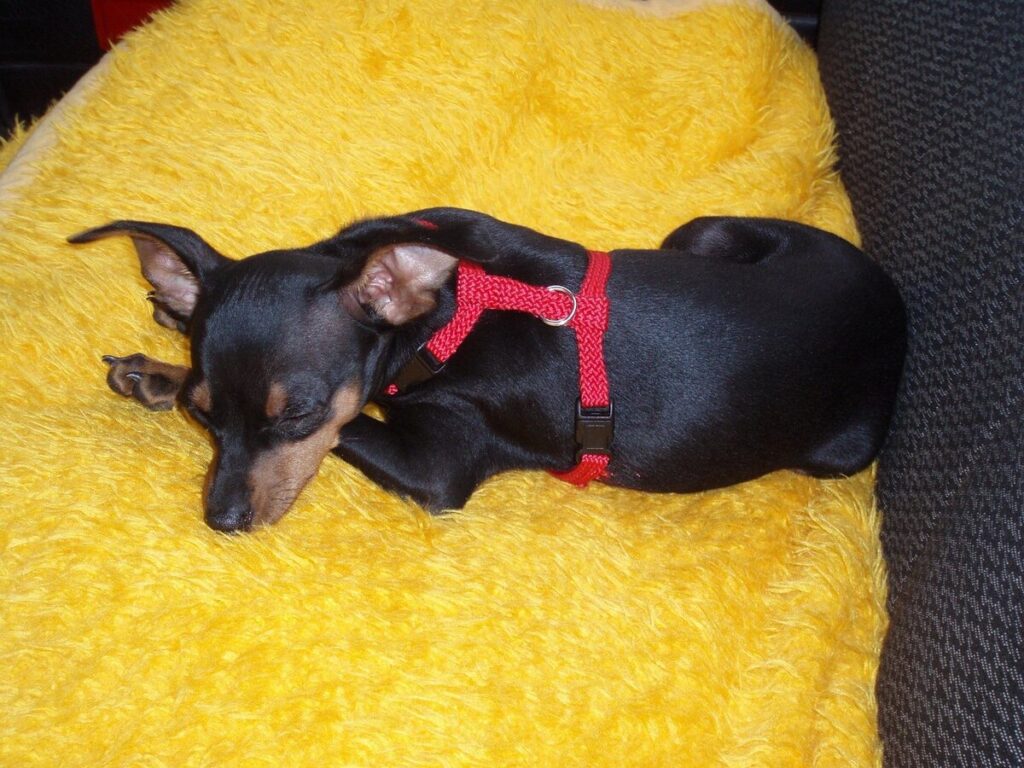
Many owners start overnight crating from the first night, before daytime training is finished. That works fine if the crate is close to you. A crate next to your bed lets you hear when your puppy needs to go out and reassures a puppy that has just left its littermates.
- Take your puppy out to potty right before bed.
- Young puppies usually need a night potty trip every few hours at first. Keep these trips quiet and boring, then straight back to the crate.
- Once your puppy sleeps through reliably, you can move the crate to its permanent spot if you want to.
For a full daily plan with meals, naps and potty breaks by age, see our crate training schedule. If nights are noisy, our guide on how to stop a puppy crying in the crate helps you tell a potty call from protest crying.
How Long Does Crate Training a Puppy Take?
There is no fixed timeline. Many puppies walk into the crate happily within a few days and nap there with the door shut within a week or two. Being comfortable alone in the crate while you leave the house usually takes longer, often a few weeks of steady practice. Puppies with a calm temperament, or that came from a breeder who used crates, often move faster.
Progress is rarely a straight line. A setback after a busy day, a vet visit or a change in routine is normal. Drop back a step for a day or two, then carry on.
Common Crate Training Problems and Fixes
My puppy won’t go in the crate
Go back to Step 2. Use better treats, feed every meal near or in the crate, and make sure the crate isn’t in a noisy or uncomfortable spot. Check the crate isn’t too big or too small, and that bedding isn’t slipping around.
My puppy cries as soon as the door closes
The door is closing too soon in the process. Shorten sessions, work with the door closed only during meals or while your puppy is busy with a chew, and open it during a quiet moment. Covering part of the crate can help some puppies settle; our dog crate covers guide covers options.
My puppy has accidents in the crate
The crate may be too large, so use the divider to shrink the space. Accidents can also mean sessions are longer than your puppy can hold it. Shorten crate time and add potty breaks. Our puppy potty training guide pairs well with crate training. Frequent accidents in a puppy that was doing well are worth mentioning to your vet.
Rules to keep it positive
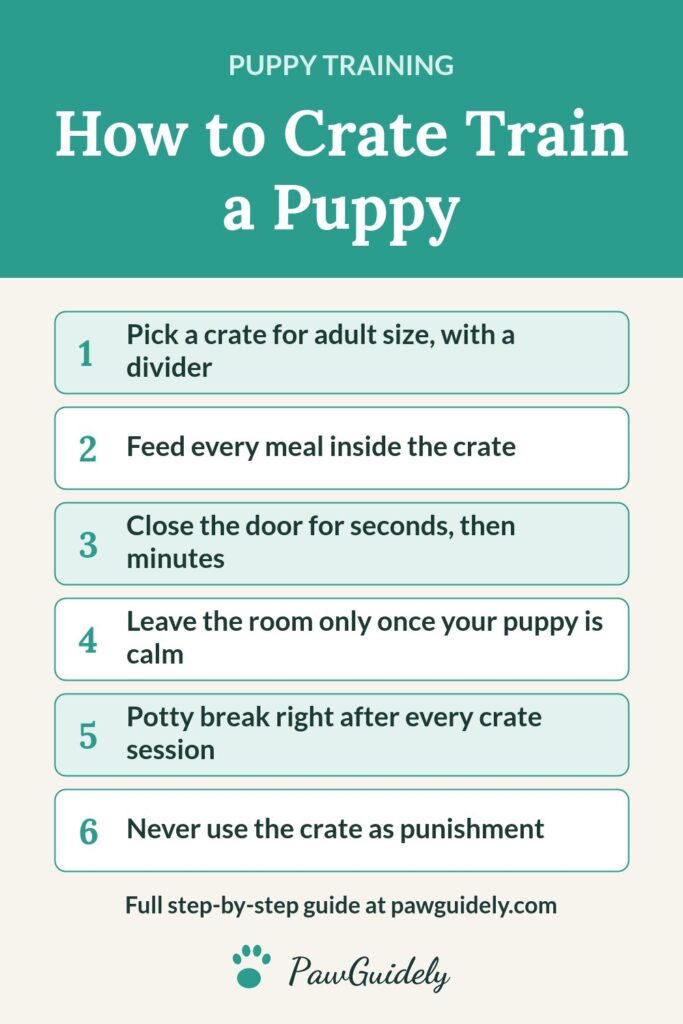
- Never use the crate as punishment.
- Don’t crate a puppy for longer than it can comfortably manage.
- Remove collars and harnesses that could catch on wire bars.
- Let your puppy out after exercise and play time, not just when it’s quiet.
Related Guides
- Crate Training Schedule by Age: A Puppy Plan From 8 Weeks to Adult
- How to Stop a Puppy Crying in the Crate (Night and Day)
- How Long Can a Dog Stay in a Crate? (By Age)
- 4 Best Dog Crates for Puppies (That Grow With Them)
- Dog Crate Sizes: Size Chart by Breed & Weight (Plus How to Measure)
- How to Crate Train an Adult Dog: A Calm, Step-by-Step Plan
- How to Potty Train a Puppy: A Simple Schedule That Works
Frequently Asked Questions
How long does it take to crate train a puppy?
Most puppies will go into a crate willingly within a few days and nap there with the door closed within a week or two. Staying relaxed alone while you leave the house often takes a few weeks of regular practice.
Should I let my puppy cry it out in the crate?
Not for long stretches. A young puppy crying at night may need the toilet, so take it out quietly. For protest crying during the day, wait for a short pause before opening the door and make the next session shorter.
What age should you start crate training a puppy?
You can start the day your puppy comes home, usually at around 8 weeks. Keep early sessions very short and pair them with frequent potty breaks.
Should I put a puppy pad in the crate?
It’s usually best not to. A pad teaches your puppy that it’s fine to go in the crate. Use washable bedding, keep sessions short, and take your puppy outside often instead.
Is it OK to put a blanket over a puppy’s crate?
Many puppies settle better with a partial cover, especially at night. Leave enough uncovered for airflow, keep the cover out of chewing reach, and stop if your puppy seems more anxious.
This is general training guidance. If your puppy panics in the crate, injures itself trying to escape, or has frequent accidents, talk to your vet or a qualified trainer.