
This post contains affiliate links. As an Amazon Associate I earn from qualifying purchases. This costs you nothing extra. See our affiliate disclosure for details.
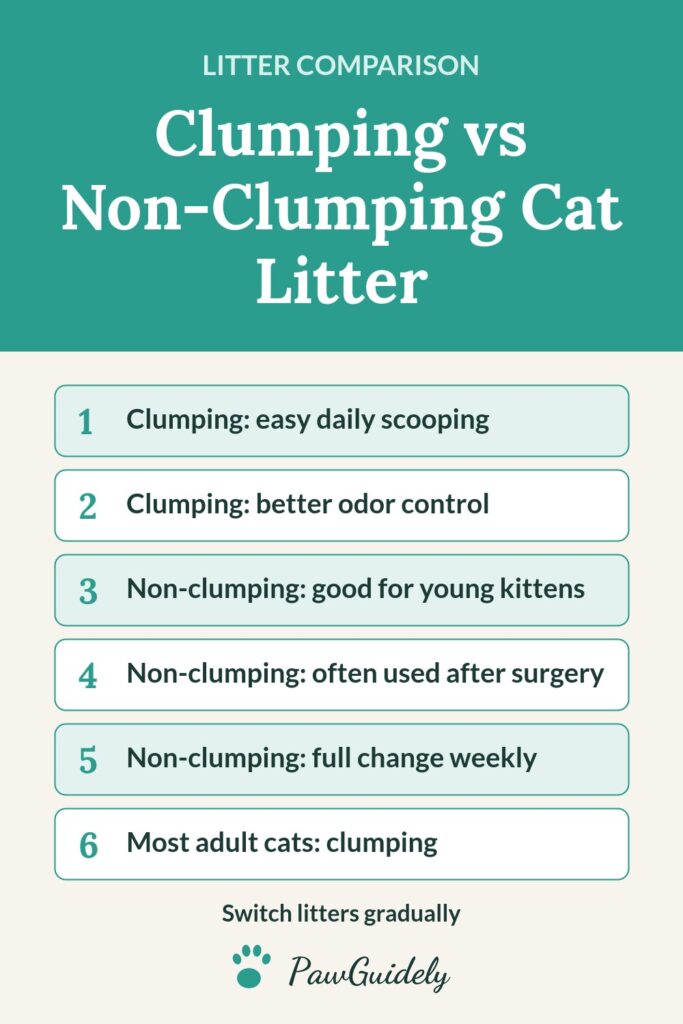
Walk down any litter aisle and you will see two main types: clumping litter, which forms solid lumps when wet so you can scoop out urine, and non-clumping litter, which absorbs urine into the granules or pellets. Both have their place. The clumping vs non-clumping cat litter question depends on your cat’s age, health and your cleaning routine.
Our Quick Picks
- Best Clumping LitterDr. Elsey's Ultra Unscented Clumping LitterCheck Price on Amazon
- Best Non-Clumping LitterPurina Yesterday's News Unscented Paper LitterCheck Price on Amazon
Short on time? These are our top choices. Full reviews and comparisons are below.
Clumping vs Non-Clumping Cat Litter at a Glance
| Feature | Clumping | Non-clumping |
|---|---|---|
| How it works | Forms scoopable clumps with urine | Absorbs urine into granules or pellets |
| Daily cleaning | Scoop clumps and solids | Scoop solids, stir, replace often |
| Full change | Every 2 to 4 weeks | About weekly, sometimes more |
| Odor control | Generally better | Good at first, fades as litter saturates |
| Common materials | Bentonite clay, corn, wheat, tofu | Paper, clay, pine, silica crystals |
| Tracking and dust | Varies, clay can be dusty | Pellets track less and are low dust |
| Best for | Most adult cats | Young kittens, cats after surgery, some special cases |
Pros and Cons of Clumping Litter
- Pros: easy to remove all urine each day, keeps the box fresher, uses litter efficiently, and many cats like the soft, sandy texture.
- Cons: clay versions are heavy and can be dusty, and very young kittens may eat it while exploring.
Pros and Cons of Non-Clumping Litter
- Pros: often low dust and low tracking (especially paper pellets), commonly recommended for young kittens and after surgery, and many options are made from recycled or plant material.
- Cons: urine stays in the box, so odor builds faster and you need full changes more often, and some cats dislike the pellet texture.
Our Picks
1. Dr. Elsey’s Ultra Unscented Clumping Litter — Best Clumping Litter
Firm, flat clumps, low dust for clay and no fragrance. A dependable choice for most adult cats and a favorite in multi-cat homes.
- Hard clumps that scoop cleanly
- Unscented
- Low dust for clay
Worth knowing: Heavy bags. Switch gradually if your cat is used to another litter.
2. Purina Yesterday’s News Unscented Paper Litter — Best Non-Clumping Litter
Paper pellets made from recycled paper, very low dust and low tracking. It is often used for kittens and for cats recovering from surgery, when vets may advise against fine clumping litter.
- Very low dust
- Low tracking pellets
- Unscented
Worth knowing: Change it fully and often, as odor builds once pellets are saturated.
When to Use Non-Clumping Litter
- Young kittens: some vets suggest non-clumping litter for kittens under about three to four months, who may eat litter.
- After surgery: vets often recommend paper pellets after procedures such as spaying or neutering, to keep fine particles out of wounds. Follow your vet’s instructions.
- Respiratory sensitivity: very low-dust pellets can suit cats or people sensitive to dust.
- Special monitoring: your vet may suggest a specific litter to check urine.
How to Switch Litter Types
- Mix a small amount of the new litter into the old.
- Increase the proportion over 7 to 10 days.
- Or offer a second box with the new litter next to the old one.
- Watch that your cat keeps using the box. If not, go slower.
The Bottom Line
For most adult cats, clumping litter is easier to keep clean and controls odor better. Non-clumping litter, especially paper pellets, is the better choice for young kittens, after surgery or for cats and people sensitive to dust. Your cat’s comfort is the final test.
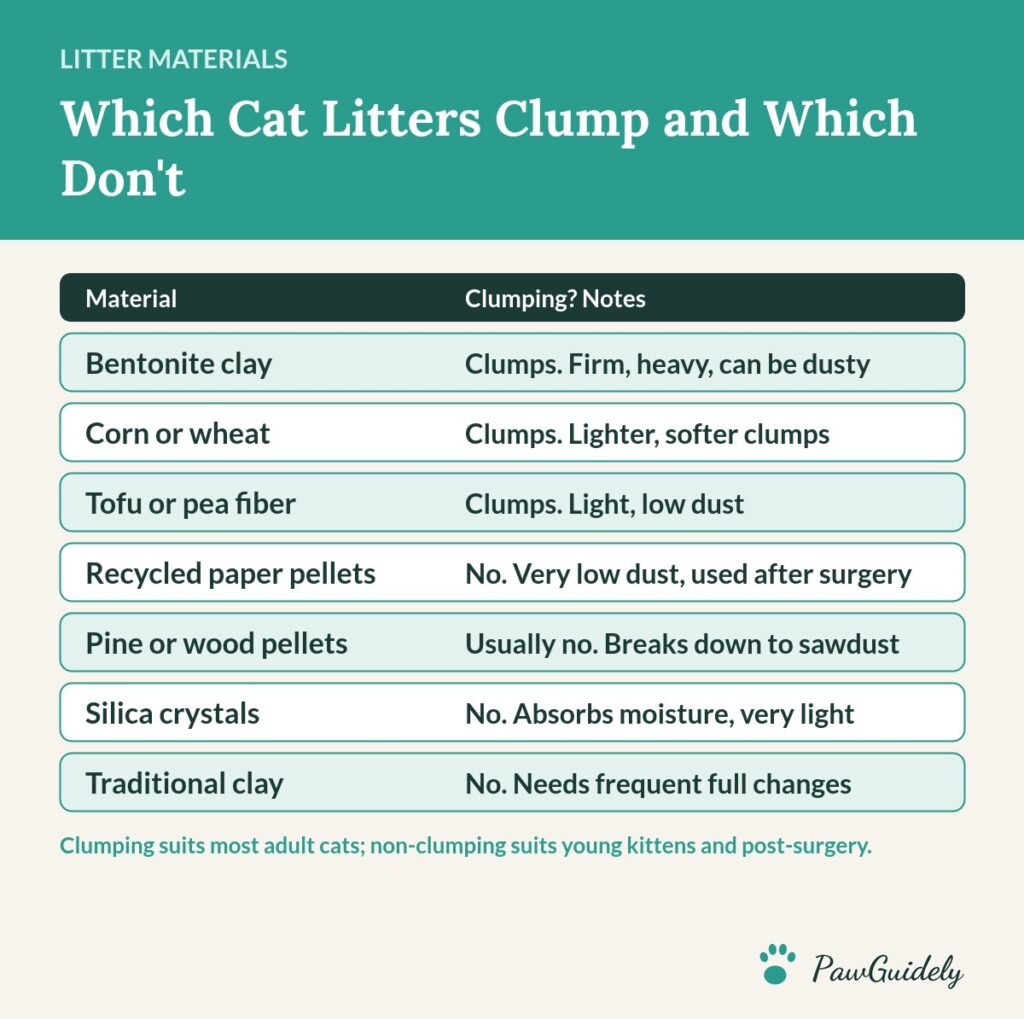
Litter Materials Explained
| Material | Clumping? | Notes |
|---|---|---|
| Bentonite clay | Yes | Firm clumps, heavy, can be dusty |
| Corn or wheat | Yes | Plant-based, lighter, softer clumps |
| Tofu or pea fiber | Yes | Light, low dust, some are flushable where allowed |
| Recycled paper pellets | No | Very low dust and tracking, common after surgery |
| Pine or wood pellets | Usually no | Natural scent, break down into sawdust |
| Silica crystals | No | Absorb urine and moisture, very light |
| Traditional clay | No | Cheap, needs frequent full changes |
Whatever material you choose, keep it unscented if your cat is picky, and keep the depth at about 2 to 3 inches.
Cost Over Time
Non-clumping litter often looks cheaper per bag, but because you replace all of it every week or so, you may use more over a month. Clumping litter costs more upfront, yet you only remove what is soiled and top up, so a bag often lasts longer. The best way to compare is to track how many weeks a bag lasts in your home.
Which Litter Do Cats Prefer?
Studies and shelter experience suggest many cats prefer fine, sandy, unscented litter, which is why unscented clumping clay is so popular. But every cat is an individual. If your cat is using the box happily, there is usually no need to change. If your cat starts avoiding the box, peeing next to it or perching on the edge, the litter may be part of the problem, alongside box size, cleanliness and location. Offering two boxes with different litters side by side is an easy way to let your cat choose. If box avoidance continues, check with your vet, as urinary problems can cause it.
Related Guides
- Best Cat Litter in 2026: 5 Picks and Every Litter Type Explained
- How to Clean a Litter Box: Daily, Weekly and Deep-Clean Routine
- Tidy Cats vs Fresh Step: Which Cat Litter Is Better?
- How to Litter Train a Kitten: Easy Steps for New Kitten Owners
- 5 Best Cat Litters for Kittens (Safe, Low-Dust and Easy to Learn)
Frequently Asked Questions
Is clumping or non-clumping litter better for odor?
Clumping litter usually controls odor better because you remove all urine each day.
Is clumping litter safe for kittens?
Many vets suggest non-clumping litter for very young kittens who may eat litter, then switching to clumping as they grow. Ask your vet.
How often should I change non-clumping litter?
Scoop solids daily and change the litter completely about once a week, or more with several cats.
Can I flush clumping litter?
Clumping clay litter should not be flushed. Some plant-based litters claim to be flushable, but check local rules first.
Why do vets recommend paper litter after surgery?
Paper pellets are low dust and less likely to stick in incisions. Follow your vet’s specific advice.