
If your dog is peeing in the crate, the most common reasons are that the crate is too big, your dog is left in it longer than it can hold its bladder, or house-training isn’t finished yet. Stress, old habits from a previous home and medical problems such as a urinary tract infection can also be behind it. Most dogs try hard not to soil where they sleep, so crate accidents are a useful signal that something needs to change. Below are the likely causes, how to tell them apart, and what to do about each.
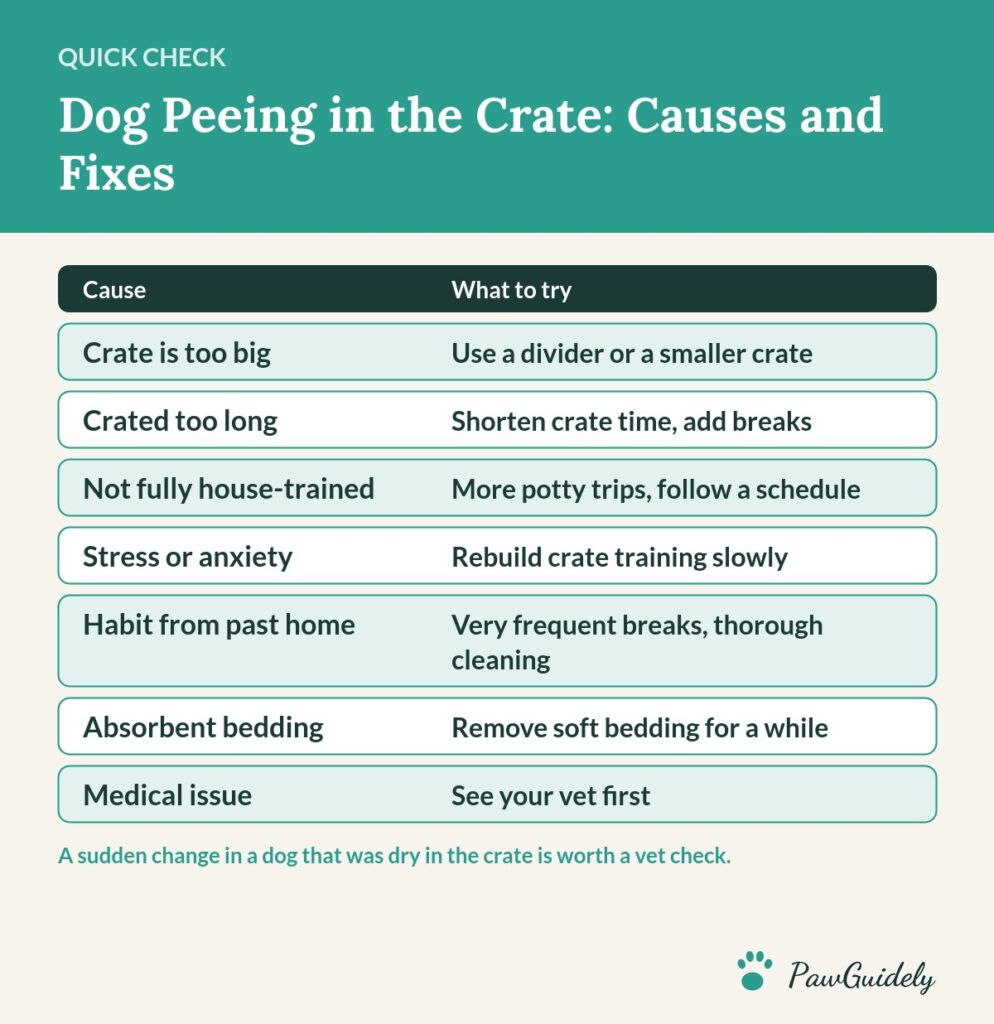
Quick Check: Common Causes at a Glance
Start by thinking about when the accidents happen, how long your dog was in the crate, and whether anything else has changed recently.
| Possible cause | Typical signs | What to try |
|---|---|---|
| Crate is too big | Pees in one end, sleeps in the other | Use a divider or a smaller crate |
| Crated too long | Accidents near the end of long sessions | Shorten crate time, add breaks |
| Too young or not fully trained | Puppy, accidents in the house too | More potty trips, follow a schedule |
| Stress or anxiety | Panting, drooling, chewing bars, crying | Rebuild crate training slowly, get help |
| Old habit from past home | Rescue or pet store dog, no fuss about mess | Very frequent breaks, clean thoroughly |
| Absorbent bedding | Pees on the towel or pad, then lies elsewhere | Remove soft bedding for a while |
| Medical issue | Sudden change, peeing often, straining, drinking more | See your vet first |
1. The Crate Is Too Big
A crate should give your dog enough room to stand, turn around and lie down comfortably. If there is much more space than that, many dogs will use one end as a toilet and sleep at the other. This is especially common with puppies in an adult-size crate.
Most wire crates come with a divider panel, so you can shrink the space and move it back as your puppy grows. Our dog crate size chart shows the right size by weight and height.
2. Your Dog Is in the Crate Too Long
Even a well-trained dog can only hold its bladder for so long. Puppies need far more frequent breaks than adults; a common rule of thumb is a puppy’s age in months plus one, in hours, as an upper limit. If accidents happen near the end of long sessions, the session is simply too long.
See our guide on how long a dog can stay in a crate for limits by age, and consider a midday walker or a visit from a neighbor on long days.
3. House-Training Isn’t Finished
Puppies don’t have full bladder control for several months. If your puppy also has accidents around the house, the crate accidents are part of the same picture. Go back to basics:
- Take your puppy out right after waking, eating, playing and every crate session.
- Go to the same outdoor spot and praise or reward the moment your puppy finishes.
- Lift water about an hour before bed during house-training.
- Set alarms for night potty trips with young puppies.
Our guide on how to potty train a puppy and our crate training schedule give a full daily plan.
4. Stress or Anxiety in the Crate
A dog that is frightened of being shut in may urinate from stress. Look for other signs: heavy panting, drooling, frantic scratching or chewing at the door, crying that doesn’t settle, or wet fur around the mouth and chest. These dogs need the crate reintroduced slowly, with short, positive sessions.
If your dog is an adult or rescue, our step-by-step plan for crate training an adult dog starts from the very beginning. Panic in the crate that doesn’t improve, or signs of separation anxiety, are worth discussing with your vet or a qualified trainer. Never punish a dog for a crate accident; it adds stress and usually makes the problem worse.
5. Habits From a Previous Home
Dogs that spent a long time confined in small spaces, such as some pet store, puppy mill or shelter dogs, may have had no choice but to soil where they lived. They can lose the natural instinct to keep their sleeping area clean. These dogs need patient retraining: very frequent potty breaks, short crate sessions, prompt cleaning of every accident, and lots of reward for going outside.
6. Bedding That Feels Like a Pee Pad
Thick towels, fleece and puppy pads can feel similar to grass or a training pad. Some dogs pee on the bedding, then push it to one side and lie on the tray. If this sounds familiar, remove soft bedding for a week or two, or swap to a flat, waterproof crate pad. Our picks for dog crate pads include washable and waterproof options. Avoid putting puppy pads in the crate, as they encourage the habit.
7. Medical Reasons to Rule Out
If your dog was reliably dry in the crate and has suddenly started having accidents, a health problem is a real possibility. Urinary tract infections, bladder stones, incontinence (more common in older dogs and some spayed females), diabetes, kidney problems and some medications can all cause more frequent or less controlled urination.
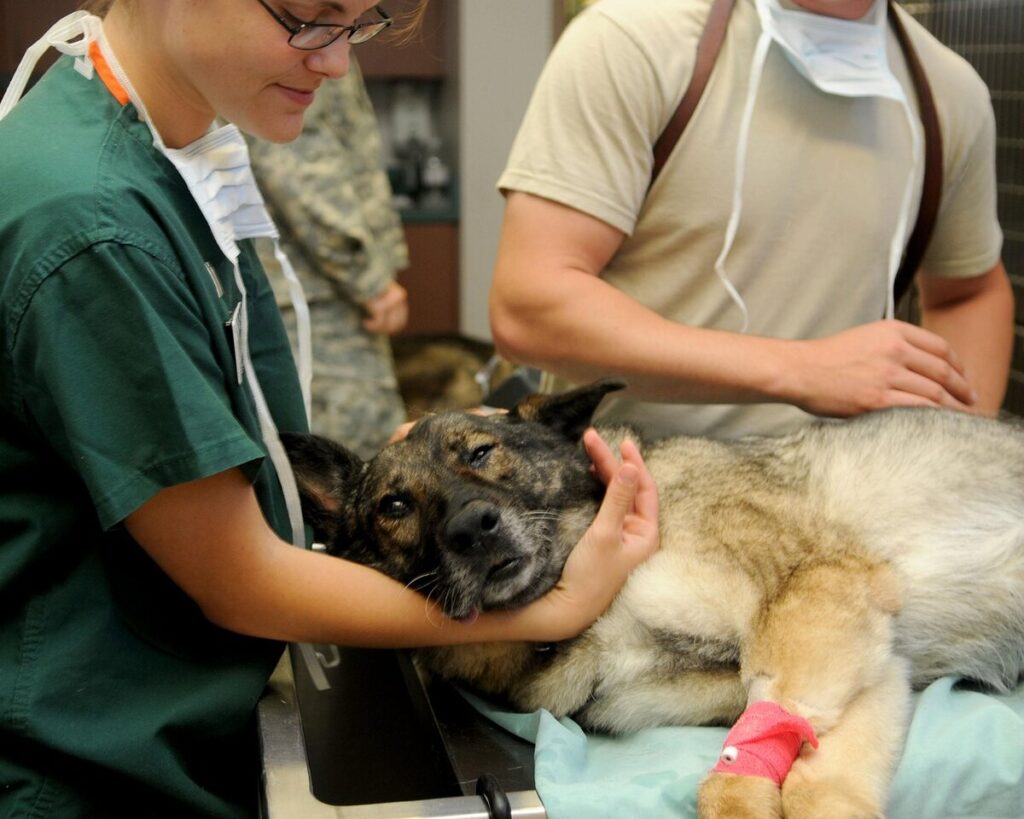
Book a vet visit if you notice any of these:
- A sudden change in a dog that was previously clean.
- Peeing small amounts often, or straining to pee.
- Blood in the urine or a strong, unusual smell.
- Drinking much more water than usual.
- Dribbling urine while asleep or lying down.
Your vet can check a urine sample and advise on treatment. Behavior work won’t fix a medical problem, so rule this out first.
How to Clean the Crate After an Accident
- Take your dog out of the crate and remove all bedding.
- Wash bedding on a hot cycle.
- Remove the tray and clean it with an enzyme cleaner made for pet urine. These break down the odor that can draw a dog back to the same spot.
- Wipe the bars or walls and the floor under the crate.
- Dry everything fully before putting your dog back in.
Avoid ammonia-based cleaners, since urine contains ammonia and the smell can encourage repeat marking.
Preventing Crate Accidents Going Forward
- Always offer a potty break right before and right after crate time.
- Keep crate sessions within what your dog can manage for its age.
- Match the crate size to your dog, using a divider for puppies.
- Make the crate a calm, positive space with chews and treats.
- Keep a simple log of accidents: time, how long in the crate, food and water. Patterns often appear within a few days.
Related Guides
- How to Potty Train a Puppy: A Simple Schedule That Works
- How Long Can a Dog Stay in a Crate? (By Age)
- Dog Crate Sizes: Size Chart by Breed & Weight (Plus How to Measure)
- Crate Training Schedule by Age: A Puppy Plan From 8 Weeks to Adult
- How to Crate Train an Adult Dog: A Calm, Step-by-Step Plan
- 5 Best Dog Crate Pads and Beds in 2026: Washable, Chew-Resistant and Orthopedic
- How to Stop a Puppy Crying in the Crate (Night and Day)
Frequently Asked Questions
Why is my puppy peeing in the crate all of a sudden?
The most common reasons are a crate that is too big, sessions longer than your puppy can hold it, or bedding it treats as a pee pad. A sudden change in a puppy that was dry can also signal a urinary infection, so check with your vet.
Should I punish my dog for peeing in the crate?
No. Punishment adds stress and can make accidents more likely. Clean up calmly, adjust crate size and timing, and reward your dog for going outside.
Should I take the bed out of the crate if my dog pees on it?
For a while, yes. Removing soft bedding, or switching to a flat waterproof pad, often stops dogs that treat towels and fleece like a toilet. Add comfort back once accidents stop.
Can a UTI cause a dog to pee in its crate?
Yes. A urinary tract infection can make a dog need to go more often and more urgently. If you see frequent peeing, straining or blood, take your dog to the vet.
How do I get the urine smell out of a dog crate?
Remove and wash all bedding, then clean the tray and bars with an enzyme cleaner made for pet urine. Avoid ammonia-based products and let everything dry before reuse.
This article is general information, not veterinary advice. If your dog’s urination habits change suddenly, ask your vet.