
This post contains affiliate links. As an Amazon Associate I earn from qualifying purchases. This costs you nothing extra. See our affiliate disclosure for details.
Crate training is not just for puppies, and learning how to crate train an adult dog is easier than many owners expect. Rescue dogs, dogs moving into a new home, and adults who need a safe space during travel, vet recovery or visitors can all learn to relax in a crate. The difference is that an adult dog arrives with history: some have never seen a crate, and others remember being shut in one for too long. That is why the plan below moves in small steps and lets your dog set the pace.
Expect the process to take anywhere from two to six weeks. A confident dog may be happily napping in the crate in a few days, while a nervous rescue may need longer. Both are normal.
Why Crate Train an Adult Dog?
| Situation | How a crate helps |
|---|---|
| New rescue or rehome | Gives a quiet den while the dog learns the household |
| House training setbacks | Most dogs avoid soiling where they sleep |
| Travel and car trips | A familiar, secure space in hotels or the car |
| Vet recovery or rest orders | Limits jumping and running after procedures |
| Visitors, deliveries, builders | A safe retreat away from doors and noise |
| Destructive chewing while alone | Protects the dog and the furniture while you build trust |
A crate should never be a place a dog spends most of the day. Think of it as a bedroom with a door, not a storage box. Adult dogs should not be crated for longer than they can comfortably hold their bladder, and most need a break at least every four hours during the day.
Choosing the Right Crate for an Adult Dog
The crate should be tall enough for your dog to stand without ducking, long enough to lie flat on their side, and wide enough to turn around. Measure your dog from nose to base of tail and add 2 to 4 inches, and from the floor to the top of the head while standing and add the same. Our dog crate size chart lists typical sizes by breed and weight.
- Wire crates are airy, fold flat and let the dog see out. A cover makes them feel more den-like.
- Plastic kennels feel enclosed, which some anxious dogs prefer, and they work for travel.
- Soft crates are light and portable but are only for dogs who are already calm in a crate. They are easy to chew or push through.
- Heavy-duty crates are for dogs with a history of escaping. Talk to a trainer or vet first if your dog is injuring themselves trying to get out.
How to Crate Train an Adult Dog in 8 Steps
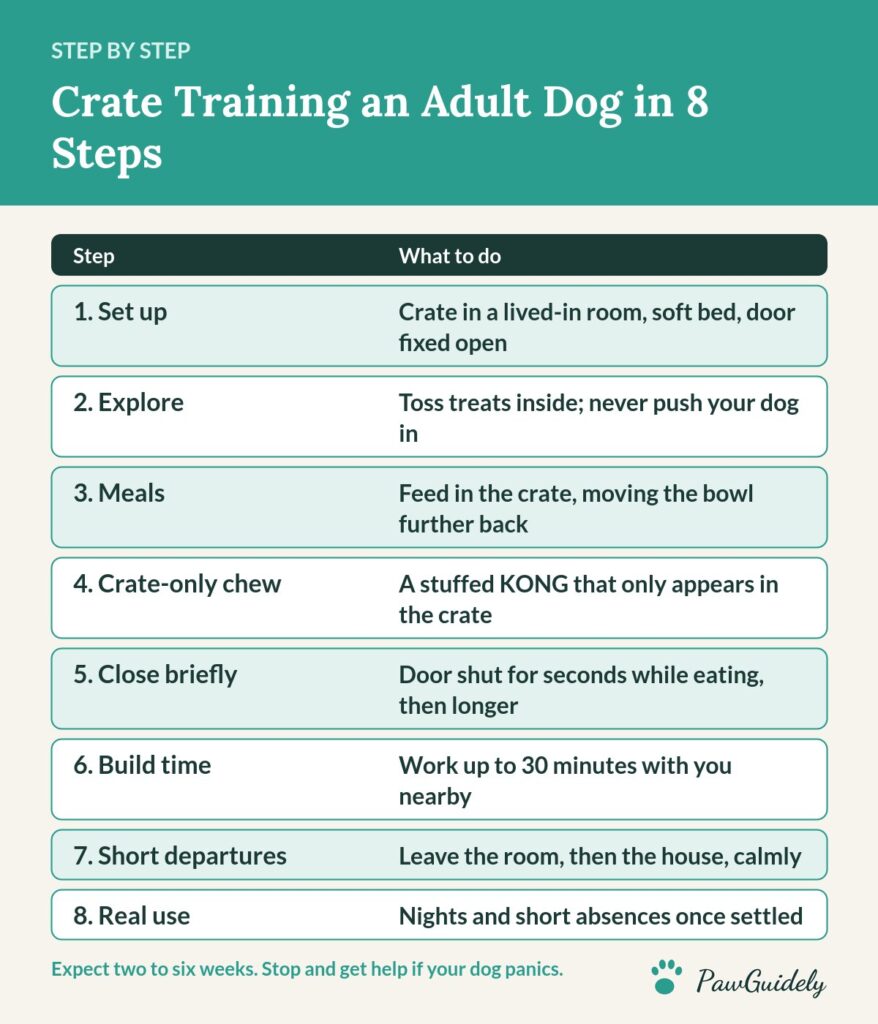
- Set the crate up in a lived-in room. The living room or bedroom works better than a garage or laundry room. Your dog should be able to see and hear you. Put in a soft bed or crate pad and leave the door fixed open so it cannot swing shut and startle them.
- Let your dog explore on their own. Toss a few treats just inside the door, then further back. Do not push or lure them all the way in. Praise any interest. Repeat several times a day for a few days.
- Feed meals in or near the crate. Start with the bowl just inside, then move it to the back over several meals. Eating in the crate is one of the fastest ways to build a positive association.
- Add a special crate-only chew. A stuffed KONG or long-lasting chew that only appears in the crate gives your dog something to look forward to.
- Close the door for a few seconds while they eat. Open it before they finish. Slowly increase to a few minutes, staying in the room. If your dog whines, wait for a moment of quiet before opening.
- Build duration with you nearby. Once your dog is relaxed for 10 minutes with the door closed, sit nearby and read or watch TV. Work up to 30 minutes over several sessions.
- Practice short departures. Leave the room for 30 seconds, then a minute, then five. Come back calmly and without fuss. Then practice leaving the house for 5 to 10 minutes.
- Use the crate at night and for short absences. Only when your dog is settled with short absences should you crate them while you run errands. Keep early absences under an hour.
Before every crate session, give your dog a potty break and some exercise. A dog who has had a walk and a sniff is far more likely to settle than one with pent-up energy.
Common Mistakes to Avoid
- Moving too fast. Shutting the door on day one can create a fear that takes weeks to undo.
- Using the crate as punishment. The crate must always be a good place.
- Letting the dog out while they bark or whine. This teaches that noise opens the door. Wait for a pause, unless you think they need the toilet.
- Crating for too long. Long hours in a crate lead to frustration and accidents. Use a dog walker, daycare or a pen for longer days.
- Leaving a collar or harness on. Tags and straps can catch on wire. Remove them for crate time.
- Making departures and returns dramatic. Keep it calm and boring.
When to Get Help
Some adult dogs are not just unsure of the crate, they are truly panicked. Signs include drooling, heavy panting, bent bars, bloody paws or teeth, or frantic attempts to escape even with you in the room. That can point to separation anxiety or confinement anxiety, and more crate time can make it worse. Stop crate training, keep your dog safe in a dog-proofed room or pen, and talk to your vet or a certified trainer or behaviorist. They can build a plan with you, and your vet can check for anything medical.
Gear That Helps
You do not need much, but the right basics make the process smoother.
1. MidWest LifeStages Double Door Crate — Best Wire Crate
A sturdy wire crate with two doors, a divider panel and a removable tray. The second door makes it easy to fit in a room and lets you open the side your dog prefers.
- Two doors for flexible placement
- Divider panel included
- Folds flat for storage
Worth knowing: Check the size carefully. It comes in several lengths, and the 36-inch model suits many medium dogs.
2. MidWest Homes for Pets Crate Cover — Makes It Cozy
A fitted fabric cover that turns a wire crate into a darker, quieter den. Many dogs settle faster when they cannot see every movement in the room.
- Roll-up side panels
- Machine washable
Worth knowing: Buy the size that matches your crate. Remove it if your dog tries to pull it through the bars.
3. KONG Extreme — Crate-Only Chew
Stuffed with food or treats and frozen, a KONG keeps many dogs busy for 20 minutes or more, which is perfect for the first closed-door sessions.
- Tough rubber for strong chewers
- Dishwasher safe
Worth knowing: Choose a size that is too big to swallow and supervise the first few sessions.
The Bottom Line
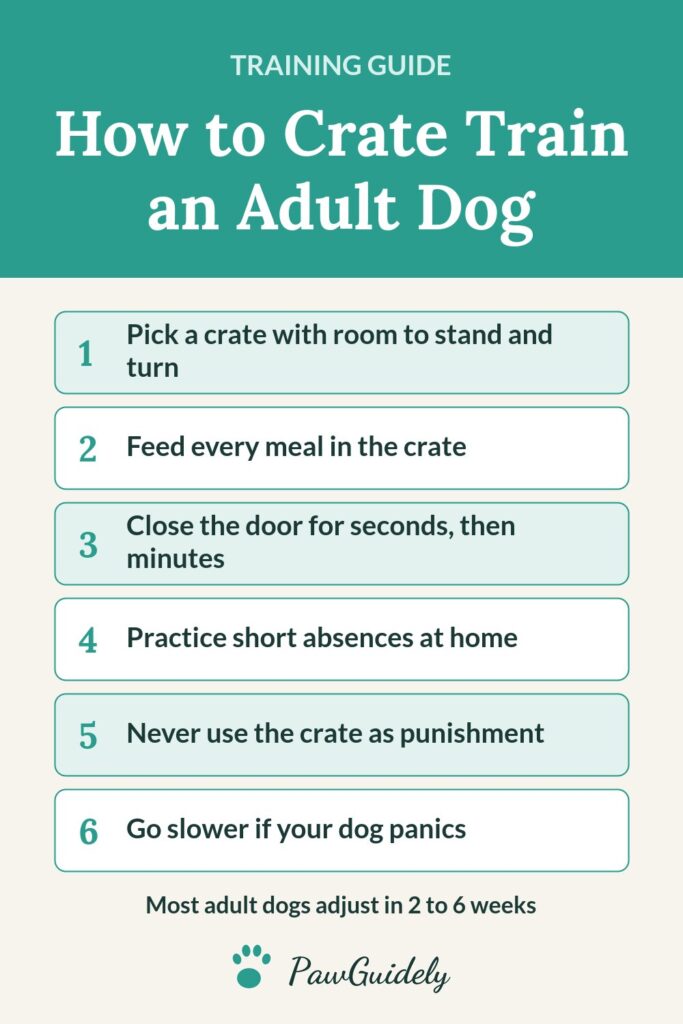
Crate training an adult dog is about patience and small wins. Make the crate a comfortable, rewarding place, add the door and your absences gradually, and stop to get help if your dog panics. Done slowly, most adult dogs come to see the crate as their own quiet room.
Related Guides
- Dog Crate Size Chart by Breed & Weight (Plus How to Measure)
- Crate Training Schedule by Age: A Puppy Plan From 8 Weeks to Adult
- How to Stop a Puppy Crying in the Crate (Night and Day)
- 4 Best Dog Crate Covers for a Calmer, Den-Like Crate
- How Long Can a Dog Stay in a Crate? (By Age)
- Where to Put a Dog Crate in Your Home
- Crate Training a Puppy at Night: A Calm Routine
- Dog Crate vs Playpen: Which Do You Need?
- 12 Crate Training Mistakes to Avoid (and What to Do Instead)
- My Dog Hates the Crate: What to Do
- How to Help a Dog With Separation Anxiety: A Gentle, Step-by-Step Approach
Frequently Asked Questions
Can you crate train an older dog?
Yes. Dogs of any age can learn to relax in a crate. Older or rescue dogs may need a slower pace, and senior dogs may need more frequent potty breaks and a thicker, supportive bed.
How long does it take to crate train an adult dog?
Most adult dogs take two to six weeks. Confident dogs can be comfortable within days, while nervous rescues may need longer. Let your dog’s body language set the pace.
Should I cover my adult dog’s crate?
Many dogs settle better with a cover because it reduces what they can see. Leave the front or one side open for airflow, and remove the cover if your dog tries to chew it.
How long can an adult dog stay in a crate?
As a general guide, no more than about four hours at a time during the day, plus overnight sleep. Every dog is different, so talk to your vet about your dog’s needs.
What if my adult dog cries in the crate at night?
Make sure they have been out to the toilet and exercised, keep the crate near your bed at first, and wait for a quiet moment before letting them out. If crying turns into panic, stop and speak to a trainer or vet.