
Crate training works best when the crate time matches what your puppy can physically handle. A young puppy simply can’t hold its bladder for long, and asking for more than that is how accidents, whining and crate aversion start. Below is a crate training schedule by age, a sample day for a new 8-week-old puppy, and a step-by-step plan to make the crate somewhere your dog chooses to go.
How Long Can a Puppy Stay in a Crate?
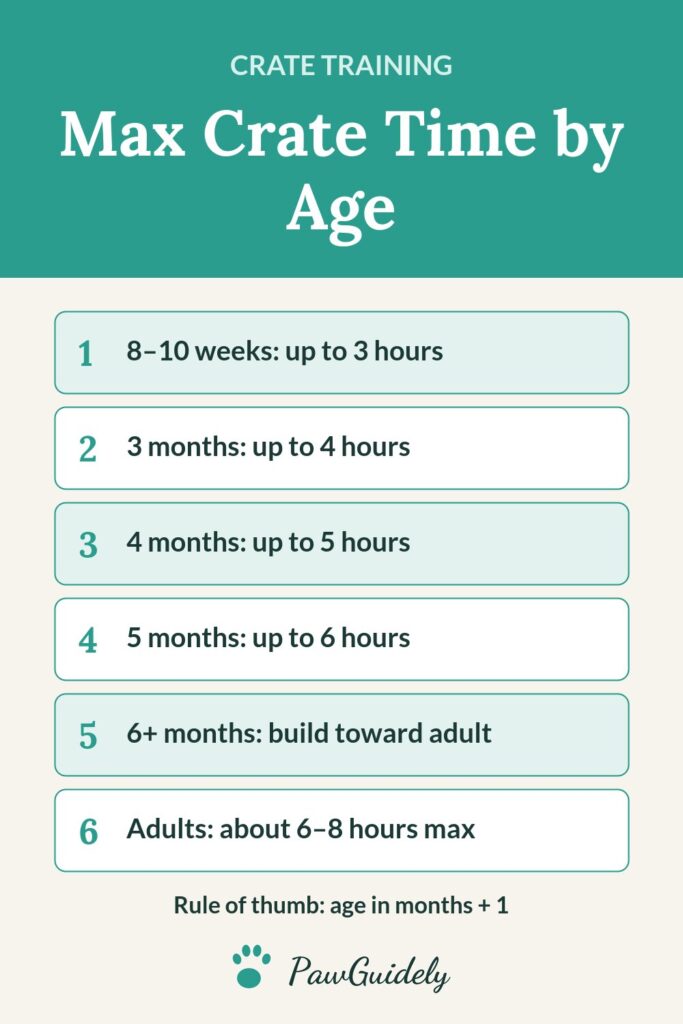
A widely used rule of thumb, recommended by the Animal Humane Society among others, is your puppy’s age in months plus one equals the maximum number of hours it can stay crated during the day. A 3-month-old puppy, for example, can handle about 4 hours.
| Puppy Age | Max Daytime Crate Time | Potty Breaks at Night |
|---|---|---|
| 8–10 weeks | Up to 3 hours (often less) | Every 2–3 hours |
| 3 months | Up to 4 hours | Every 3–4 hours |
| 4 months | Up to 5 hours | Once, sometimes none |
| 5 months | Up to 6 hours | Usually sleeps through |
| 6 months and older | Build gradually toward adult limits | Sleeps through |
| Adult dog | About 6–8 hours max | Sleeps through |
These are upper limits, not targets. Shorter stretches with lots of breaks, play and time out of the crate make training faster. Every dog is different, so ask your vet if you’re unsure what’s right for your puppy.
Sample Crate Training Schedule for an 8-Week-Old Puppy
Here’s what a realistic weekday can look like for a brand-new puppy. Adjust times to your routine and keep the pattern consistent: sleep, potty, play, eat, potty, nap.
| Time | What Happens |
|---|---|
| 7:00 am | Out of the crate and straight outside to potty |
| 7:15 am | Breakfast, then potty again |
| 7:30–8:30 am | Play and short training session |
| 8:30 am | Potty, then nap in the crate |
| 10:30 am | Potty, play, short walk around the yard |
| 12:00 pm | Lunch, potty, then crate nap |
| 2:00 pm | Potty and play |
| 3:30 pm | Crate nap with a chew toy |
| 5:30 pm | Dinner, potty, family time |
| 8:00 pm | Quiet time, last water well before bed |
| 10:00 pm | Final potty, then bedtime in the crate |
| 1:00 am & 4:00 am | Quick, calm potty trips, straight back to the crate |
Keep night potty breaks boring: no play, dim lights, few words. You want your puppy to learn that nighttime is for sleeping.
How to Crate Train a Puppy in 6 Steps
- Pick the right size. Your puppy should be able to stand, turn around and lie flat, but no more. Use a divider in an adult-size crate so it grows with them. Our dog crate size chart shows which size to buy.
- Put the crate where you are. A living room or kitchen works better than a spare room. Add a soft blanket and leave the door open.
- Make it rewarding. Drop treats near the door, then just inside, then at the back. Let your puppy go in and out freely.
- Feed meals in the crate. Move the bowl gradually to the back, then close the door while your puppy eats and open it right after.
- Build time slowly. Add a few minutes at a time after meals. Once your puppy is settled for about 30 minutes, start leaving the room, then the house, for short periods.
- Add a cue word. Say something like “crate” or “bed”, toss a treat inside, and praise when your puppy goes in.
Crate Training Mistakes to Avoid
- Using the crate as punishment. The crate should always mean good things.
- Letting your puppy out while it whines. Wait for a few seconds of quiet, otherwise whining becomes the way out. The exception is a genuine potty need, so take them out calmly and bring them straight back.
- Rushing. Most puppies take days to weeks to feel settled. Going too fast is the most common reason crate training stalls.
- Crating too long. Stick to the age limits above. If you work long days, arrange a midday break with a walker, neighbor or family member.
What You Need for Crate Training
The essentials are a correctly sized crate with a divider, a washable bed or blanket, and a safe chew toy. If you haven’t chosen a crate yet, our guide to the best dog crates compares wire, plastic, soft-sided and modular styles.
Related Guides
- 5 Best Dog Crates in 2026: Wire, Plastic, Soft-Sided, and Modular Picks Compared
- Dog Crate Size Chart by Breed & Weight (Plus How to Measure)
- 5 Best Dog Crate Pads and Beds in 2026: Washable, Chew-Resistant and Orthopedic
- 4 Best Slow Feeder Dog Bowls in 2026 for Dogs That Eat Too Fast
Frequently Asked Questions
How long does crate training take?
Many puppies are comfortable in a crate within a few days to a couple of weeks, but it depends on the dog. Adult dogs and rescues with no crate history may take longer. Go at your dog’s pace.
Should I crate my puppy at night?
Yes, for most puppies a crate at night helps with house-training and keeps them safe. Put the crate near your bed for the first weeks so your puppy feels secure and you hear when it needs to go out.
Should I cover my dog’s crate?
Many dogs settle better with a light cover over the top and sides, which makes it feel more den-like. Leave the front open for airflow and remove the cover if your dog tries to pull it in and chew it.
Can I crate my dog while I work?
Adult dogs can handle up to about 6–8 hours, but young puppies can’t. Plan for a midday break until your puppy is old enough to follow the adult guideline.