
This post contains affiliate links. As an Amazon Associate, PawGuidely earns from qualifying purchases at no extra cost to you. See our affiliate disclosure for details.
Cats groom themselves, but during shedding season they swallow a lot of loose hair, which can lead to hairballs, and long-haired cats can develop painful mats. Regular brushing removes that loose fur before it ends up in your cat’s stomach or on your sofa. The best cat brushes for shedding are gentle on sensitive skin, match your cat’s coat length and are easy to clean. Below we compare three well-known brushes on Amazon and share tips for brushing cats that dislike grooming.
Our Quick Picks
- Best OverallHertzko Self-Cleaning Slicker BrushCheck Price on Amazon
- Best for Long HairFURminator Undercoat deShedding Tool, Long Hair CatsCheck Price on Amazon
- Best for Short HairFURminator Undercoat deShedding Tool, Short Hair CatsCheck Price on Amazon
Short on time? These are our top choices. Full reviews and comparisons are below.
Best Cat Brushes for Shedding Compared
| Brush | Type | Coat | Best For |
|---|---|---|---|
| Hertzko Self-Cleaning Slicker Brush | Slicker with retractable pins | All coats | Best overall, everyday brushing |
| FURminator Long Hair Cat deShedding Tool | Undercoat deshedding edge | Long hair | Heavy shedding in long coats |
| FURminator Short Hair Cat deShedding Tool | Undercoat deshedding edge | Short hair | Heavy shedding in short coats |
1. Hertzko Self-Cleaning Slicker Brush — Best Overall
A slicker brush is the everyday workhorse for most cats. Hertzko’s fine bent wire pins remove loose hair and light tangles, and the pins retract at the push of a button so the hair slides off in one piece. It works on both long and short coats and is gentle enough for regular use when used with light pressure.
- Removes loose hair and small tangles
- Push-button self-cleaning
- Works on long and short coats
- Comfortable grip
Worth knowing: Use light pressure; slicker pins can irritate skin if pressed too hard.
2. FURminator Undercoat deShedding Tool, Long Hair Cats — Best for Long Hair
The FURminator’s fine stainless edge reaches through the topcoat to remove loose undercoat, which is where most shedding comes from in long-haired cats such as Maine Coons and Persians. Used gently once or twice a week, it can noticeably reduce hair around the home. This version is sized for medium to large long-haired cats.
- Removes loose undercoat efficiently
- Designed for long coats
- Button to release collected hair
- Sized for medium to large cats
Worth knowing: Do not overuse it or use it on mats or broken skin; limit sessions to a few minutes.
3. FURminator Undercoat deShedding Tool, Short Hair Cats — Best for Short Hair
Short-haired cats shed plenty too. This FURminator has a shorter edge designed for short coats, removing loose undercoat without pulling on the topcoat. It is a good weekly tool during spring and autumn shedding seasons.
- Edge sized for short coats
- Cuts down shedding around the home
- Easy hair release
- Durable build
Worth knowing: Gentle strokes only; stop if your cat’s skin looks pink or irritated.
How We Chose These Brushes
We focused on brushes from established brands that suit cats’ thinner skin, compared how well each removes loose hair, how easy it is to clean, and whether it suits long or short coats. We do not list prices because they change; use the buttons for current prices. For dogs, see our dog brushes and deshedding tools guides.
Which Brush for Which Coat?
| Coat Type | Everyday Brush | Shedding Season | How Often |
|---|---|---|---|
| Long hair (Maine Coon, Persian, Ragdoll) | Slicker brush and a wide-tooth comb | Long-hair deshedding tool | Daily or every other day |
| Medium hair | Slicker brush | Deshedding tool as needed | 2-3 times a week |
| Short hair (Domestic Shorthair, British Shorthair) | Slicker or rubber brush | Short-hair deshedding tool | 1-2 times a week |
How to Brush a Cat That Hates Grooming
- Start tiny: brush for 30 seconds on a spot your cat enjoys, like the cheeks or back, then stop.
- Pair with treats: offer a lickable treat or favorite snack while brushing.
- Pick a calm moment, such as after a meal when your cat is relaxed.
- Go with the fur, using light strokes, and avoid the belly and legs at first.
- End before your cat gets annoyed, watching for tail flicks or skin twitching.
- Build up gradually over days and weeks.
Mats, Hairballs and When to Get Help
Never cut out mats with scissors, as it is easy to cut the skin. Small tangles can be worked loose with your fingers and a comb; large or tight mats are best handled by a professional groomer or your vet. If your cat has frequent hairballs, is suddenly shedding much more, has bald patches or stops grooming themselves, ask your vet, as these can signal health issues.
Care and Cleaning
Remove hair after every session. Wash brushes in warm, soapy water every week or two and dry them fully to prevent rust. Keep a lint roller and a good vacuum on hand for the rest; see our vacuums for pet hair guide.
Our Verdict
The Hertzko Self-Cleaning Slicker Brush is the best cat brush for most cats and everyday brushing. Add a FURminator deShedding Tool matched to your cat’s coat length for heavy shedding seasons, used gently once or twice a week.
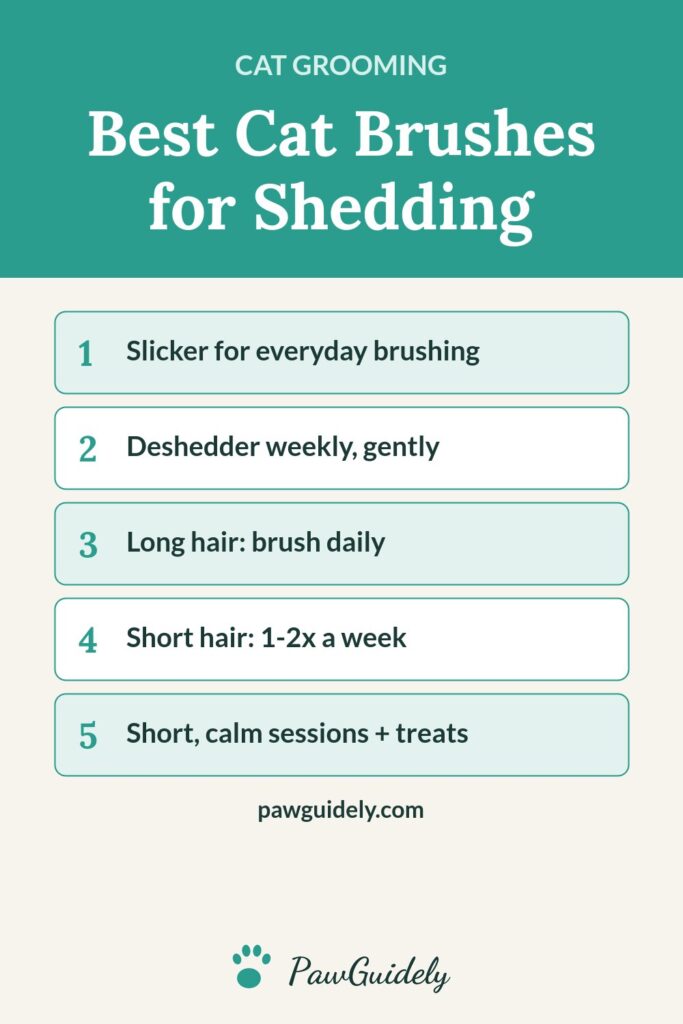
Types of Cat Brushes Explained
- Slicker brush: fine bent wires that lift loose hair and small tangles; the best all-round choice.
- Deshedding tool: a fine metal edge that pulls out loose undercoat; use sparingly during heavy shedding.
- Wide-tooth comb: essential for long-haired cats to check for and gently separate tangles.
- Rubber brush or grooming glove: soft nubs that many short-haired cats enjoy, and a good starter for nervous cats.
- Bristle brush: smooths the coat and spreads natural oils after the loose hair is removed.
Most cats only need one or two of these. Start with a slicker brush, add a comb for long coats, and keep a deshedding tool for spring and autumn when shedding peaks.
Related Guides
- 5 Best Vacuums for Pet Hair: Uprights and Handhelds
- 4 Best Dog Brushes in 2026: Which Brush for Which Coat?
- 6 Best Deshedding Tools for Dogs in 2026, Matched to Coat Type
- New Cat Checklist: 20 Essentials to Buy Before You Bring Your Cat Home
Frequently Asked Questions
How often should I brush my cat?
Long-haired cats benefit from daily or every-other-day brushing. Short-haired cats usually need brushing once or twice a week, more during shedding season.
Is a deshedding tool safe for cats?
Yes, when used gently for a few minutes once or twice a week. Avoid mats, broken skin and heavy pressure.
Does brushing reduce hairballs?
Regular brushing removes loose hair your cat would otherwise swallow while grooming, which can help reduce hairballs.
What brush is best for a long-haired cat?
A slicker brush for everyday care, a wide-tooth comb for tangles, and a long-hair deshedding tool during shedding season.
My cat hates being brushed. What can I do?
Keep sessions very short, use treats, brush the spots your cat enjoys first and build up slowly over time.