
If your dog hates the crate, the fix is usually to slow down and rebuild the crate as a good place, not to push harder. Most crate hatred comes from a rushed introduction, too many long stretches inside, or a setup that is uncomfortable. Start by ruling out simple problems like size and location, then work through short, rewarding sessions until your dog walks in on their own.
This guide explains why dogs come to dislike the crate, how to tell normal protest from real panic, and a step-by-step reset plan you can start today. It works for puppies and adult dogs, though older dogs with a long history of crate stress usually need more time.
Why Some Dogs Hate the Crate
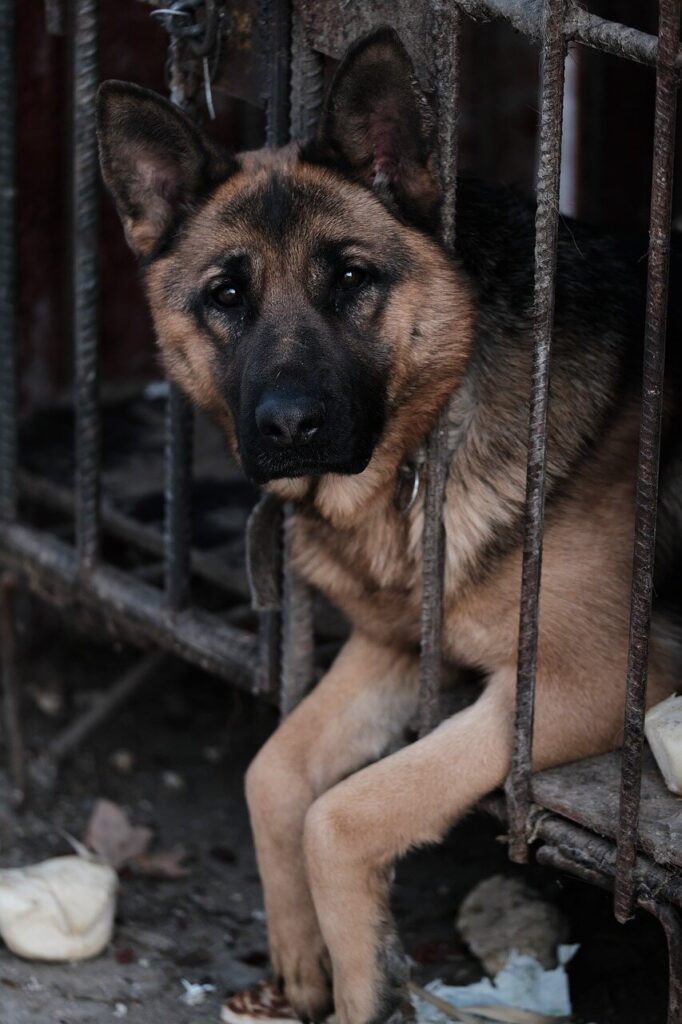
Dogs are not born hating crates. Something about how the crate was introduced or used has taught your dog that it predicts something unpleasant. Common reasons include:
- Too much, too fast: going straight from no crate to a full night or workday with the door shut.
- Long stays: regularly being crated for longer than your dog can comfortably manage. See our guide to how long a dog can stay in a crate.
- Crate as punishment: being sent to the crate after being told off makes it feel like a penalty box.
- Wrong size or setup: too small to turn around, too hot, next to a loud appliance, or in an isolated room.
- Pent-up energy: going in before a walk or play session, with no outlet for that energy.
- Only used when you leave: if the crate always means being alone, your dog learns to dread it.
- A history you don’t know: rescued and rehomed dogs may have had bad experiences in kennels or shelters.
Protest or Panic? Read the Signs
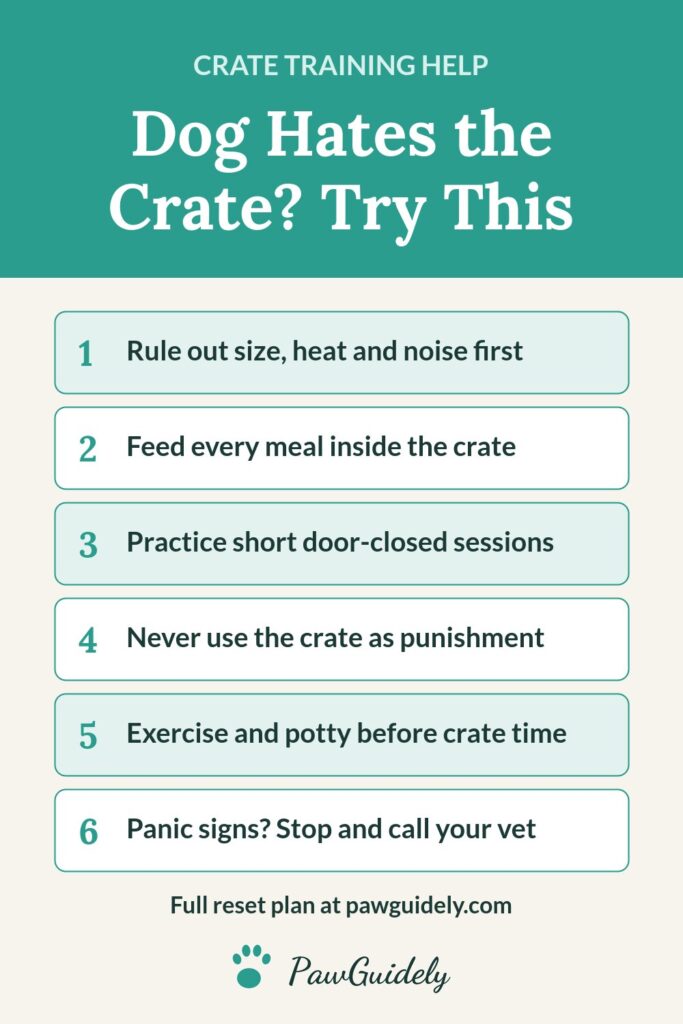
Before you start, work out how strong the reaction is. Mild protest can be trained through with patience. Panic is different, and pushing a panicking dog to stay in the crate can make things much worse.
| What you see | What it likely means | What to do |
|---|---|---|
| Whines for a few minutes, then settles | Mild protest, still learning | Keep sessions short and calm, don’t open the door mid-whine |
| Refuses to walk in, freezes at the door | Negative association with the crate | Go back to door-open treat games |
| Chews bedding or the tray | Boredom or frustration | More exercise first, add a safe chew |
| Barks non-stop for long periods | Frustration or rising distress | Shorten sessions, check exercise and potty timing |
| Soils the crate when normally house-trained | Stress or crated too long | Cut crate time, review the schedule |
| Heavy drooling, panting, bent bars, injured paws or mouth | Panic, possible separation-related distress | Stop crating and talk to your vet |
If you see the panic signs in the last row, use a safer alternative for now (more on that below) and speak with your vet. A dog that injures itself trying to escape needs a professional plan, not more crate time.
Rule Out the Simple Fixes First
Sometimes a dog hates the crate because the crate itself is the problem. Check these before you start retraining:
- Size: your dog should be able to stand without ducking, turn around and lie flat on their side. Our dog crate size chart shows how to measure.
- Location: a quiet corner of a room where the family spends time usually works better than a garage, basement or laundry room.
- Temperature: keep the crate away from radiators, heat vents, drafty doors and direct sun.
- Comfort: add a washable pad sized to the floor. Our crate pads guide covers chew-resistant options.
- Cover: many dogs settle faster when the crate feels like a den. See our crate covers guide.
- Crate type: some dogs dislike the rattle of a wire crate and relax in a quieter plastic one. Our wire vs plastic crate comparison explains the trade-offs.
How to Reset Crate Training: Step by Step
Think of this as starting crate training again from zero. Move to the next step only when your dog is relaxed at the current one. Some dogs move through it in a week; others need several weeks.
- Fix the setup. Make the changes from the checklist above so the crate is comfortable and in a good spot.
- Door-open treat games. Prop the door open so it cannot swing shut. Toss a treat just inside, then a little further in. Let your dog walk in and straight back out. Praise calmly every time.
- Feed meals in the crate. Put the food bowl just inside the door at first, then gradually move it to the back. Leave the door open.
- Close the door briefly. Once your dog eats happily at the back of the crate, close the door while they eat and open it again as soon as they finish, before any whining starts.
- Build duration with you nearby. Give a long-lasting chew or a stuffed food toy and sit next to the crate. Add a minute or two at a time. Open the door while your dog is calm, not while they are protesting.
- Step out of sight. Walk out of the room for a few seconds, then come back calmly. Slowly stretch these absences, mixing short and longer ones so leaving is not a big event.
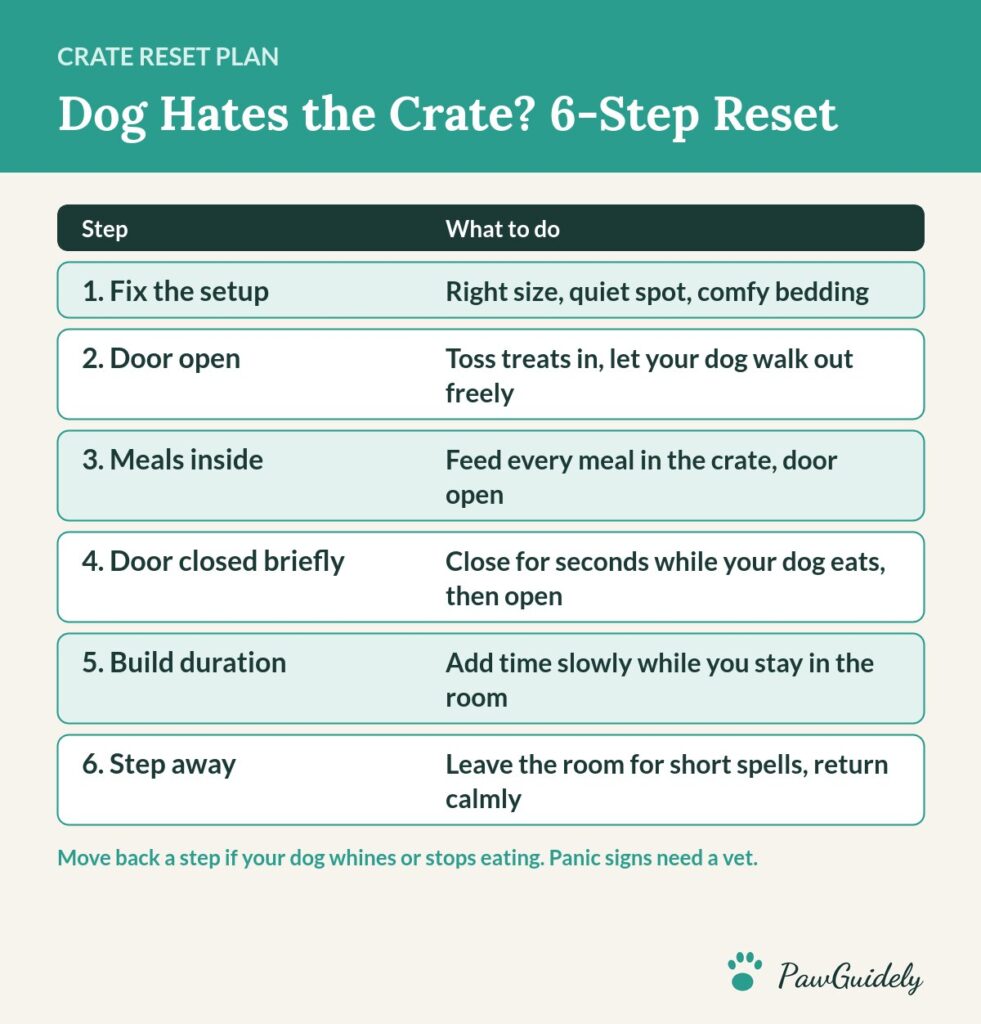
If your dog starts whining or stops eating at any step, you moved too fast. Go back to the last step where they were relaxed and repeat it for a few more days. For a fuller plan aimed at older dogs, see how to crate train an adult dog, and for young puppies, our crate training schedule by age.
Make the Crate Worth Going Into
The goal is for the crate to predict good things. A few habits make a big difference:
- Crate-only treats: save a favourite stuffed food toy or chew for crate time only, and pick it up when your dog comes out.
- Random rewards: drop a treat in the crate when your dog isn’t looking, so they find surprises there.
- A cue word: say a cheerful word like “bed” as you toss the treat in, so going in becomes a simple trained behaviour.
- Door open at home: leave the door open when you are home so your dog can choose to nap there.
- Calm exits: let your dog out quietly, without a big greeting, so getting out is not the highlight of the day.
What Not to Do
- Don’t drag, push or lift a reluctant dog into the crate.
- Don’t use the crate as a time-out after scolding.
- Don’t let your dog out while they are barking or scratching at the door, if you can avoid it. Wait for a few seconds of quiet first.
- Don’t crate your dog for long stretches while you are still retraining.
- Don’t leave collars with tags or harnesses on in the crate, as they can catch on wire.
- Don’t use bark collars or punishment to stop crate noise. They add stress and can make crate hatred worse.
Safer Alternatives While You Retrain
While you work through the reset plan, you still need somewhere safe for your dog when you can’t supervise. Options include a gated, dog-proofed room such as a kitchen, or an exercise pen with a bed, water and toys. Our best dog playpens guide covers sturdy options. For long workdays, a dog walker, a trusted neighbour or daycare can break up the time so the crate is only used for short, positive sessions.
Before crate time, give your dog a proper walk, a sniff session or a play session, plus a potty break. A tired dog settles much more easily than one with energy to burn. Food puzzles also help; see our best dog puzzle toys.
When to Get Professional Help
Some dogs who hate the crate are really struggling with being left alone. Signs that point beyond the crate include distress in any room when you leave, destruction near doors and windows, howling that starts as soon as you go, and house-soiling only when alone. If you see these, or your dog has hurt themselves trying to escape, talk to your vet first. They can check for medical causes and refer you to a qualified behaviour professional, such as a veterinary behaviourist or a certified trainer experienced with separation problems.
Related Guides
- How to Crate Train an Adult Dog: A Calm, Step-by-Step Plan
- Crate Training Schedule by Age: A Puppy Plan From 8 Weeks to Adult
- How to Stop a Puppy Crying in the Crate (Night and Day)
- How Long Can a Dog Stay in a Crate? (By Age)
- Wire vs Plastic Dog Crate: Which Is Better for Your Dog?
- 4 Best Escape-Proof Dog Crates for Strong Dogs and Escape Artists
Frequently Asked Questions
Why does my dog suddenly hate the crate?
A sudden change usually has a trigger: a scary noise near the crate, a few very long stays, being crated as punishment, or discomfort such as heat or pain. Check the setup, cut crate time back and restart with short positive sessions. If the change comes with other new behaviour, ask your vet to rule out a medical cause.
Should I ignore my dog crying in the crate?
For mild whining that stops within a few minutes, wait for a short quiet moment before letting your dog out. For non-stop crying, drooling or frantic escape attempts, don’t ignore it. That is distress, so stop and use an easier step or a different setup.
How long does it take to get a dog to like the crate?
It depends on the dog and their history. Some dogs relax in about a week of daily practice, while dogs with a strong negative association can take several weeks. Short, frequent sessions work better than long ones.
Is it cruel to crate a dog that hates it?
Forcing a frightened dog to stay in a crate is stressful and can make things worse. Use a gated room or pen while you retrain, and only crate for short, positive sessions until your dog is comfortable.
Can I stop using the crate altogether?
Yes, many adult dogs never need one if they are house-trained and safe loose at home or in a dog-proofed room. A crate is still useful for vet visits, travel and recovery from surgery, so gentle training is worth keeping up.
This guide offers general training information. If your dog shows signs of panic, injury or separation distress, please speak with your veterinarian or a qualified behaviour professional.