
This post contains affiliate links. As an Amazon Associate I earn from qualifying purchases. This costs you nothing extra. See our affiliate disclosure for details.
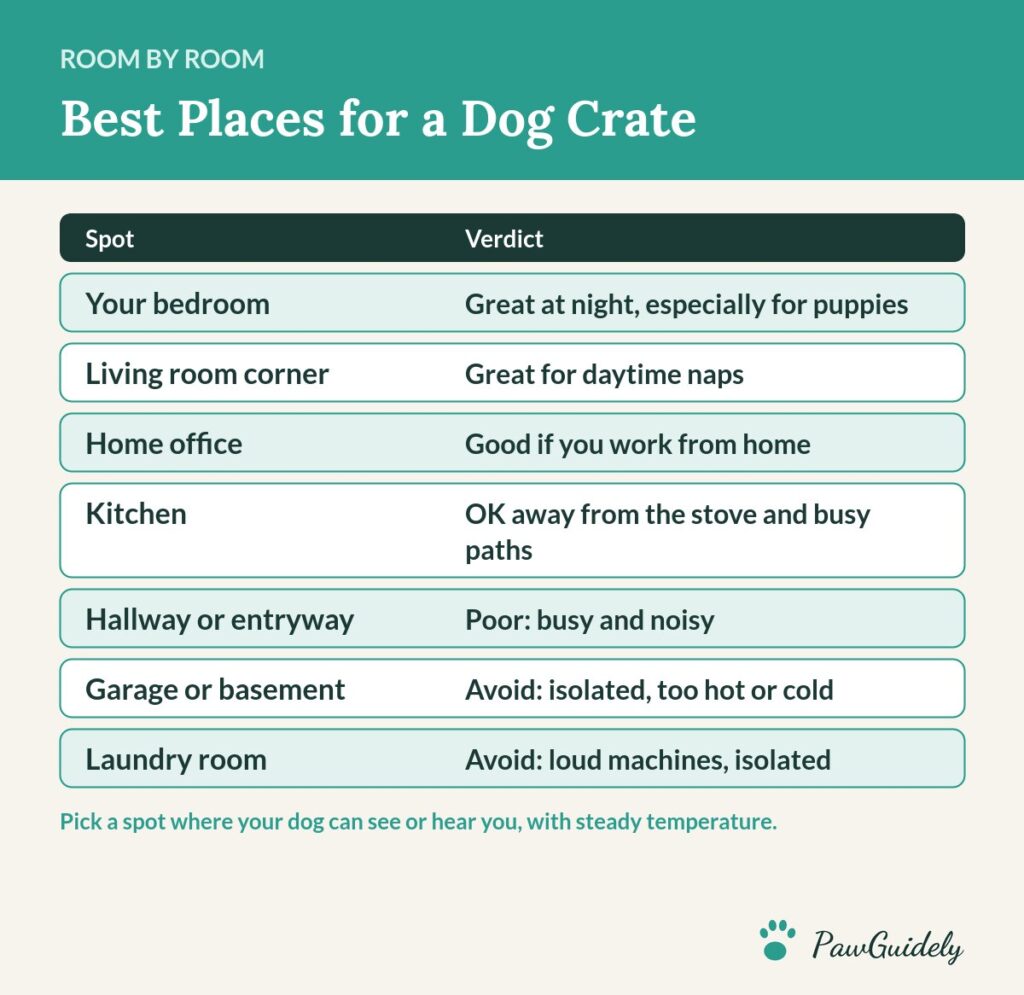
The best place to put a dog crate is in a quiet corner of a room where your family actually spends time, such as the living room during the day and your bedroom at night. Dogs are social, and a crate tucked away in a garage or laundry room feels like being sent away. Where you put a dog crate also matters for comfort: it should be away from heaters, air vents, drafts and direct sun.
Below you will find a room-by-room guide, the spots to avoid, and how to handle day and night placement without buying two of everything.
What Makes a Good Crate Spot
Whatever room you choose, look for a spot that ticks most of these boxes:
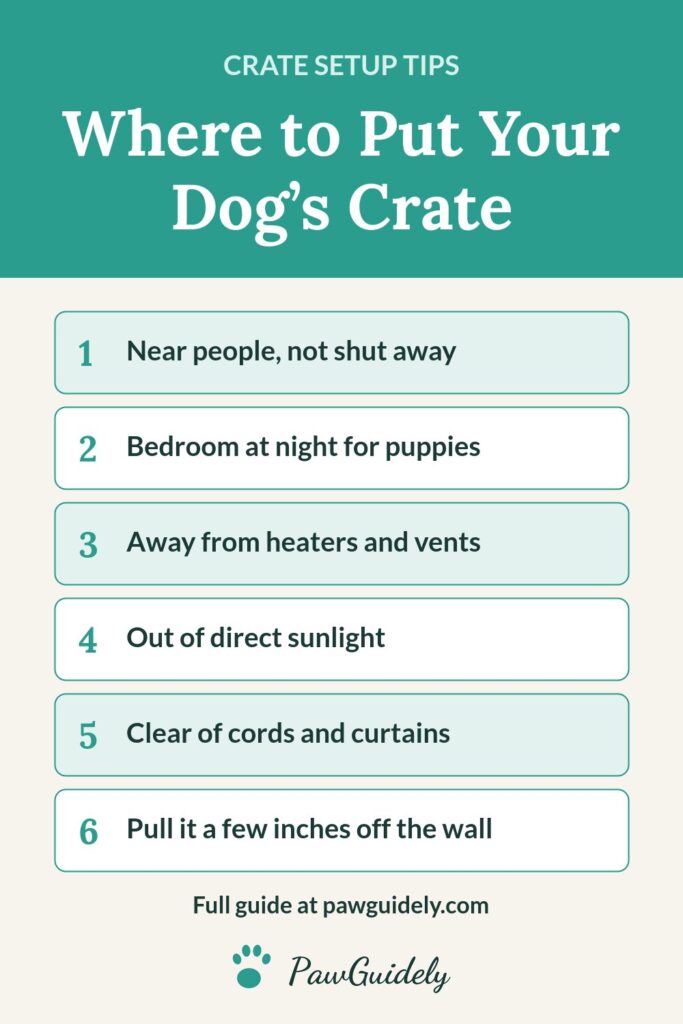
- Close to people. Your dog should be able to see or hear you. Isolation is one of the most common reasons dogs cry in the crate.
- Out of the main walkway. A corner or a spot along a wall is better than the middle of a busy path to the back door.
- Steady temperature. Away from radiators, fireplaces, heating and cooling vents, and drafty doors.
- Out of direct sun. A crate in a sunny window can get hot quickly, especially with a cover on.
- Safe surroundings. No electrical cords, curtain or blind cords, houseplants or shelves within reach of the bars.
- Room to breathe. Leave a few inches between the crate and the wall so air can move and your dog cannot pull things in.
Best and Worst Rooms for a Dog Crate
| Room | Good for | Watch out for |
|---|---|---|
| Bedroom | Night sleep, new puppies | Your own sleep if your dog is restless |
| Living room | Daytime naps, family time | Foot traffic, TV noise, sunny windows |
| Home office | Workdays at home | Cords and chargers near the crate |
| Kitchen | Easy-clean floors | Cooking heat, dropped food, busy paths |
| Hallway or entryway | Rarely a good choice | Doorbells, deliveries, constant traffic |
| Garage or basement | Not recommended | Isolation, temperature swings, fumes |
| Laundry room | Not recommended | Loud machines, isolation, chemicals |
Bedroom or Living Room? Day vs Night Placement
Many owners end up using two locations, and that is fine. During the day, the living room or home office keeps your dog near the action without being in the way. At night, the bedroom lets your dog sleep near you, which is especially helpful for puppies and newly adopted dogs.
You have three ways to handle this:
- Move one crate. Folding wire crates and lighter plastic kennels can be carried from room to room. This works if the move is quick and part of the evening routine.
- Use two crates. A main crate in the living room and a second, simpler one in the bedroom saves carrying anything. A plastic kennel or a smaller wire crate is often enough for the bedroom.
- Pick one spot for both. If your bedroom is next to the living area, or you live in a small apartment, a single well-chosen spot can work day and night.
Whichever you choose, keep the setup the same in each place: the same bed or pad, a familiar blanket and the same bedtime routine.
Where to Put a Puppy’s Crate
For the first few weeks, put your puppy’s crate right beside your bed at night. Being able to smell and hear you is very reassuring, and you will also hear when your puppy wakes and needs a potty break. Young puppies usually cannot make it through the night without one. Our crate training schedule by age shows roughly how often puppies need to go out.
Once your puppy sleeps through the night calmly, you can move the crate gradually if you want it elsewhere. Move it a few feet every few nights rather than all at once. If crying starts again, go back a step. The guide on how to stop a puppy crying in the crate covers the first nights in more detail.
Where to Put an Adult or Rescue Dog’s Crate
Adult dogs usually do best in a lived-in room too. A rescue dog that is new to your home may feel safer in a quieter corner where they can watch the room without being in the middle of it. Avoid placing the crate where people constantly step over or around it.
If your dog barks at the window, the front door or passing cars, place the crate so it faces away from those triggers, or cover the side that faces them. Our guide on how to crate train an adult dog explains how to introduce the crate in a new spot step by step.
Spots to Avoid
- Next to a heater, fireplace or radiator. Your dog cannot move away from the heat inside a crate.
- Under an air conditioning or heating vent. Constant airflow can make the crate too cold or too warm.
- In front of a sunny window. Sun moves through the day, and a crate that is shaded in the morning may be in full sun by afternoon.
- By the front door. Deliveries, doorbells and visitors make it hard for a dog to rest.
- In a garage, shed or basement. These spaces are isolated and can get very hot or cold. Garages also hold fumes and chemicals.
- Within reach of cords or plants. Dogs can pull cords, curtains or leaves through the bars and chew them.
Small Apartments and Multi-Dog Homes
In a studio or one-bedroom apartment, a corner of the main room is usually the best and only choice. A crate with a cover or a furniture-style crate can double as a side table and look less like gear in the middle of your home. Measure the space before buying, and check our dog crate size chart so the crate fits both your dog and the room.
If you have more than one dog, give each dog their own crate. Many dogs like to see each other, so placing crates side by side often works well. If one dog guards food or toys, leave a little space between them and give chews only when each dog is in their own crate.
Gear That Helps
1. MidWest LifeStages Double Door Crate — Best for Tight Corners
A sturdy wire crate with two doors, a divider panel and a removable tray. The second door gives you more choice about where the crate can sit, and it folds flat if you want to move it between rooms.
- Two doors for flexible placement
- Divider panel included
- Folds flat for moving or storage
Worth knowing: It comes in several lengths. Measure your dog and your space before choosing.
2. MidWest Quiet Time Defender Crate Cover — Best for Busy Rooms
If the best spot in your home is also a busy one, a fitted cover blocks the view of foot traffic and windows. The door and side panels roll up so you can choose which sides stay open.
- Roll-up panels to control the view and airflow
- Made to fit MidWest wire crates
- Machine washable
Worth knowing: Keep at least one side open, and remove it if your dog chews fabric.
3. K&H Self-Warming Crate Pad — Best for Cold Floors
If the only good spot has a tile or hard floor, this thin pad reflects your dog’s body heat back to them without any electricity. It has a non-slip bottom and is machine washable.
- No cords to chew
- Non-slip bottom
- Machine washable
Worth knowing: It is thin, so larger or senior dogs may want a thicker bed too.
Related Guides
- Dog Crate Sizes: Size Chart by Breed & Weight
- 5 Best Dog Crates: Wire, Plastic, Soft-Sided, and Modular Picks Compared
- Crate Training Schedule by Age: A Puppy Plan From 8 Weeks to Adult
- How to Crate Train an Adult Dog: A Calm, Step-by-Step Plan
- 4 Best Dog Crate Covers for a Calmer, Den-Like Crate
- Wire vs Plastic Dog Crate: Which Is Better for Your Dog?
- My Dog Hates the Crate: What to Do
Frequently Asked Questions
Should a dog crate be in the bedroom?
For puppies and new dogs, yes, at least at first. Sleeping near you helps them settle and lets you hear when they need a potty break. Adult dogs that sleep well elsewhere can stay where they are.
Is it OK to put a dog crate in the living room?
Yes. A quiet corner of the living room is one of the best daytime spots, as long as it is out of the main walkway and away from heaters, vents and sunny windows.
Can I put my dog’s crate in the garage?
It is not recommended. Garages are isolated, often too hot or cold, and can hold fumes and chemicals. Keep the crate inside the living space.
Is it bad to move a dog crate from room to room?
No. Many owners move a crate between the living room by day and the bedroom at night. Keep the routine and bedding the same and most dogs adjust quickly.
Should the crate face the wall or the room?
Most dogs prefer to see the room, with the back of the crate against a wall. If your dog reacts to something in view, turn the crate or cover that side.
If your dog panics or injures themselves in the crate in any location, stop and speak to your vet or a certified trainer.