
This post contains affiliate links. As an Amazon Associate I earn from qualifying purchases. This costs you nothing extra. See our affiliate disclosure for details.
To find your dog’s coat size, measure three things: back length from the base of the neck to the base of the tail, chest girth around the widest part of the ribcage, and neck circumference. Then match those numbers to the brand’s size chart, giving chest girth the most weight because it decides whether the coat closes comfortably. This dog coat size chart shows typical back lengths for each size and common breeds, how to measure step by step, and how to tell when a coat fits.
Dog Coat Size Chart
Coat brands do not share one standard. Some size mainly by back length, others by chest girth, and the same letter can mean very different things between brands. Use this chart to get in the right range, then check the specific coat’s chart.
| Coat Size | Typical Back Length | Typical Chest Girth | Example Dogs |
|---|---|---|---|
| XS | 8–10″ | 12–16″ | Chihuahua, Toy Poodle |
| S | 10–14″ | 15–20″ | Yorkie, Shih Tzu, Miniature Dachshund |
| M | 14–18″ | 20–26″ | Beagle, French Bulldog, Cocker Spaniel |
| L | 18–22″ | 26–32″ | Border Collie, Australian Shepherd |
| XL | 22–26″ | 30–38″ | Labrador, Golden Retriever, Boxer |
| XXL | 26″+ | 36″+ | German Shepherd, Bernese, Great Dane |
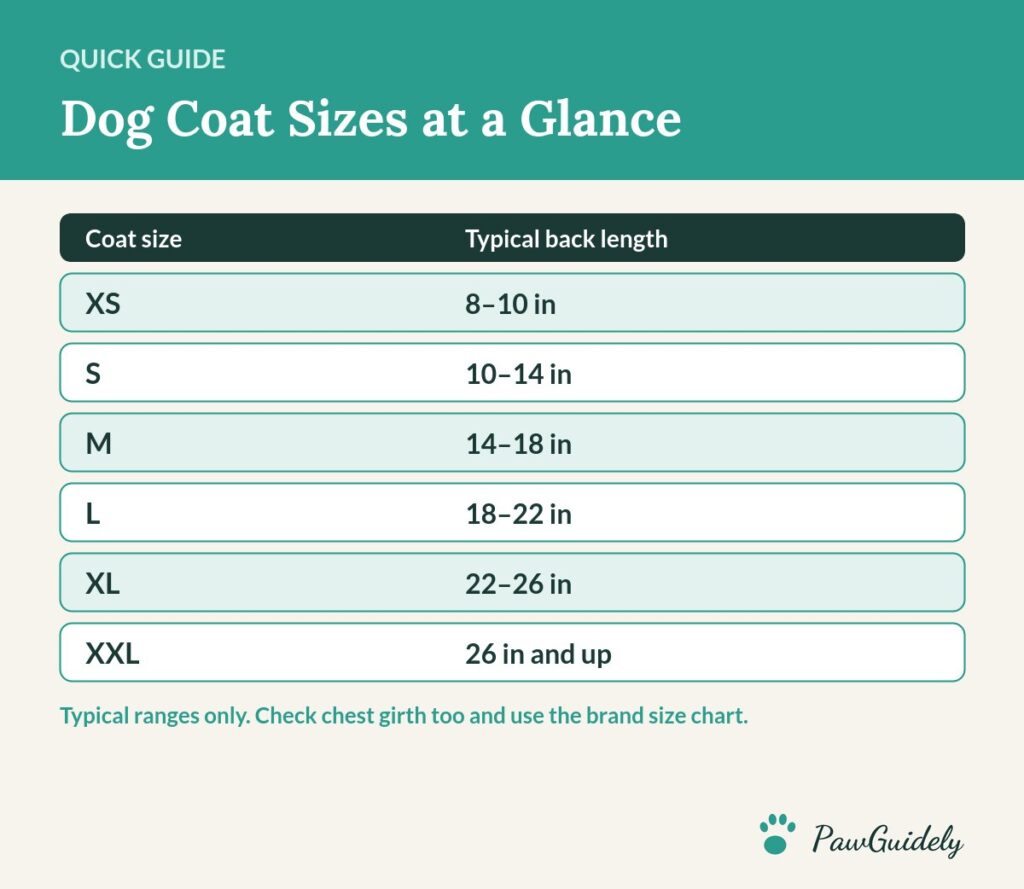
Body shape is why breed examples only go so far. A French Bulldog and a Beagle can have similar back lengths, but the Frenchie’s much deeper chest often needs a bigger size. Dachshunds are the opposite: long backs with narrow chests, which is why some brands make breed-specific cuts.
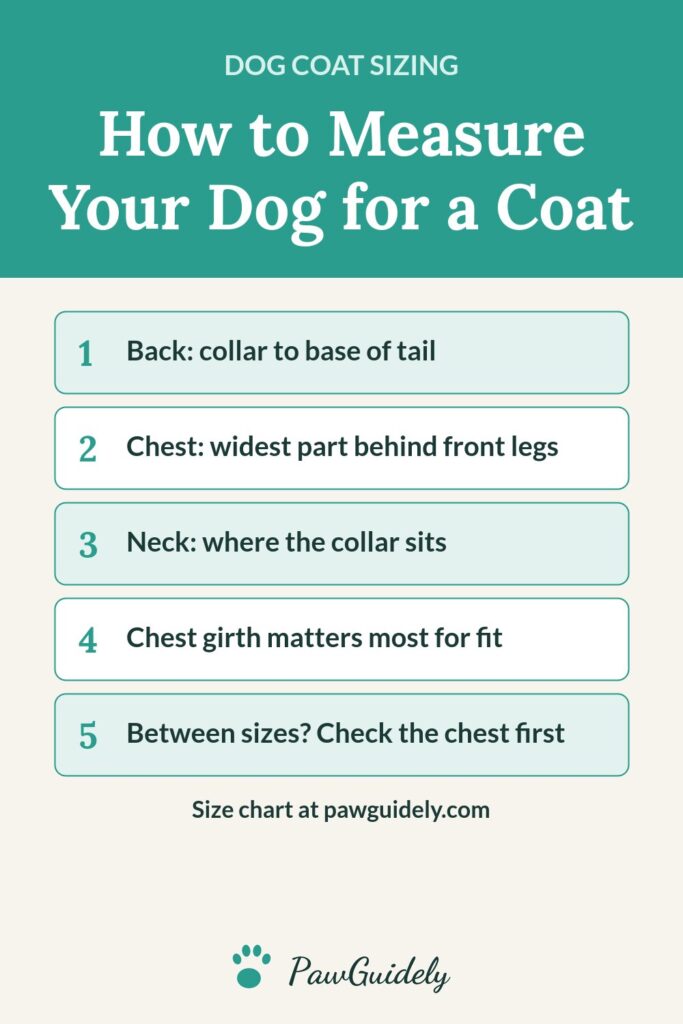
How to Measure Your Dog for a Coat
Use a soft tape measure and have your dog standing square on all four legs. Measuring while your dog sits or lies down gives misleading numbers.
- Back length: measure along the spine from the base of the neck, where the collar sits, to the base of the tail. Don’t include the tail.
- Chest girth: wrap the tape around the widest part of the chest, usually just behind the front legs. Keep it snug but not tight.
- Neck: measure around the neck where a collar would sit. Add an inch or so if the coat has a fitted collar or high neck.
- Write all three down and compare them with the brand chart. If they point to different sizes, use the chest girth to decide.
- Weigh your dog if the brand lists weight ranges, but treat weight as a tiebreaker only.
Fluffy dogs measure bigger than smooth-coated dogs of the same frame. Measure through the fur without compressing it too much, because the coat has to sit over that fur.
Coat Size by Breed
These typical back lengths are a rough starting point. Measure your own dog before ordering, especially for mixed breeds.
| Breed | Typical Back Length | Fit Notes |
|---|---|---|
| Chihuahua, Yorkshire Terrier | 8–12″ | Small sizes run fast; check chest |
| Miniature Dachshund | 12–14″ | Long back, narrow chest |
| Pug, French Bulldog | 12–15″ | Deep chest; often size up |
| Beagle, Cocker Spaniel | 14–17″ | Usually a standard medium |
| Whippet, Italian Greyhound | 14–20″ | Deep chest, tiny waist; sighthound cuts fit best |
| Border Collie, Australian Shepherd | 18–21″ | Thick coat adds girth |
| Labrador, Golden Retriever | 20–24″ | Broad chest; check girth |
| German Shepherd, Husky | 22–26″ | Many need XL or XXL |
| Great Dane, Mastiff | 28″+ | Look for giant-breed sizing |
How a Dog Coat Should Fit
Put the coat on and check it with your dog standing, walking and sitting. A good fit looks like this:
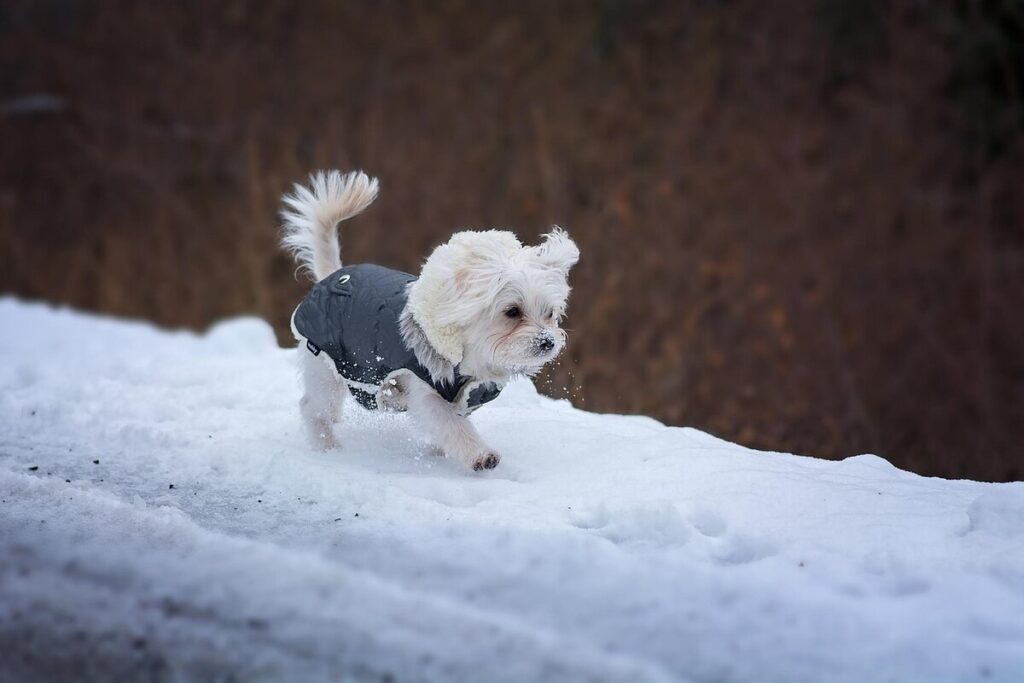
- Length: the coat ends at or just before the base of the tail. Too long and it bunches when your dog sits; too short and the lower back is exposed.
- Chest: the straps close without stretching, and you can slide two fingers under the belly strap.
- Shoulders and legs: your dog can stride fully, lie down and get up without the coat pulling or rubbing in the armpits.
- Neck: the collar opening isn’t choking or gaping. If there is a leash opening, it lines up with the harness or collar ring.
- Toileting: on male dogs, check the belly panel won’t get soiled.
Give your dog a few short sessions at home before a long walk. Some dogs freeze or walk oddly the first time they wear a coat, and that usually passes quickly with treats and practice.
Between Sizes? What to Do
If your dog falls between two sizes, let the chest decide. A coat that is a little long can often be adjusted, but one that is tight around the ribs will restrict breathing and movement. Choose the larger size when:
- Your dog has a deep chest or very thick fur.
- You plan to wear the coat over a harness.
- The coat has little adjustment in the chest strap.
- Your dog is still growing.
Choose the smaller size when your dog is slim and the larger size would leave gaps that let cold air or rain in, and the smaller one still closes comfortably around the chest.
Coats That Size Well
These coats appear in our seasonal and rain gear guides. Each has its own chart, so measure first and check the listing before you order.
1. Ruffwear Powder Hound Insulated Jacket — Best for Cold Walks
An insulated jacket sized mainly by chest girth, with adjustable fit and a leash portal for a harness or collar. It is a good choice for active dogs that need warmth without restricting movement.
- Sized by chest girth, which suits many body shapes
- Adjustable closures
- Leash access opening
Worth knowing: It is a premium price, and long-backed breeds should check the back length on the chart.
2. Kurgo Loft Reversible Dog Jacket — Best Value
A reversible, water-resistant jacket with a wide size range from extra small to extra large. It is a solid everyday coat for cold, damp weather.
- Reversible with two colors
- Wide size range
- Easy to put on and take off
Worth knowing: Deep-chested breeds may need to size up.
3. Gooby Padded Vest — Best for Small Dogs
A light padded vest that suits small dogs who feel the cold, with a simple fastening and a ring for leash attachment.
- Lightweight for small breeds
- Simple to fit
- Budget-friendly
Worth knowing: Gooby sizing runs small for some dogs, so measure carefully and use the brand chart.
For wet weather rather than cold, see our guide to the best dog raincoats.
Related Guides
- 4 Best Dog Raincoats to Keep Walks Dry and Visible
- Best Dog Life Jackets
- Dog Harness vs Collar: Which Is Better?
- Best Harnesses for Small Dogs
- Dog Bed Size Chart
- Dog Crate Size Chart by Breed and Weight
Frequently Asked Questions
How do you measure a dog for a coat?
Measure back length from the base of the neck to the base of the tail, chest girth around the widest part behind the front legs, and neck circumference. Then compare all three with the brand chart.
Should a dog coat cover the tail?
No. A coat should end at or just before the base of the tail so your dog can sit and toilet without it bunching or getting dirty.
What size coat does a Labrador need?
Most adult Labradors have a back length of roughly 20–24 inches and wear a large or extra large coat. Their broad chests mean chest girth is the measurement to check.
Is it better to size up or down in dog coats?
If your dog is between sizes, size up when the chest is deep, the fur is thick or you will wear it over a harness. A coat that is too tight is worse than one slightly too long.
Do dogs need coats in winter?
Small, short-coated, senior and very lean dogs often benefit from a coat in cold weather. Thick double-coated breeds usually don’t. Ask your vet if your dog has a health condition that affects how it handles cold.
Measurements are typical ranges, not breed standards. Always use the size chart for the specific coat you buy.