
This post contains affiliate links. As an Amazon Associate I earn from qualifying purchases. This costs you nothing extra. See our affiliate disclosure for details.
Chewing is normal dog behavior. Dogs chew to explore, to relieve teething pain, to burn off energy and to calm themselves. The problem is when their chosen chew is your table leg. Learning how to stop a dog chewing furniture is mostly about understanding why your dog is chewing, then making the right choice easy and the wrong choice hard.
Why Dogs Chew Furniture
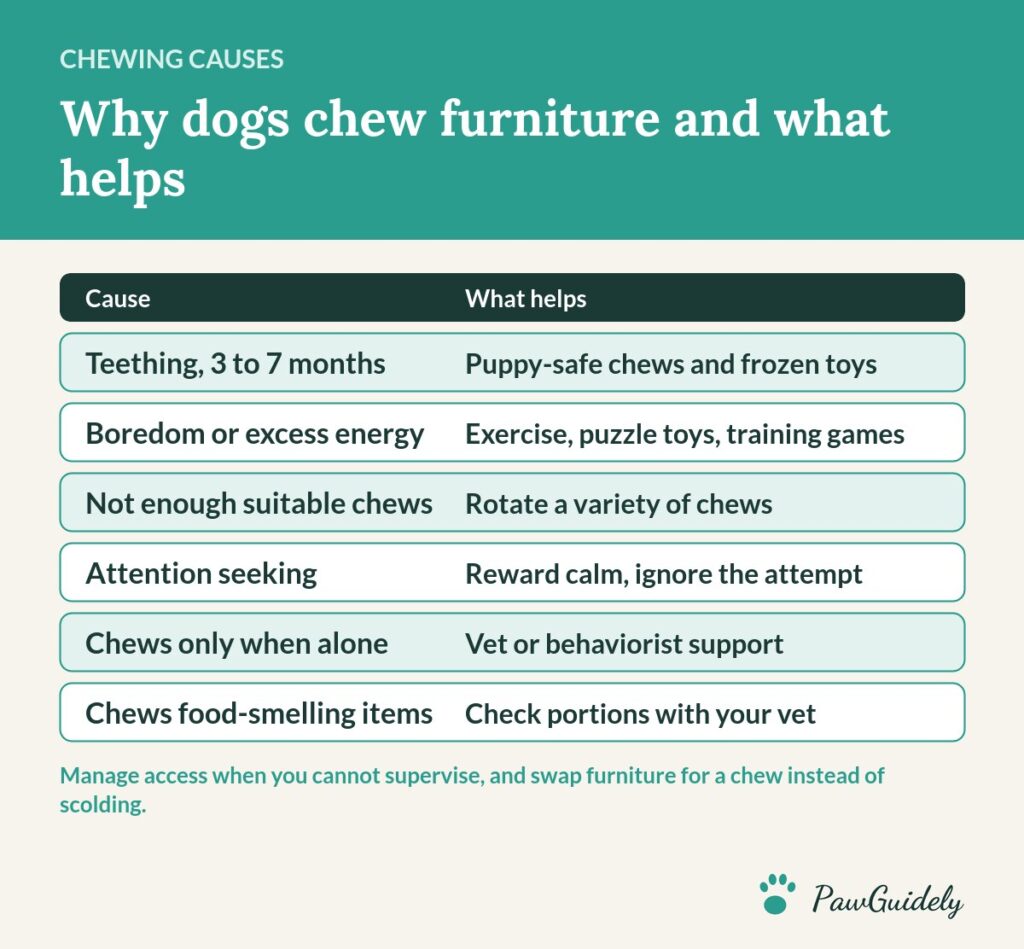
| Cause | Clues | What helps |
|---|---|---|
| Teething (puppies) | 3 to 7 months old, chews everything | Puppy-safe chews, frozen toys, management |
| Boredom or excess energy | Chews when ignored, young active breed | Exercise, puzzle toys, training games |
| Lack of suitable chews | Few toys, or toys are boring | Rotate a variety of chews |
| Attention seeking | Chews while looking at you | Reward calm behavior, ignore the attempt |
| Stress or separation anxiety | Chews doors and windows only when alone | Vet or behaviorist support |
| Hunger or diet | Chews food-smelling items | Check portions with your vet |
How to Stop a Dog Chewing Furniture in 8 Steps
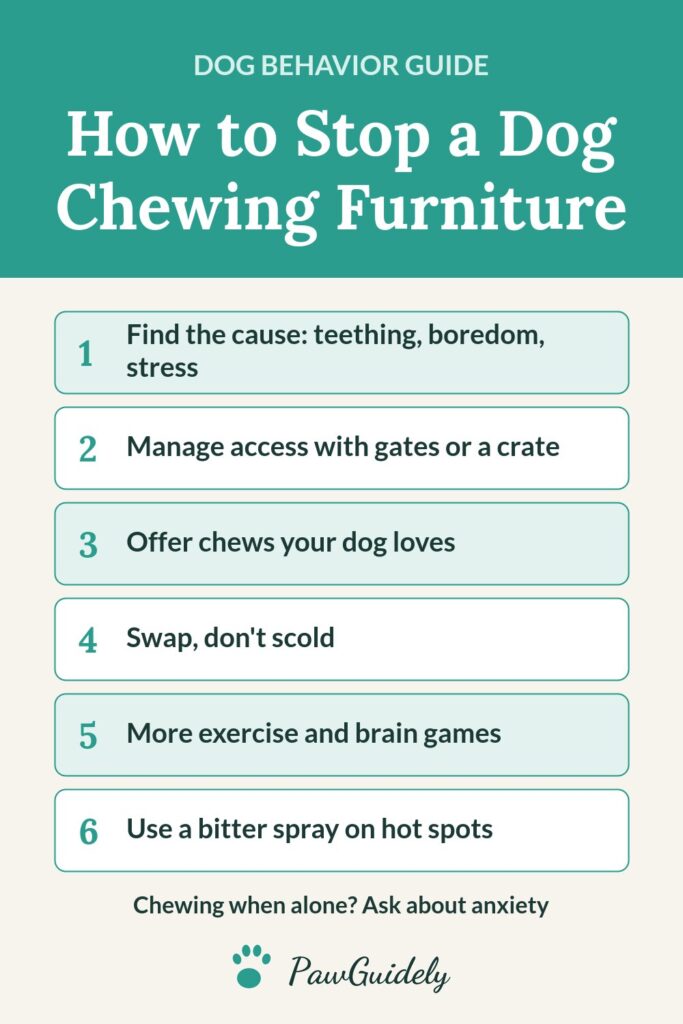
- Manage access first. When you cannot supervise, use a crate, playpen or gated dog-proofed room. Every successful chew of the sofa strengthens the habit.
- Provide chews your dog actually likes. Offer a mix: rubber toys to stuff, durable nylon chews, and edible chews suited to your dog’s size.
- Rotate toys. Keep a few out and swap them every few days so they stay interesting.
- Swap, don’t scold. If you catch your dog chewing furniture, calmly interrupt, offer a chew toy, and praise them when they take it.
- Increase exercise. Most young dogs need more activity than we think. Add a sniffy walk or a game of fetch.
- Add mental work. Puzzle toys, snuffle mats and short training sessions tire the brain as well as the body.
- Use a taste deterrent. Spray a bitter-tasting deterrent on favorite furniture targets. Test on a hidden spot first.
- Be consistent. Everyone in the house should follow the same rules and redirect in the same way.
Tips for Teething Puppies

- Freeze a damp washcloth or a stuffed puppy KONG for soothing chewing.
- Keep shoes, cables and remote controls out of reach.
- Choose chews made for puppies, which are softer on baby teeth.
- Expect teething chewing to calm down once adult teeth are in, around 6 to 7 months.
Chewing When Left Alone
If your dog chews mostly near doors and windows, only when you are out, or alongside howling, pacing or accidents, it may be separation-related stress rather than boredom. More toys will not fix that. Film your dog when you leave, and talk to your vet or a qualified behaviorist, who can build a plan to help your dog feel safe alone.
Mistakes to Avoid
- Punishing after the fact. Dogs cannot link it to chewing earlier.
- Giving old shoes or socks as toys, which blurs the line between toys and belongings.
- Using chews that are too hard, which can break teeth, or too small, which can be swallowed.
- Relying on deterrent sprays alone without offering alternatives.
- Giving too much freedom too soon.
Gear That Helps
1. KONG Classic — Best Stuffable Chew
Stuffed and frozen, a KONG gives your dog a satisfying chewing job that lasts. It is one of the best ways to redirect chewing during alone time or crate time.
- Durable natural rubber
- Stuff and freeze for longer sessions
Worth knowing: For power chewers, choose the black KONG Extreme.
2. Benebone Wishbone — Best Long-Lasting Chew
A durable nylon chew infused with flavor and shaped so dogs can hold it between their paws. Many dogs who ignore rubber toys love it.
- Real flavor dogs like
- Easy-to-hold shape
Worth knowing: Replace it when worn down, and supervise heavy chewers.
3. Grannick’s Bitter Apple Spray — Taste Deterrent
A bitter-tasting spray that discourages licking and chewing on furniture, cables and other targets. It works best alongside good chew toys.
- Simple to apply
- Useful for favorite chew spots
Worth knowing: Spot-test surfaces first and reapply regularly. Some dogs do not mind the taste.
4. Nina Ottosson Dog Tornado — Brain Game
A spinning puzzle toy where your dog moves layers to find hidden treats. Mental work like this can take the edge off boredom chewing.
- Challenging but learnable
- Great rainy-day activity
Worth knowing: Supervise puzzle toys and put them away after use.
The Bottom Line
To stop a dog chewing furniture, figure out why they are chewing, prevent access when you cannot watch, and give them better things to chew. Add exercise and brain games, use a deterrent on favorite spots, and be patient. If chewing only happens when your dog is alone, get professional advice.
Quick Dog-Proofing Checklist
- Tuck electrical cables behind furniture or inside cord covers.
- Keep shoes, bags and laundry in closets or baskets with lids.
- Move remote controls, glasses and phones off low tables.
- Put houseplants out of reach, as some are toxic to dogs.
- Use a baby gate to keep your dog out of rooms with valuable furniture while you train.
- Leave out two or three approved chews so there is always a better option nearby.
Dog-proofing is not forever. As your dog learns what is theirs to chew, you can slowly give back more freedom, one room at a time.
Related Guides
- 5 Best Chew Toys for Aggressive Chewers in 2026 (Tough but Tooth-Safe)
- 3 Best Puppy Teething Toys (and How to Soothe Sore Gums)
- 5 Best Dog Puzzle Toys in 2026, From Beginner to Genius Level
- KONG Classic vs KONG Extreme: Which Red or Black KONG Should You Buy?
- How to Help a Dog With Separation Anxiety: A Gentle, Step-by-Step Approach
- How to Stop a Puppy Biting: Gentle Training That Works
Frequently Asked Questions
At what age do puppies stop chewing everything?
Teething chewing usually eases once adult teeth are in, around 6 to 7 months. Many dogs still chew as adults, so keep providing safe chews.
Does bitter apple spray work?
It helps many dogs, especially combined with management and good chew toys. Some dogs are not bothered by the taste.
Should I punish my dog for chewing furniture?
No. Punishment after the fact does not work and can increase stress. Interrupt calmly, redirect to a toy and prevent access.
Why does my adult dog suddenly chew furniture?
It could be boredom, a change in routine, stress, or a dental problem. If it starts suddenly, check with your vet.
What are safe chews for dogs?
Rubber toys, durable nylon chews and size-appropriate edible chews. Avoid very hard items that can crack teeth, and supervise chewing.