
This post contains affiliate links. As an Amazon Associate I earn from qualifying purchases. This costs you nothing extra. See our affiliate disclosure for details.
The PetSafe Easy Walk and the Ruffwear Front Range are two of the most recommended harnesses for dogs that pull. Both have a front clip on the chest that helps turn a pulling dog back toward you, but they’re built very differently. In this Easy Walk vs Front Range comparison, we look at pulling control, comfort, fit, clips and durability, and help you choose the right harness for your dog.
Our Quick Picks
- Best for Strong PullersPetSafe Easy Walk HarnessCheck Price on Amazon
- Best All-Round ComfortRuffwear Front Range HarnessCheck Price on Amazon
Short on time? These are our top choices. Full reviews and comparisons are below.
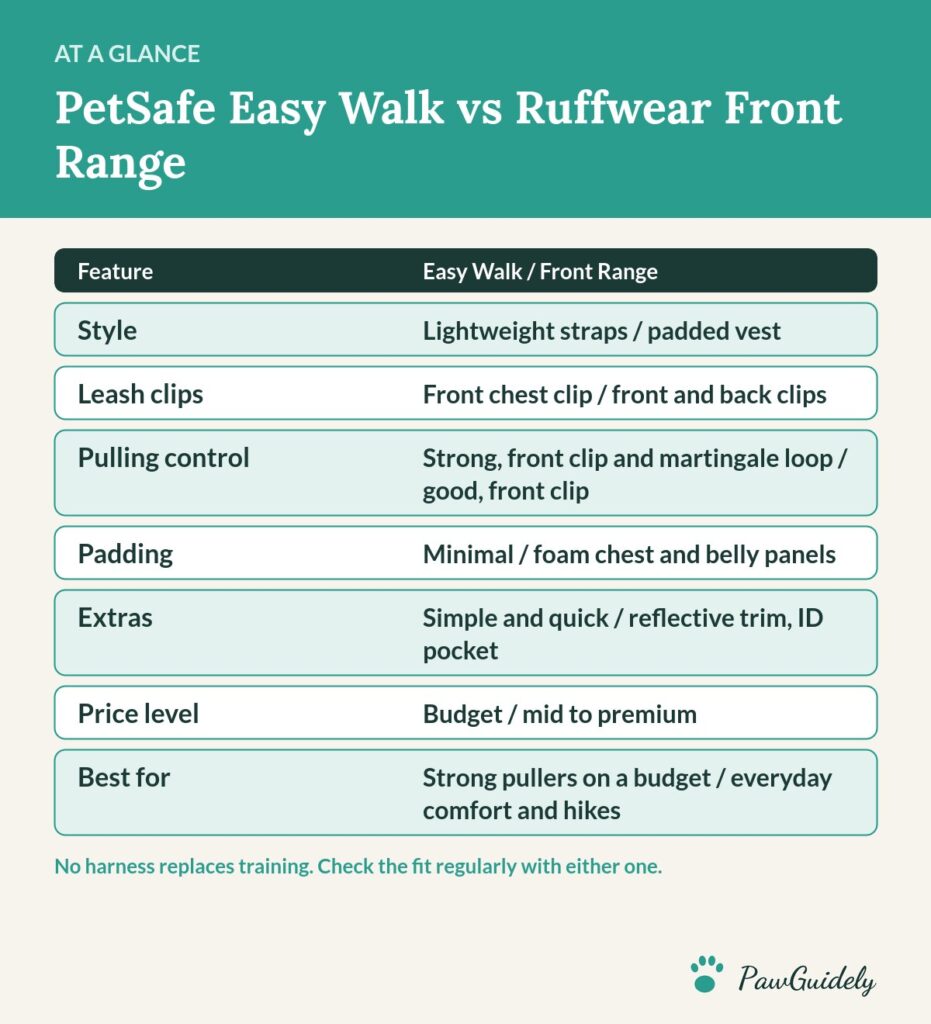
Easy Walk vs Front Range at a Glance
| PetSafe Easy Walk | Ruffwear Front Range | |
|---|---|---|
| Style | Lightweight strap harness | Padded vest-style harness |
| Leash clips | Front chest clip | Front clip and back clip |
| Pulling control | Strong, via front clip and martingale loop | Good, via front clip |
| Padding | Minimal | Foam-padded chest and belly panels |
| Adjustment points | Several | Four |
| Extras | Simple and quick | Reflective trim, ID pocket |
| Price level | Budget | Mid to premium |
| Best for | Strong pullers, training on a budget | Everyday comfort, hikes, dogs that pull moderately |
Pulling Control
The Easy Walk is designed specifically for pulling. Its chest strap and martingale loop tighten slightly when your dog pulls, and the front clip turns them sideways toward you, which many owners find very effective for strong pullers. The Front Range also has a front clip that discourages pulling, but it is designed as an everyday all-rounder, so its no-pull effect is a little gentler. Remember that no harness replaces training; see our guide on how to stop your dog pulling on the leash.
Comfort and Fit
The Front Range is more comfortable for long walks and hikes thanks to foam padding and four points of adjustment that help it fit many body shapes. The Easy Walk uses thin straps, which keeps it light and quick to put on, but it needs careful fitting: if the chest strap sits too low or the harness is loose, it can rub behind the front legs or affect how your dog moves. Check the fit regularly with either harness.
Clips and Versatility
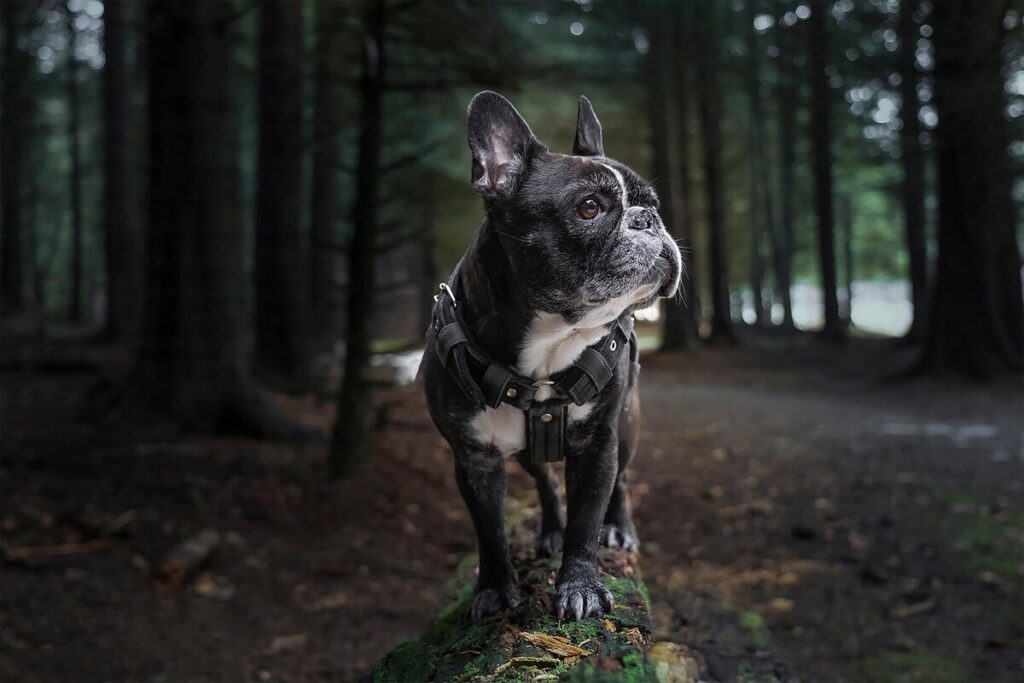
The Front Range has two leash points: use the front clip while training loose-leash walking, then switch to the back clip for relaxed walks and hikes once your dog walks nicely. The Easy Walk has only a front clip, so it is best as a training harness. The Front Range also adds reflective trim and a small ID pocket.
Who Should Buy Which
| Choose the Easy Walk if… | Choose the Front Range if… |
|---|---|
| Your dog pulls hard | You want all-day comfort |
| You want an affordable training harness | You want front and back clips |
| You want something quick to put on | You hike or walk long distances |
| You’ll use it mainly for walks while training | You want one harness to use long-term |
The Two Harnesses
1. PetSafe Easy Walk Harness — Best for Strong Pullers
A simple, affordable front-clip harness that trainers often use for dogs that pull. It sits across the chest rather than the throat and turns your dog toward you when they pull.
- Very effective for pullers
- Affordable
- Quick to put on
- Many sizes
Worth knowing: Fit carefully to avoid rubbing behind the front legs; front clip only.
2. Ruffwear Front Range Harness — Best All-Round Comfort
A padded, adjustable harness with front and back clips, reflective trim and an ID pocket. Our top pick in the best no-pull dog harnesses guide.
- Foam padding for comfort
- Front and back clips
- Four adjustment points
- Reflective trim and ID pocket
Worth knowing: Costs more; the no-pull effect is gentler than the Easy Walk’s.
How to Measure for Either Harness
- Measure your dog’s chest at the widest point, just behind the front legs.
- Measure the neck base for the Easy Walk, as it has a separate chest and neck strap.
- Compare with the brand’s size chart and choose by chest girth, not weight.
- Adjust so you can fit two fingers under every strap.
Our Verdict
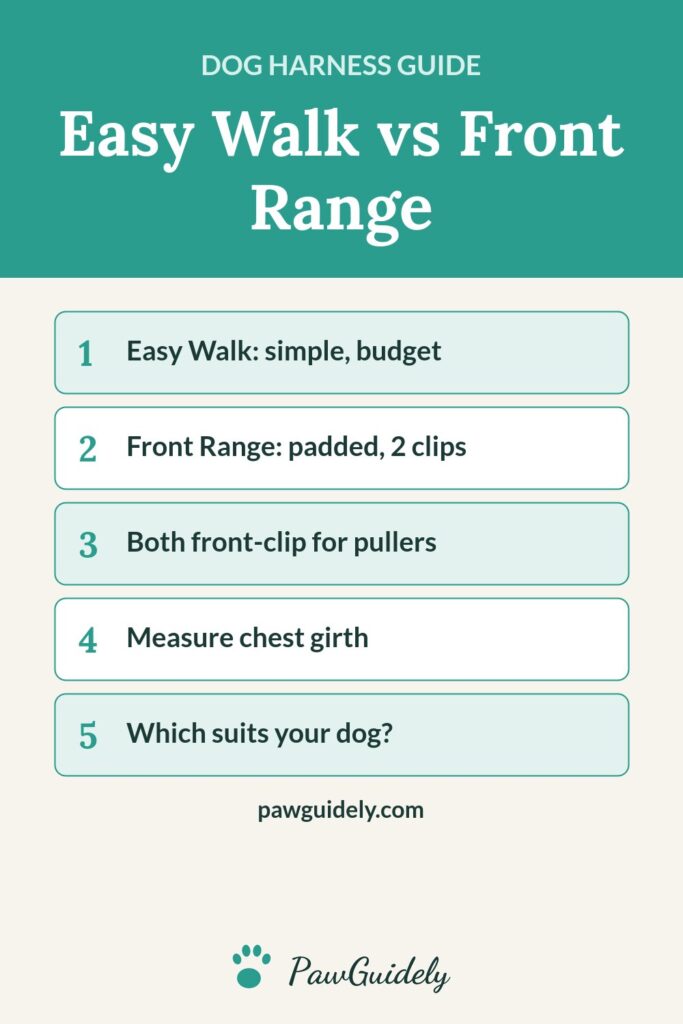
In the Easy Walk vs Front Range comparison, the PetSafe Easy Walk is the better choice for strong pullers and budget-friendly training. The Ruffwear Front Range is the better everyday harness, with padding, two clips and a fit that works well for long walks. Many owners train with the Easy Walk and move to a Front Range once their dog walks nicely. For more, read dog harness vs collar.
Getting Your Dog Used to a New Harness
Some dogs freeze or roll over the first time they wear a harness. Introduce it slowly: let your dog sniff it and reward them, then drape it over their back, then fasten one buckle, rewarding at each step. Let them wear it indoors for a few minutes during play or meals before the first walk. Keep early walks short and fun, and check for rubbing under the front legs after each outing. Within a few days, most dogs get excited when they see the harness because it means a walk is coming.
Related Guides
- 4 Best No-Pull Dog Harnesses in 2026 (and How to Fit One Properly)
- How to Stop Your Dog Pulling on the Leash (Loose-Leash Walking Guide)
- Dog Harness vs Collar: Which Is Better for Your Dog?
- 5 Best Dog Leashes for Everyday Walks, Running and Training
- Ruffwear Front Range vs Kurgo Tru-Fit: Which Dog Harness Should You Buy?
- 3 Best Harnesses for French Bulldogs (and How to Fit a Frenchie)
- Julius-K9 vs Ruffwear Harness: IDC Powerharness or Front Range?
Frequently Asked Questions
Is the Easy Walk or Front Range better for pulling?
The Easy Walk is designed specifically for pulling and is often more effective for strong pullers. The Front Range reduces pulling too but focuses more on comfort.
Can the Easy Walk harness cause rubbing?
If it’s fitted loosely or the chest strap sits too low, it can rub behind the front legs. Adjust it carefully and check the fit often.
Does the Front Range have a front clip?
Yes, it has both a front clip for training and a back clip for relaxed walks.
Which harness is better for hiking?
The Front Range, thanks to its padding, adjustability and back clip.
How should a no-pull harness fit?
You should fit two fingers under each strap, the chest strap should sit on the breastbone, and your dog should move freely.
Pingback: Best Harness for French Bulldogs: 3 Picks + Fit Guide