
This post contains affiliate links. As an Amazon Associate, PawGuidely earns from qualifying purchases at no extra cost to you. See our affiliate disclosure for details.
A dog pulling on the leash turns every walk into a tug of war, and it can hurt your shoulder and strain your dog’s neck. Dogs pull for a simple reason: it works. Pulling gets them to the next interesting smell faster. To stop your dog pulling on the leash, you need to make walking beside you more rewarding than pulling ahead. Below is a step-by-step loose-leash walking plan, the gear that genuinely helps, and the mistakes that slow progress.
Why Dogs Pull on the Leash
- Pulling gets results: every time they pull and you follow, pulling is rewarded.
- Dogs walk faster than people: our pace feels slow to most dogs.
- Excitement and energy: under-exercised dogs pull harder.
- The opposition reflex: dogs naturally lean into pressure, so a tight collar makes many pull more.
- Nobody taught them: walking on a loose leash is a skill, not instinct.
How to Stop Your Dog Pulling on the Leash: Step by Step
- Choose your reward spot. Decide which side your dog walks on, and always deliver treats right beside your leg on that side.
- Practice indoors first. Walk a few steps around the living room and reward your dog every time they are next to you. Keep it easy and fun.
- Mark the moment. Say “yes” the instant the leash is loose and your dog is beside you, then give a treat at your side.
- Be a tree. Outside, the moment the leash goes tight, stop and stand still. Wait until the leash slackens, then mark and move on.
- Change direction. If your dog keeps charging ahead, calmly turn and walk the other way, rewarding them for catching up.
- Reward often at first. Every few steps of loose leash early on, then gradually less as your dog improves.
- Use sniffing as a reward. Say “go sniff” and let your dog explore as a reward for good walking.
- Keep sessions short. Five to ten minutes of focused practice, then a relaxed walk, works better than long frustrating sessions.
How Long Does Loose-Leash Training Take?
Most dogs show improvement within one to two weeks of consistent practice, but reliable loose-leash walking in busy places can take one to three months. Puppies and young, energetic dogs take longer. Consistency matters more than time: if pulling works even occasionally, your dog will keep trying it.
Common Mistakes
| Mistake | Why It Backfires | Do This Instead |
|---|---|---|
| Following when your dog pulls | Rewards pulling | Stop until the leash is loose |
| Yanking the leash | Painful and damages trust | Stand still or change direction |
| Using a retractable leash | Constant tension teaches pulling | Use a 5-6 ft standard leash |
| Walking an over-excited dog | Too much energy to focus | Play first, then train |
| Treats in the wrong place | Dog learns to walk ahead | Always reward beside your leg |
See our comparison of retractable vs standard leashes to understand why retractables make pulling worse.
Gear That Helps With Pulling
No gear replaces training, but the right equipment makes walks more comfortable and training faster. Avoid tools that work through pain, such as prong and choke collars.
1. PetSafe Easy Walk Harness — Front-Clip Harness
A front-clip harness turns your dog gently toward you when they pull, which interrupts pulling without choking. The Easy Walk is simple, affordable and widely used by trainers. More options in our no-pull harness guide.
2. Ruffwear Front Range Harness — Comfort for Long Walks
The Front Range has both front and back clips, so you can train with the front clip and switch to the back clip once your dog walks nicely. It is padded and adjustable at four points.
3. Doggone Good Rapid Rewards Treat Pouch — Fast Rewards
Good timing is key. A snap-open treat pouch on your hip lets you reward within a second of your dog getting it right. See our treat pouches guide.
The Bottom Line
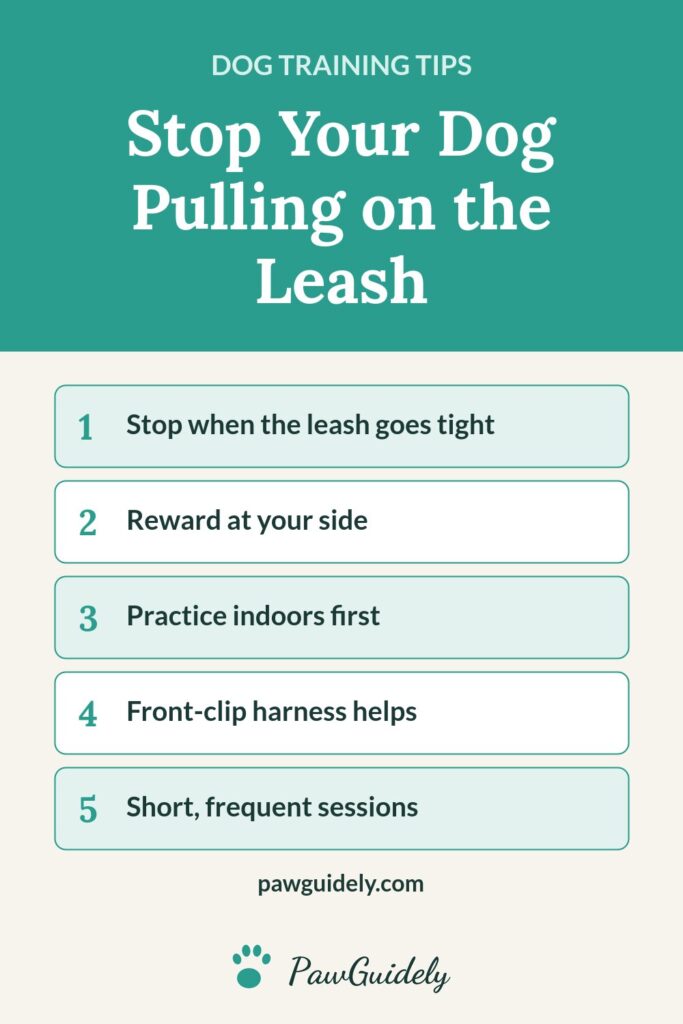
To stop a dog pulling on the leash, make pulling pointless and walking beside you rewarding: stop when the leash goes tight, reward at your side, and practice in short, frequent sessions. A front-clip harness and a standard 5- or 6-foot leash make it easier. For more on equipment, see harness vs collar and our best dog leashes. If your dog lunges at other dogs or people, a certified trainer can help.
Loose-Leash Walking Games to Practice at Home
- Follow the leader: walk around the house with your dog off leash and reward every time they choose to walk beside you. Change direction often so they learn to watch you.
- The treat line: drop a trail of treats beside your leg as you walk slowly, then gradually space them out.
- Stop and go: walk three steps, stop, and reward your dog for stopping with you. This builds attention without any leash pressure.
- Name game: say your dog’s name and reward the moment they look at you. A dog that checks in with you is much easier to walk.
Practice these games for a few minutes before each walk. They warm up your dog’s focus and make the outdoor training steps far more successful.
Walking a Dog That Pulls Toward Other Dogs
If your dog pulls hardest when they see other dogs, increase the distance until your dog can notice the other dog but still take treats, then reward calm looking. Cross the road or turn away early rather than letting your dog reach the end of the leash. If your dog barks, lunges or seems fearful, work with a certified trainer or behaviorist, as reactivity needs a tailored plan.
Related Guides
- 4 Best No-Pull Dog Harnesses in 2026 (and How to Fit One Properly)
- 5 Best Dog Leashes for Everyday Walks, Running and Training
- Dog Harness vs Collar: Which Is Better for Your Dog?
- Retractable Leash vs Standard Leash: Which Should You Use?
Frequently Asked Questions
Why does my dog pull on the leash?
Because pulling usually works: it gets them where they want to go faster. Dogs also walk faster than people and naturally lean into leash pressure.
Does a no-pull harness stop pulling?
A front-clip harness reduces pulling and makes walks more comfortable, but training is what teaches your dog to walk on a loose leash.
Can you train an older dog to stop pulling?
Yes. Older dogs learn loose-leash walking with the same methods, though habits may take a little longer to change.
Should I use a prong or choke collar?
Most modern trainers advise against them because they work through discomfort. A front-clip harness and reward-based training are kinder and effective.
How often should I practice loose-leash walking?
Short sessions of five to ten minutes, once or twice a day, work well. Consistency on every walk is what makes the habit stick.