
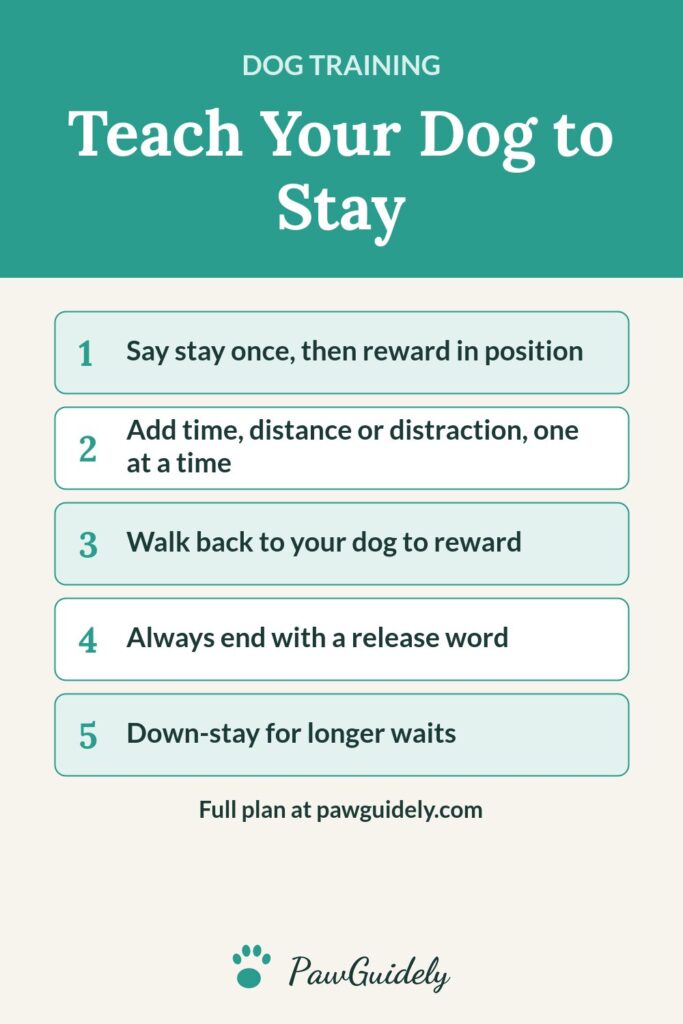
To teach a dog to stay, ask for a sit or down, say “stay” once, pause for a second or two, then reward your dog while they are still in position and finish with a release word. From there you stretch the stay in tiny steps: a little longer, a little further away, or a small distraction, but only one of those at a time. Most dogs manage a short stay in a quiet room within a week of daily practice; holding it at the front door or in the park takes several weeks.
Stay or Wait? Decide What You Are Teaching
The two cues sound alike but mean different things, and mixing them up confuses dogs.
- Stay means “remain exactly here until I come back to you or release you.” It is for longer holds: guests arriving, the vet waiting room, while you carry shopping in.
- Wait means “pause briefly, then carry on.” It is for thresholds: the front door, the car door, the gate before a walk. Your dog may move once the moment passes.
This guide covers stay. Once it is solid, a separate wait cue is quick to add.
Set Up for Success Before Session One
- A reliable sit or down. Stay extends a position your dog already knows. If the sit or down isn’t solid, start there.
- A release cue. Choose one word, such as “break” or “all done,” and never end a stay without it. Otherwise your dog learns that stays end whenever they decide.
- Small, quick treats kept in a pouch or pocket, not in your hand where your dog can stare at them.
- A mat or towel (optional). Giving your dog a clear spot to hold makes it obvious when they have left it.
Phase 1: Seconds, Right Beside Your Dog
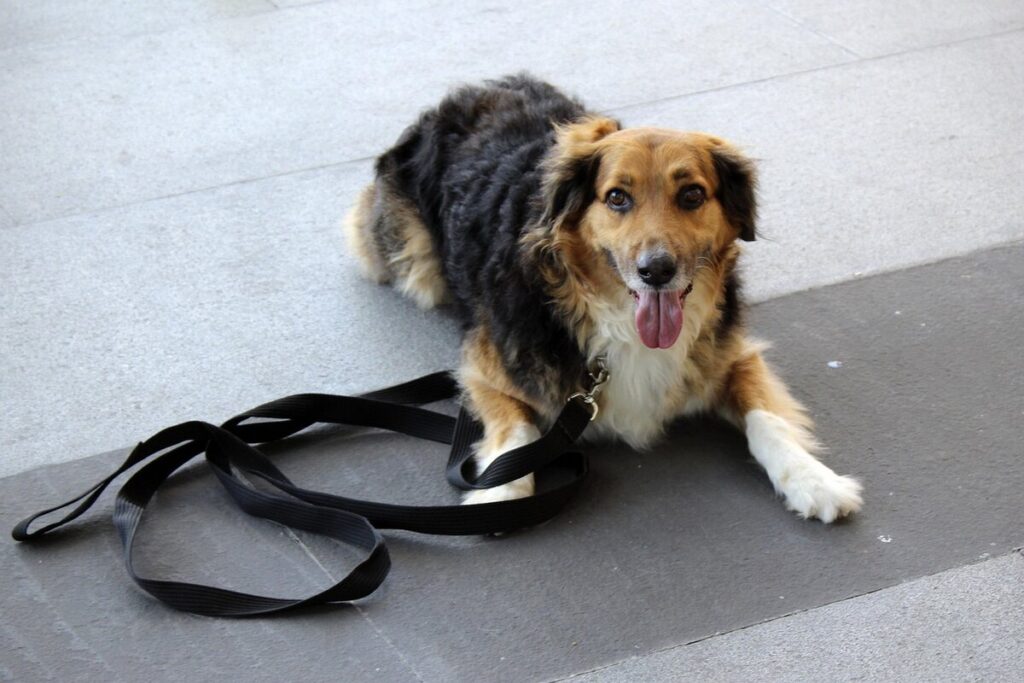
- Ask for a sit while standing next to your dog.
- Say “stay” once and show a flat palm toward your dog if you want a hand signal.
- Count one second in your head, then give a treat at nose height so your dog doesn’t have to stand to reach it.
- Give a second treat after another second. Several treats during the stay teach that staying put is what pays.
- Release with your cue and encourage your dog to move. The release itself is not rewarded with food.
- Build toward 30 seconds over several sessions, adding one or two seconds at a time and spacing treats further apart.
Phase 2: Add Distance Without Breaking the Stay
Distance is where most stays fall apart, because the moment you move your dog wants to follow. Shorten the duration back to a few seconds whenever you add distance.
- Lean your weight as if to step away, then straighten up and reward.
- Take a single step back, return immediately, reward your dog in position, then release.
- Always go back to your dog to reward. Calling your dog to you for the treat teaches them to break the stay.
- Add steps one at a time until you can reach about six feet, then try turning your back for a second or walking a small circle.
- Out-of-sight stays come last. Step behind a doorway for one second and come straight back. Build these slowly.
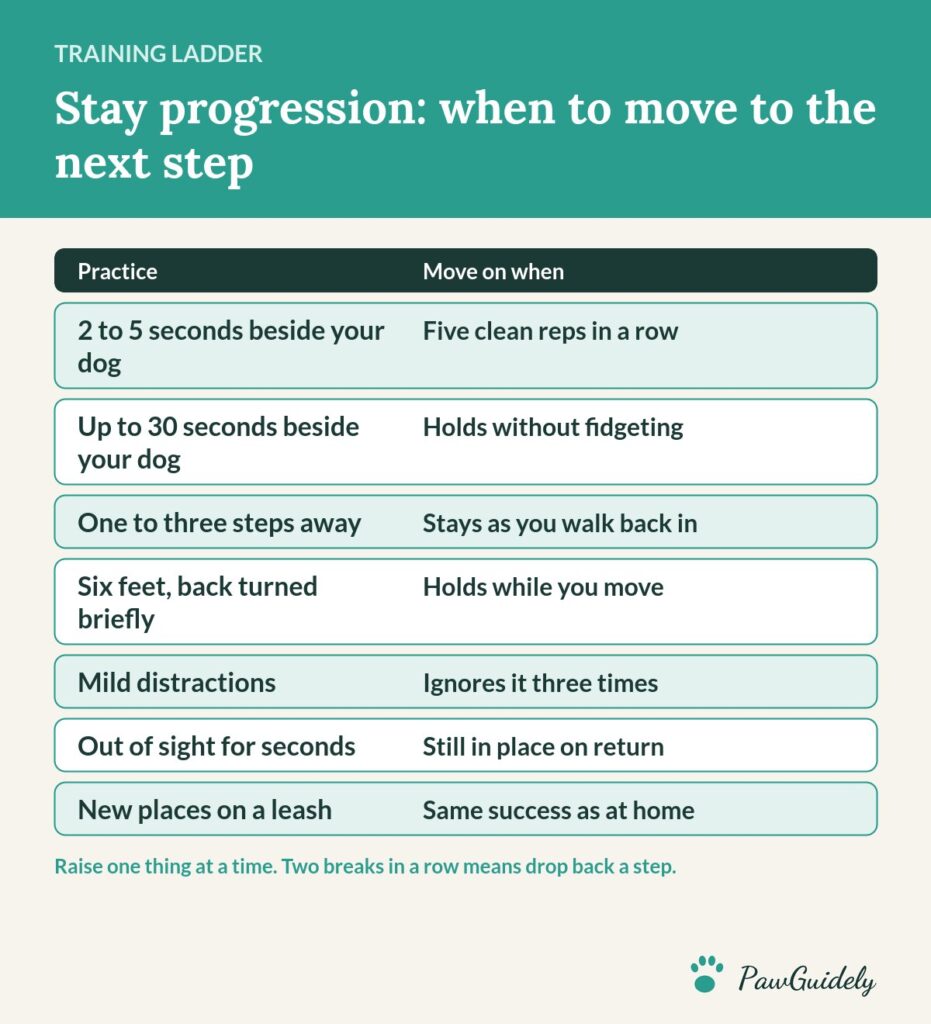
Stay Progression Ladder
Use this ladder to decide when to move on. Raise only one column at a time, and drop back a rung if your dog breaks twice in a row.
| Rung | What to practice | Move on when |
|---|---|---|
| 1 | Stay beside your dog for 2 to 5 seconds | Five clean reps in a row |
| 2 | Build to 30 seconds beside your dog | Holds without fidgeting |
| 3 | One to three steps away, short hold | Your dog stays as you walk back in |
| 4 | Six feet away, back turned briefly | Holds while you move around |
| 5 | Mild distractions: dropped toy, knock on a table | Ignores the distraction three times |
| 6 | Out of sight for a few seconds | Still in place when you return |
| 7 | New places: yard, porch, quiet park on a leash | Same success as at home |
Phase 3: Proof It Against Real Life
A stay only matters when something interesting is happening. Add distractions in rising order and keep the stay short while you do.
- Bounce on your toes, clap once, or crouch down.
- Drop a toy on the floor a few feet away, then a treat (pick it up yourself if your dog moves).
- Have someone walk past, then knock on the door, then ring the doorbell.
- Practice on a leash in the yard, on the porch, then somewhere quiet outside.
For long waits, such as a vet visit or a meal, ask for a down-stay rather than a sit-stay. Lying down is more comfortable for most dogs, so they are less likely to shift. Older dogs or dogs with stiff joints may struggle to hold a sit; ask your vet if your dog seems uncomfortable in either position.
Why the Stay Keeps Breaking (and What to Change)
- Your dog pops up as you walk away. You added distance too fast. Go back to one step and shorten the hold.
- Your dog stands as you come back. Your return looks like the end of the stay. Walk back calmly, reward in position, and only then release.
- Your dog creeps forward. A mat helps them see the boundary. Reset quietly to the original spot each time.
- Your dog breaks when you bend to give the treat. Bending looks like an invitation. Deliver treats from standing at first, then practice bending as a distraction.
- You keep repeating “stay, stay, stay.” Say it once. If your dog needs reminders, the step is too hard.
- Your dog guesses the release. Vary hold times so some stays are short and some longer, and say the release in a neutral tone.
Habits That Quietly Undo a Good Stay
- Calling your dog out of a stay. It blurs stay and come. Practice recalls from a separate wait or sit later, once stay is rock solid.
- Scolding a broken stay. It makes dogs anxious about the exercise. Reset without fuss and make the next rep easier.
- Marathon sessions. Two or three sessions of about five minutes each day work better than one long session.
- Forgetting to release. If you wander off and your dog eventually gets up, they learn stays have no clear end.
A Three-Week Practice Outline
- Week 1: rungs 1 and 2, indoors only, in short daily sessions.
- Week 2: rungs 3 and 4, with an occasional easy distraction at close range.
- Week 3: rungs 5 to 7, mixing short and longer stays and moving to new rooms and the yard.
Puppies and easily excited dogs often need longer on each week. Moving slowly through the ladder is faster in the end than rushing and having to rebuild.
Related Guides
- 4 Best Dog Treat Pouches for Training and Walks
- How to Stop Your Dog Pulling on the Leash When Walking
- 15 Indoor Games for Dogs and Puppies
- How to Potty Train a Puppy
- Crate Training Schedule by Age
- New Puppy Checklist: 25 Essentials
Frequently Asked Questions
How long does it take to teach a dog to stay?
A short stay in a quiet room often comes together in a week of daily practice. A stay that holds around visitors, other dogs or outdoors usually takes several weeks of gradual work.
Should I teach stay in a sit or a down?
Start with whichever position your dog holds best. Use a sit-stay for short pauses and a down-stay for anything longer than a minute or two.
At what age can a puppy learn to stay?
Puppies can start with one- or two-second stays as soon as they know sit. Keep sessions very short and expect to stay on the early rungs for longer.
Do I need a release word if my dog already knows stay?
Yes. Without one, your dog decides when the stay is over, which is how stays slowly fall apart.