
This post contains affiliate links. As an Amazon Associate I earn from qualifying purchases. This costs you nothing extra. See our affiliate disclosure for details.
Scratching is a natural and necessary behavior for cats. It keeps claws healthy, stretches muscles and leaves scent marks. The trick to saving your sofa is offering a scratcher your cat prefers, and the material makes a big difference. The two most popular are sisal (a tough natural fiber, usually wrapped around posts) and corrugated cardboard (often used in flat or angled scratchers). The sisal vs cardboard cat scratcher debate usually comes down to your cat’s scratching style.
Our Quick Picks
- Best Sisal ScratcherSmartCat Ultimate Scratching PostCheck Price on Amazon
- Best Cardboard ScratcherPetFusion Ultimate Cat Scratch LoungeCheck Price on Amazon
Short on time? These are our top choices. Full reviews and comparisons are below.
Sisal vs Cardboard Cat Scratcher at a Glance
| Feature | Sisal | Cardboard |
|---|---|---|
| Texture | Rough, fibrous, satisfying shred | Crunchy, gives way under claws |
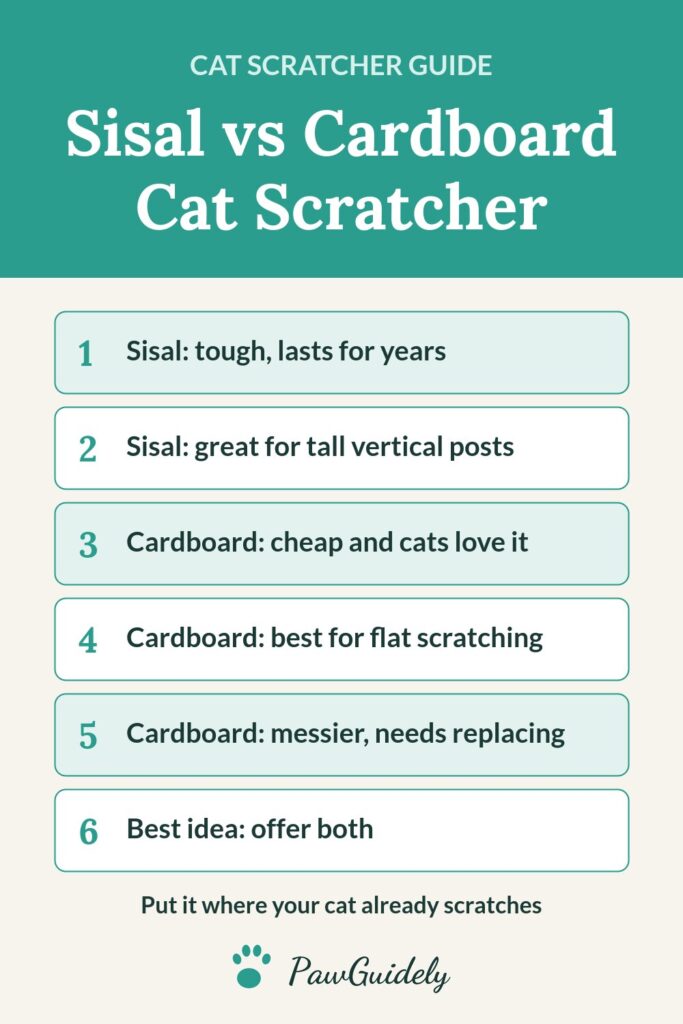
| Durability | Months to years | Weeks to a few months |
| Typical shape | Tall posts, cat trees | Flat pads, ramps, lounges |
| Scratching style | Vertical stretching | Horizontal and angled |
| Mess | Low, some loose fibers | Higher, cardboard bits |
| Cost over time | Higher upfront, lasts longer | Cheap, replaced more often |
| Catnip | Sprinkle or spray | Often included |
Sisal Scratchers: Pros and Cons
Sisal rope or sisal fabric is tough and gives a satisfying rough texture that many cats love for long vertical scratches. Sisal fabric tends to be even better than rope because claws do not catch in the grooves. A good sisal post can last for years.
- Pros: very durable, ideal for tall posts, lets cats stretch fully, low mess.
- Cons: costs more upfront, a wobbly or short post will be ignored, some cats find new sisal too rough at first.
Cardboard Scratchers: Pros and Cons
Corrugated cardboard scratchers are cheap and hugely popular with cats. They are usually flat or angled, which suits cats who like to scratch rugs and carpets. Many double as a lounging spot.
- Pros: inexpensive, cats take to them quickly, great for horizontal scratchers, often come with catnip.
- Cons: wear out and shed cardboard bits, need replacing regularly, not ideal for tall vertical stretching.
Our Picks
1. SmartCat Ultimate Scratching Post — Best Sisal Scratcher
A tall, heavy sisal-fabric post with a wide base that does not wobble. It is tall enough for most cats to stretch fully, which is exactly what many short, cheap posts get wrong.
- Tall enough for a full stretch
- Heavy, stable base
- Tough sisal fabric lasts
Worth knowing: It is simple in style. Place it next to the furniture your cat currently scratches.
2. PetFusion Ultimate Cat Scratch Lounge — Best Cardboard Scratcher
A curved cardboard scratcher with raised sides that cats use for scratching and lounging. It is reversible to double its life, and many cats treat it as a bed as well as a scratcher.
- Scratcher and lounger in one
- Reversible cardboard insert
- Sturdy build
Worth knowing: Cardboard sheds bits as it wears. Replace or flip it when worn.
How to Tell Which Your Cat Prefers
| If your cat scratches… | Try |
|---|---|
| The sides of sofas or door frames | A tall sisal post |
| Carpets, rugs or stairs | A flat or angled cardboard scratcher |
| The back of a chair while standing tall | Sisal post at least 30 inches tall |
| Everything | Both, in different spots |
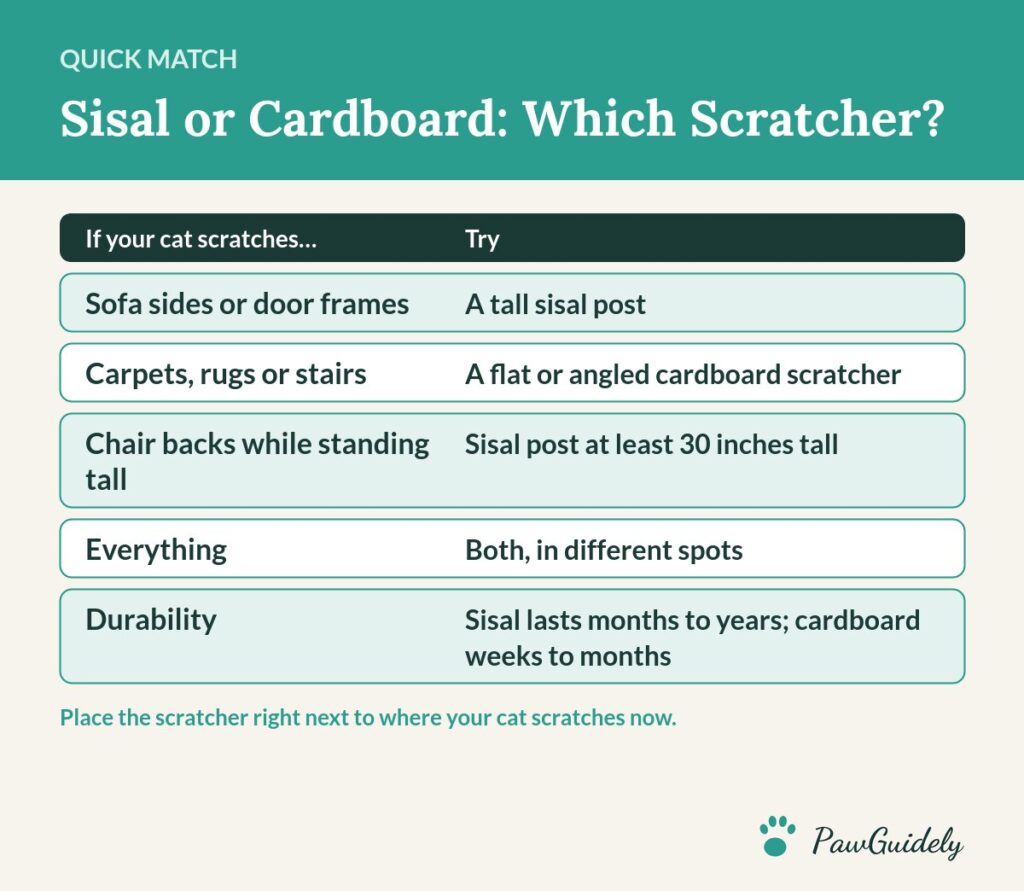
Watch how your cat scratches now: stretched upward or lying flat. That tells you more than any product review.
Getting Your Cat to Use a New Scratcher
- Place the scratcher right next to the spot your cat is scratching now.
- Rub catnip or silvervine on it, if your cat responds to them.
- Drag a wand toy across it so your cat’s claws catch it naturally.
- Reward your cat with praise or a treat when they use it.
- Temporarily cover the furniture spot with a throw or double-sided tape.
- Once your cat is using the scratcher, you can move it slowly to a better spot.
The Bottom Line
If your cat stretches up to scratch furniture, a tall, heavy sisal post like the SmartCat Ultimate is the best investment. If your cat scratches rugs or likes to lounge, a cardboard scratcher like the PetFusion lounge is cheap and loved. Most cats are happiest with both, placed where they already like to scratch.
Other Scratcher Materials Worth Knowing
- Carpet: common on budget cat trees, but it can teach cats that scratching carpet at home is fine. Many owners avoid it for that reason.
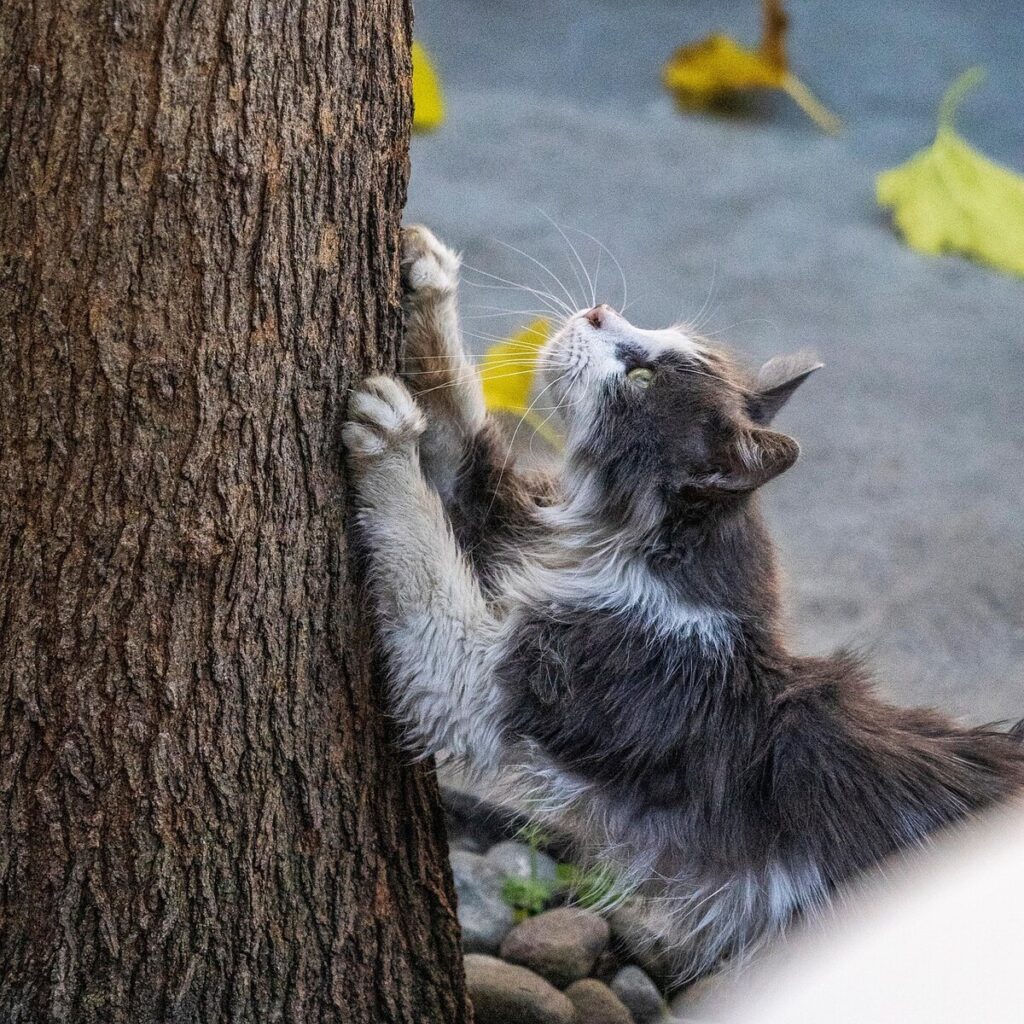
- Wood and bark: some cats, especially those who have spent time outdoors, love scratching logs or untreated wood.
- Jute: similar to sisal but softer. It suits kittens and cats who find sisal too rough, though it wears faster.
- Seagrass: smooth and woven, often used on stylish scratchers. Cats’ reactions vary.
Where to Put Scratchers
Location matters as much as material. Cats often scratch right after waking up, near entrances, and in social areas of the home where their scent marking means the most. Put at least one scratcher near where your cat sleeps and one in the living area. Avoid tucking scratchers away in a spare room, because your cat will simply keep scratching the furniture where the family spends time. In multi-cat homes, offer extra scratchers in different rooms so no cat has to share their favorite spot.
Related Guides
- Best Cat Scratching Posts and Scratchers in 2026 (Plus How to Save Your Sofa)
- How to Stop a Cat Scratching Furniture (Without Punishment)
- 3 Best Cat Trees for Small Spaces and Apartments
- How to Trim Cat Nails at Home Without a Struggle
Frequently Asked Questions
Do cats prefer sisal or cardboard?
It varies by cat. Cats who scratch vertically often prefer tall sisal posts, while cats who scratch rugs often prefer cardboard. Offering both is the easiest way to find out.
Is sisal rope or sisal fabric better?
Many cats prefer sisal fabric because it is smoother and claws do not catch in grooves. Sisal rope is still popular and very durable.
How often should I replace a cardboard scratcher?
When it is shredded flat or falling apart, usually every few weeks to few months depending on your cat. Reversible inserts last longer.
Why does my cat ignore the scratching post?
It may be too short, wobbly or in the wrong place. Choose a tall, stable post and put it where your cat already scratches.
How many scratchers does a cat need?
At least one per cat, ideally in several rooms and near sleeping areas, since cats often scratch after waking up.