
This post contains affiliate links. As an Amazon Associate I earn from qualifying purchases. This costs you nothing extra. See our affiliate disclosure for details.
Few things are more frustrating than finding a puddle on the rug. But a cat peeing outside the litter box is not being spiteful. It is one of the most common signs that something is wrong, either with your cat’s health or with the litter box setup. The good news is that most cases can be solved once you find the cause.
First: Rule Out Medical Problems
Always start with a vet visit. Urinary tract problems, bladder inflammation, crystals or stones, kidney disease, diabetes, arthritis and other conditions can all lead to accidents. A male cat who is straining in the litter box and producing little or no urine needs emergency veterinary care, as a urinary blockage can be life threatening.
| Sign | Could point to |
|---|---|
| Frequent trips, small amounts | Urinary tract problem |
| Straining or crying in the box | Urinary problem or blockage (urgent) |
| Blood in urine | Bladder issue |
| Drinking and peeing much more | Kidney disease, diabetes, others |
| Accidents near the box in older cats | Arthritis, difficulty climbing in |
Common Non-Medical Causes
- Dirty box: many cats refuse to use a box that is not scooped daily.
- Too few boxes: multi-cat homes need one per cat plus one.
- Box too small or covered: cats like room to turn and dig.
- Litter they dislike: strong scents or rough textures.
- Bad location: noisy, busy or hard-to-reach spots.
- Stress: new pets, moves, visitors, conflict with other cats, or outdoor cats at the window.
- Previous accident spots: lingering odor draws cats back.
How to Stop a Cat Peeing Outside the Litter Box: 9 Steps
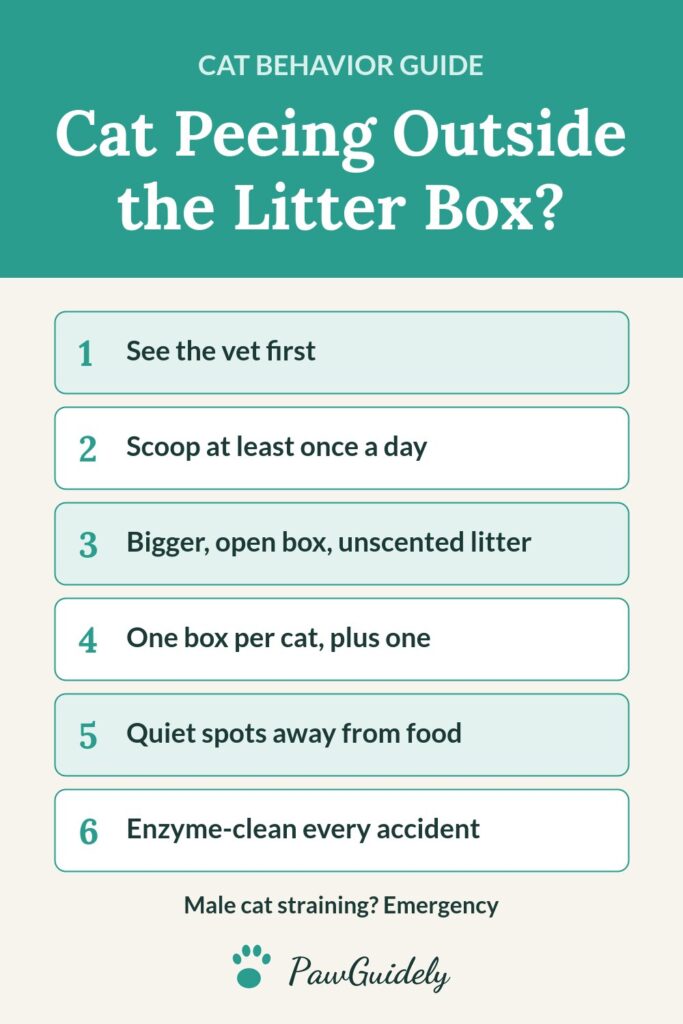
- See your vet and follow their treatment plan.
- Scoop at least once a day, and do a full clean regularly.
- Add more boxes, in different rooms and on each floor.
- Use a bigger, open box. Many cats prefer a box one and a half times their length.
- Switch to unscented, fine-grained clumping litter, or try a litter with an attractant.
- Move boxes to quiet, safe spots away from food, water and noisy appliances.
- Clean accidents with an enzyme cleaner to remove the odor completely.
- Make accident spots less appealing. Place food bowls, toys or a bed there, since cats rarely toilet where they eat or sleep.
- Reduce stress. Keep routines steady, add hiding spots and high perches, and block the view of outdoor cats if needed.
Spraying vs Peeing
Spraying is different from peeing outside the box. A spraying cat stands with a raised, quivering tail and sprays a small amount of urine on vertical surfaces like walls or furniture. It is a form of marking, often linked to stress or territory, and is more common in unneutered cats. Spaying or neutering, reducing stress and talking to your vet or a feline behaviorist can help.
What Not to Do
- Never punish or rub your cat’s nose in it. It increases stress and makes the problem worse.
- Do not use ammonia or strongly scented cleaners.
- Do not suddenly change several things at once. Change one thing at a time so you know what worked.
Gear That Helps
1. Precious Cat Cat Attract Litter — Best Attractant Litter
A clumping litter with a natural herbal attractant designed to encourage cats back into the box. It is widely used for cats with litter box problems.
- Designed for problem cats
- Low dust clay
Worth knowing: Use alongside a vet check and box setup changes.
2. IRIS USA XX-Large High Sided Litter Box — Best Big Box
An extra-large, high-sided box that gives cats plenty of room to turn and dig while keeping litter and urine inside.
- Very roomy
- High sides reduce spills
Worth knowing: Check that older cats can step in comfortably.
3. Rocco & Roxie Enzyme Stain & Odor Eliminator — Best Cleaner
An enzyme cleaner that breaks down urine so your cat is not drawn back to the same spot.
- Enzyme formula
- For carpets, floors and bedding
Worth knowing: Soak the area generously and let it dry naturally.
The Bottom Line
When a cat pees outside the litter box, start at the vet. Then look at the box from your cat’s point of view: clean, big, open, in a quiet place, with unscented litter and enough boxes for every cat. Clean accidents properly and reduce stress. With patience, most cats go back to using the box.
Tracking Progress
Keep a simple log for two to three weeks: where and when accidents happen, what changed in the house, and which fixes you tried. Patterns often appear quickly, such as accidents only near one door or only after a particular visitor. The log is also very helpful for your vet or a feline behaviorist if the problem continues.
Litter Box Setup Checklist
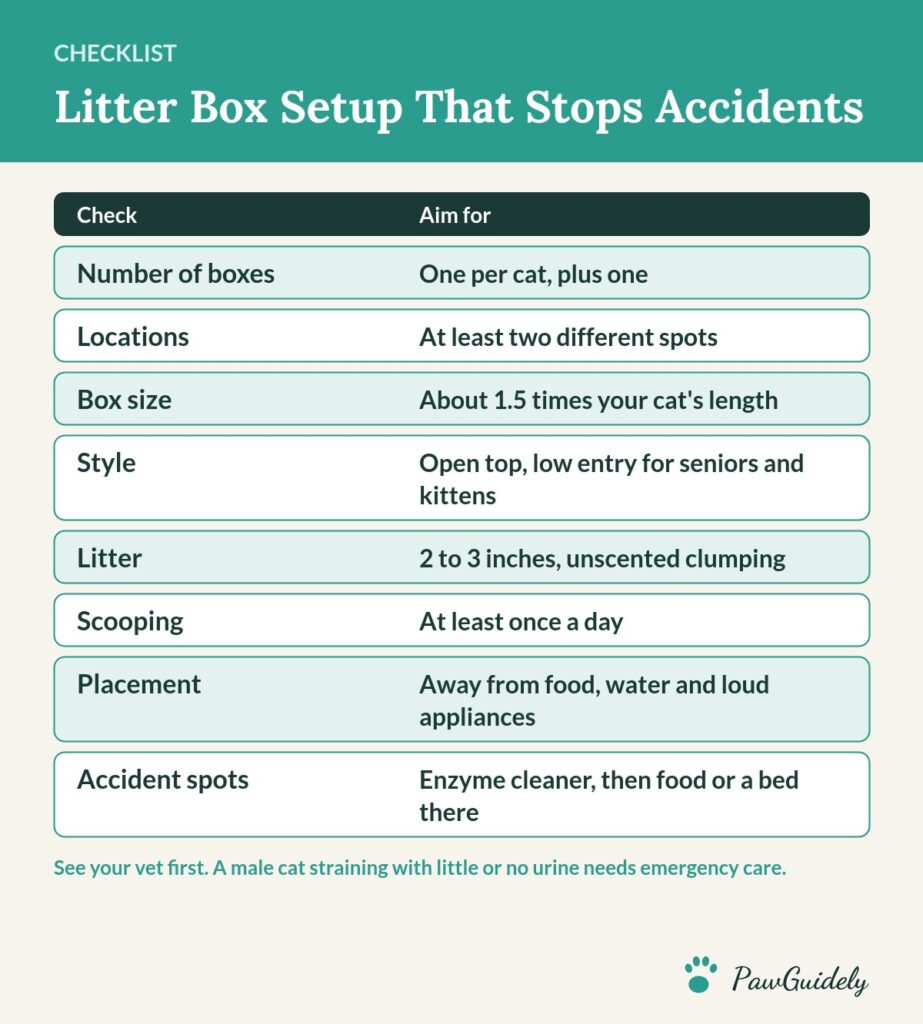
- One box per cat, plus one.
- Boxes in at least two different locations.
- Box about one and a half times your cat’s length.
- Open top, low entry for seniors and kittens.
- 2 to 3 inches of unscented clumping litter.
- Scooped at least daily.
- Away from food, water and loud appliances.
Further reading: Further reading from trusted animal-welfare and veterinary sources: ASPCA: Litter Box Problems and Cornell Feline Health Center: Feline Behavior Problems, House Soiling. This guide is general information, not veterinary advice, so ask your vet about your own pet.
Related Guides
- How to Clean a Litter Box: Daily, Weekly and Deep-Clean Routine
- How Many Litter Boxes Do You Need Per Cat? (The N+1 Rule Explained)
- 5 Best Litter Boxes for Large Cats (Maine Coons and Big Breeds)
- 5 Best Cat Litters for Odor Control (That Actually Work)
Frequently Asked Questions
Why is my cat suddenly peeing outside the litter box?
Sudden changes often have a medical cause, such as a urinary problem. See your vet first, then check for changes in the box, litter or household.
Is a cat peeing outside the box an emergency?
It can be. A male cat straining with little or no urine needs emergency care. Otherwise, book a vet visit soon.
How do I get the smell of cat pee out?
Use an enzyme cleaner and soak the area. Regular cleaners often leave odor your cat can still smell.
Will my cat stop peeing outside the box on its own?
Rarely. The cause needs to be found and fixed, whether medical or environmental.
Can stress cause a cat to pee outside the box?
Yes. Changes at home, new pets, conflict with other cats and outdoor cats can all trigger it.