
This post contains affiliate links. As an Amazon Associate I earn from qualifying purchases. This costs you nothing extra. See our affiliate disclosure for details.
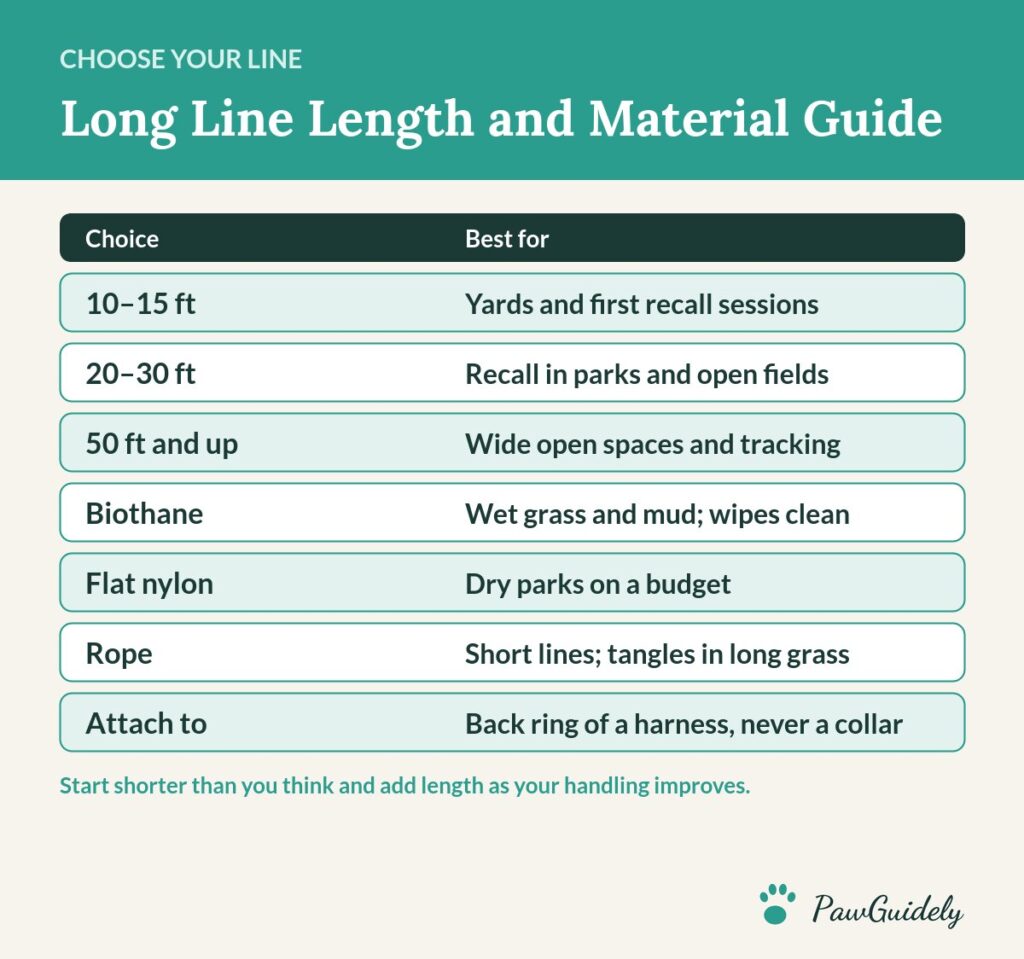
The best long line for most dog training is a 15 to 30 ft biothane line: it doesn’t soak up water or mud, wipes clean, and tangles less than rope or woven nylon. Choose about 15 ft for yard work and first recall practice and 30 ft for open fields, and always clip it to the back ring of a harness, never a collar. Below are three lines worth buying and how to handle one without burns or tangles.
What a Long Line Is For
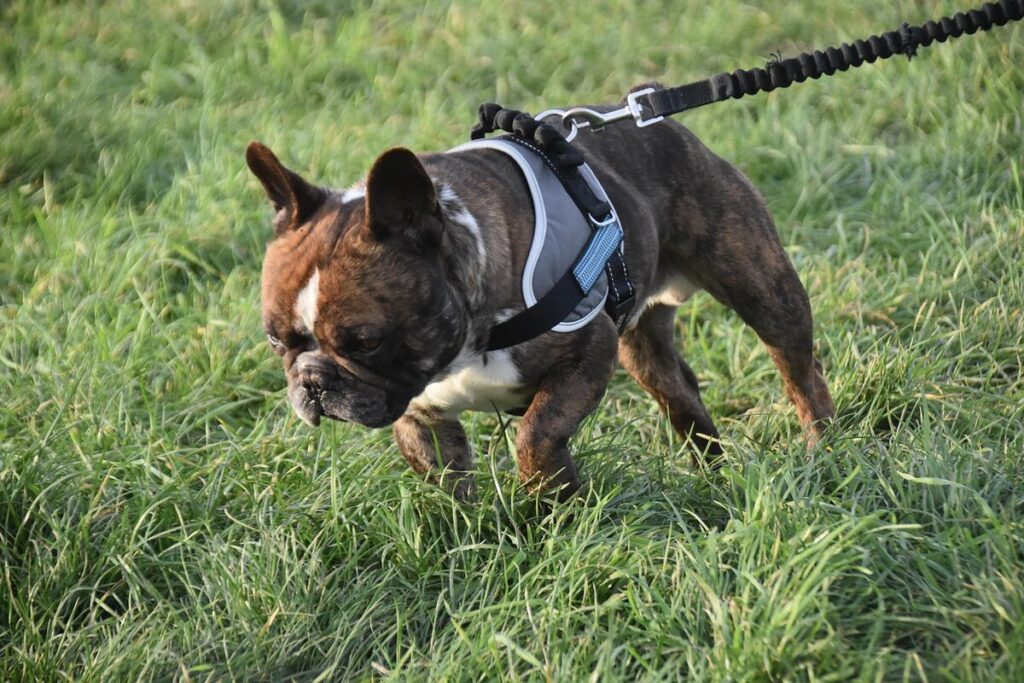
A long line is a training leash, not an everyday walking leash. It gives your dog room to sniff and practice coming back from a distance while you keep a way to stop it reaching a road, wildlife or another dog. Trainers use it as the bridge between on-leash recall and trusting a dog off leash. Unlike a retractable leash, there is no constant pull on the dog and no thin cord in a locking reel, so the dog learns what a slack line feels like.
Biothane vs Nylon vs Rope
| Material | Wet and muddy use | Grip and burn risk | Tangling | Best for |
|---|---|---|---|---|
| Biothane (coated webbing) | Stays light; wipes clean | Smooth; less friction burn but slippery when wet | Low | Fields, beaches, wet grass |
| Flat woven nylon | Soaks up water and gets heavy | Good grip; can burn hands if it runs | Medium | Dry parks, budget buys |
| Round rope | Absorbs water; dries slowly | Easy to hold; burns if it runs | High in long grass | Short lines, tie-outs |
How Long Should a Long Line Be?
Longer isn’t automatically better. Every extra 10 ft is more line to manage, more to tangle around legs and trees, and more distance for your dog to build speed before the line goes tight.
- 10–15 ft: backyards, first recall sessions, and handlers new to long lines. Easy to control.
- 20–30 ft: the most useful range for recall in parks and fields once you are comfortable reeling in and letting out.
- 50 ft and up: wide open spaces and scent or tracking work. Hard to manage around obstacles and other people.
As a rough width guide, toy and small dogs need a light line around 1/4 to 3/8 in so it doesn’t drag on them; most medium and large dogs do well with about 1/2 in; very strong dogs may need a wider or heavier-rated line. Check the snap hook, not just the strap, since the hook is usually the weakest point.
1. Viper Biothane Long Line — Best Overall
Viper is a long-running working-dog brand, and its biothane lines are popular with tracking and recall trainers. Biothane is webbing sealed in a waterproof coating, so the line stays the same weight after crossing wet grass and you can rinse mud off under a tap. It is sold in several lengths and widths, so you can match the line to your dog rather than buying a one-size option.
- Waterproof coating stays light and clean
- Smooth surface tangles less in grass
- Choice of lengths and widths
- Works well for tracking and recall
Worth knowing: biothane gets slippery when wet, so gloves help with strong dogs, and it costs noticeably more than nylon. It can also be stiff in very cold weather.
2. Hi Kiss Recall Training Lead — Best Budget
This flat nylon lead is one of the most-bought long lines on Amazon and comes in a wide range of lengths, from short training leads up to 100 ft. For dry-weather recall practice it does the job at a low price, and the bright color options make it easier to see in grass.
- Low price for a first long line
- Many lengths to choose from
- Bright colors are easy to spot
- Light enough for medium dogs
Worth knowing: woven nylon soaks up water and mud and becomes heavy and smelly, and it can give a friction burn if it slides through bare hands. Inspect the stitching near the clip regularly.
3. Leash Boss Free Range 30 ft Long Line — Best for Big Dogs
The Free Range is a 1-inch-wide soft-weave nylon line with a padded handle and a swivel clip. The extra width makes it easier to grip when a large dog hits the end of the line, and the swivel reduces twisting as your dog circles.
- 1-inch width for a firmer grip
- Padded handle
- Swivel snap reduces twisting
- Good for large, strong dogs
Worth knowing: the width and weight make it too heavy for small dogs, and like other nylon lines it holds water. It’s bulkier to coil and carry than biothane.
How to Handle a Long Line Safely
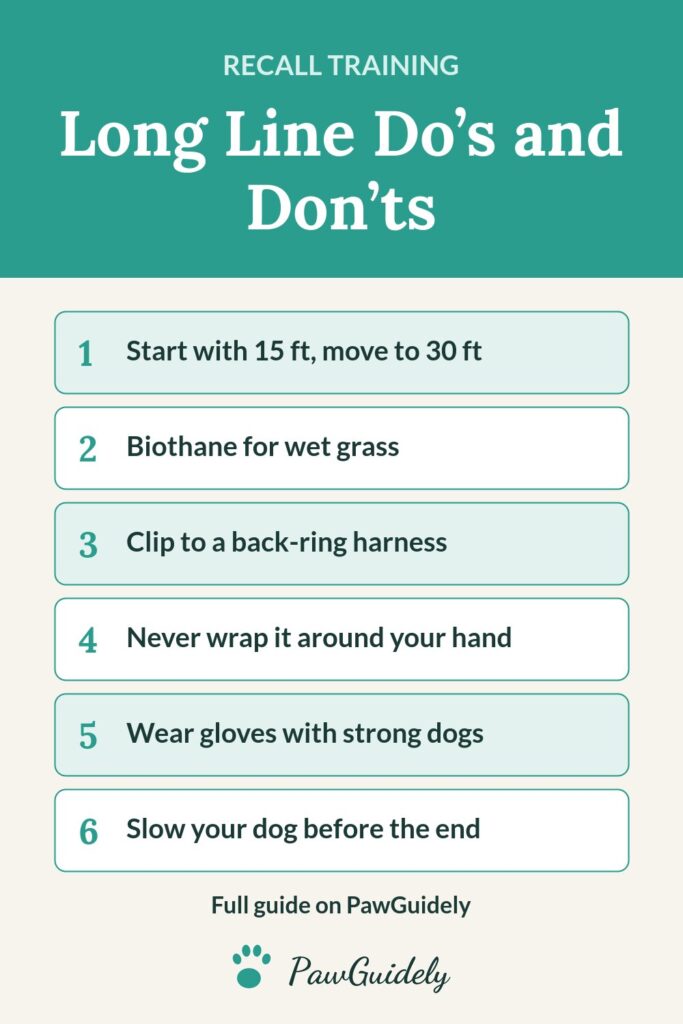
- Clip it to a back-ring harness. A dog hitting the end of 30 ft at a run can hurt its neck on a collar, and a head halter should never be used with a long line.
- Never wrap the line around your hand or fingers. Hold it in a loose coil or flat folds so you can let go if you have to.
- Wear gloves with strong dogs or nylon lines to prevent friction burns.
- Keep the line off the ground in long grass and coil it as your dog comes in so it doesn’t wrap around legs.
- Slow your dog before the end. Call or slow your own pace as the dog nears full length, rather than letting it hit the end hard.
- Use dragging lines only in open, safe areas. A trailing line can snag on brush or fences.
A Simple Long-Line Recall Routine
Start in a quiet field with the line at about half length. Let your dog wander, then call once in a happy voice. When it turns toward you, reward with something better than what it was doing: a high-value treat, a toy, or a release back to sniffing. If your dog ignores you, use the line to stop it moving away, wait for it to look at you, then reward the check-in. Practice short sessions, gradually let out more line, then add distractions. Only consider off-leash time once your dog comes back reliably on a dragging line in a range of places.
When to Skip a Long Line
Long lines are not for busy sidewalks, crowded trails or places with lots of other dogs, where the line can trip people or tangle around other dogs. They are also a poor fit for handlers who can’t physically stop a large dog. In those cases, stick to a standard 6 ft leash and practice recall in a fenced area instead.
Care and Replacement
- After every muddy session: rinse biothane and wipe dry; hang nylon to dry fully before storing.
- Monthly: check the snap hook spring and the stitching or rivets where the clip attaches.
- Replace any line with fraying, cuts, chew damage or a sticky clip.
Related Guides
- Retractable Leash vs Standard Leash: Which Should You Use?
- 5 Best Dog Leashes for Everyday Walks, Running and Training
- How to Stop Your Dog Pulling on the Leash When Walking (8 Steps)
- 5 Best Harnesses for Large Dogs: Strong, Comfortable and Secure
- 5 Best GPS Dog Trackers: Find Your Dog Fast If They Get Loose
- Dog Harness vs Collar: Is a Harness Better for Your Dog?
Frequently Asked Questions
What length long line is best for recall training?
Most owners do best with 15 to 30 ft. Start shorter while you learn to handle the line, then move to 30 ft for open fields.
Is biothane better than nylon for a long line?
For wet or muddy places, yes: biothane stays light and wipes clean. Nylon is cheaper and grips well in dry conditions but soaks up water.
Can I attach a long line to my dog’s collar?
It is safer to use the back ring of a harness. If a running dog hits the end of a long line, a collar puts all that force on the neck.
How long should I use a long line before going off leash?
There’s no fixed timeline. Move on when your dog responds to a single recall cue on a dragging line in several different places and around distractions.