
This post contains affiliate links. As an Amazon Associate I earn from qualifying purchases. This costs you nothing extra. See our affiliate disclosure for details.
Kittens explore everything with their paws and mouths, and they are still learning where to go. That makes litter choice more important than it is for adult cats. The best cat litter for kittens is unscented, low in dust, comfortable under small paws and appealing enough that your kitten wants to use it. Many vets also suggest avoiding fine clumping litter for very young kittens who might eat it.
We compared kitten training litters, non-clumping paper litters and gentle unscented clumping litters, based on dust, scent, texture, safety considerations and owner feedback.
Our Quick Picks
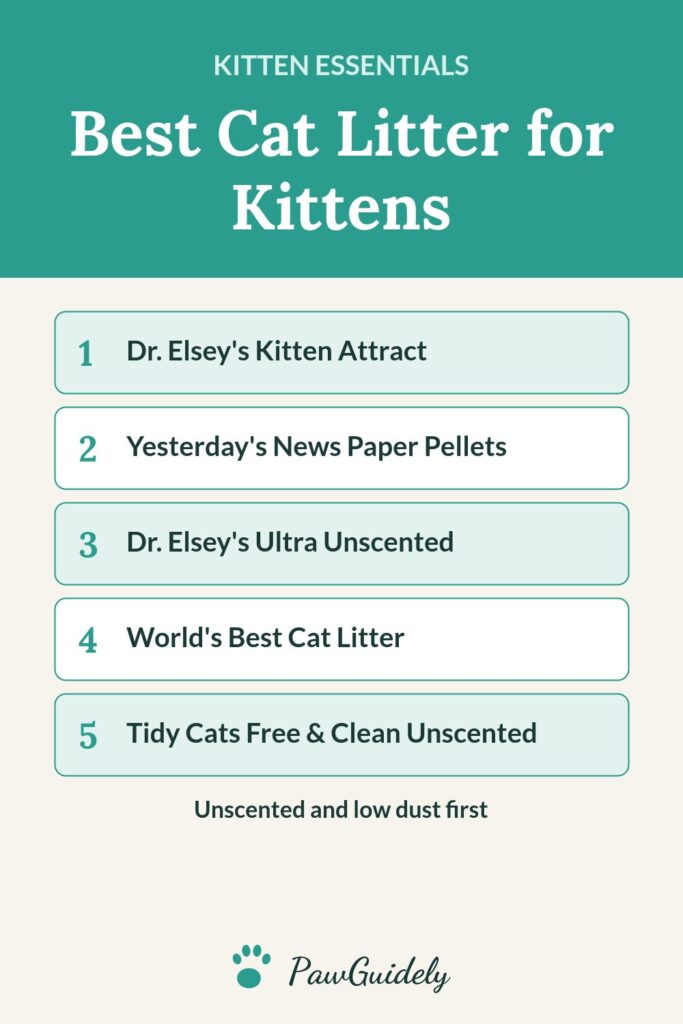
- Best OverallDr. Elsey's Kitten Attract LitterCheck Price on Amazon
- Best for Very Young KittensPurina Yesterday's News Unscented Paper LitterCheck Price on Amazon
- Best for Older KittensDr. Elsey's Ultra Unscented Clumping LitterCheck Price on Amazon
Short on time? These are our top choices. Full reviews and comparisons are below.
Kitten Litters Compared
| Litter | Type | Clumping | Best for |
|---|---|---|---|
| Dr. Elsey’s Kitten Attract | Clay with herbal attractant | Yes | Training and reluctant kittens |
| Yesterday’s News Unscented | Recycled paper pellets | No | Very young kittens, post-surgery |
| Dr. Elsey’s Ultra Unscented | Clay | Yes | Older kittens moving to adult litter |
| World’s Best Cat Litter | Corn-based | Yes | Plant-based option |
| Tidy Cats Free & Clean Unscented | Clay | Yes | Unscented, widely available |
1. Dr. Elsey’s Kitten Attract Litter — Best Overall
A kitten litter with a natural herbal attractant designed to draw kittens to the box, plus a texture suited to small paws. It is a popular choice for kittens who are still learning or who came from outdoors.
- Designed for litter training
- Low dust
- Unscented for people
Worth knowing: It is a clumping litter. Ask your vet whether it suits your kitten’s age.
2. Purina Yesterday’s News Unscented Paper Litter — Best for Very Young Kittens
Soft recycled paper pellets that are very low dust and do not clump, which is why many shelters and vets use them for very young kittens and after surgery.
- Non-clumping
- Very low dust and tracking
- Unscented
Worth knowing: Change it fully and often, since odor builds as pellets absorb urine.
3. Dr. Elsey’s Ultra Unscented Clumping Litter — Best for Older Kittens
Once your kitten is a few months old and past the litter-tasting stage, this unscented, low-dust clumping litter is an easy step up that you can keep using into adulthood.
- Firm clumps for easy scooping
- Unscented
- Low dust for clay
Worth knowing: Switch gradually from the kitten’s first litter.
4. World’s Best Cat Litter — Best Plant-Based
A corn-based clumping litter that is lighter than clay and popular with owners who prefer plant-based products.
- Plant-based
- Lighter than clay
- Clumps well
Worth knowing: Clumps are softer than clay. Scoop daily.
5. Tidy Cats Free & Clean Unscented — Best Widely Available
An unscented clumping clay litter that is easy to find in stores, useful if you want to keep the same litter your kitten used at the shelter or breeder.
- Unscented
- Widely available
- Good clumping
Worth knowing: Clay litter creates some dust when poured. Pour slowly and low.
How We Chose the Best Cat Litter for Kittens
- Safety considerations: non-clumping options for very young kittens.
- Dust: low-dust litters for small, developing airways.
- Scent: unscented options, since fragrance can put kittens off the box.
- Texture: comfortable for small paws.
- Training help: attractant litters for slow learners.
When Can Kittens Use Clumping Litter?
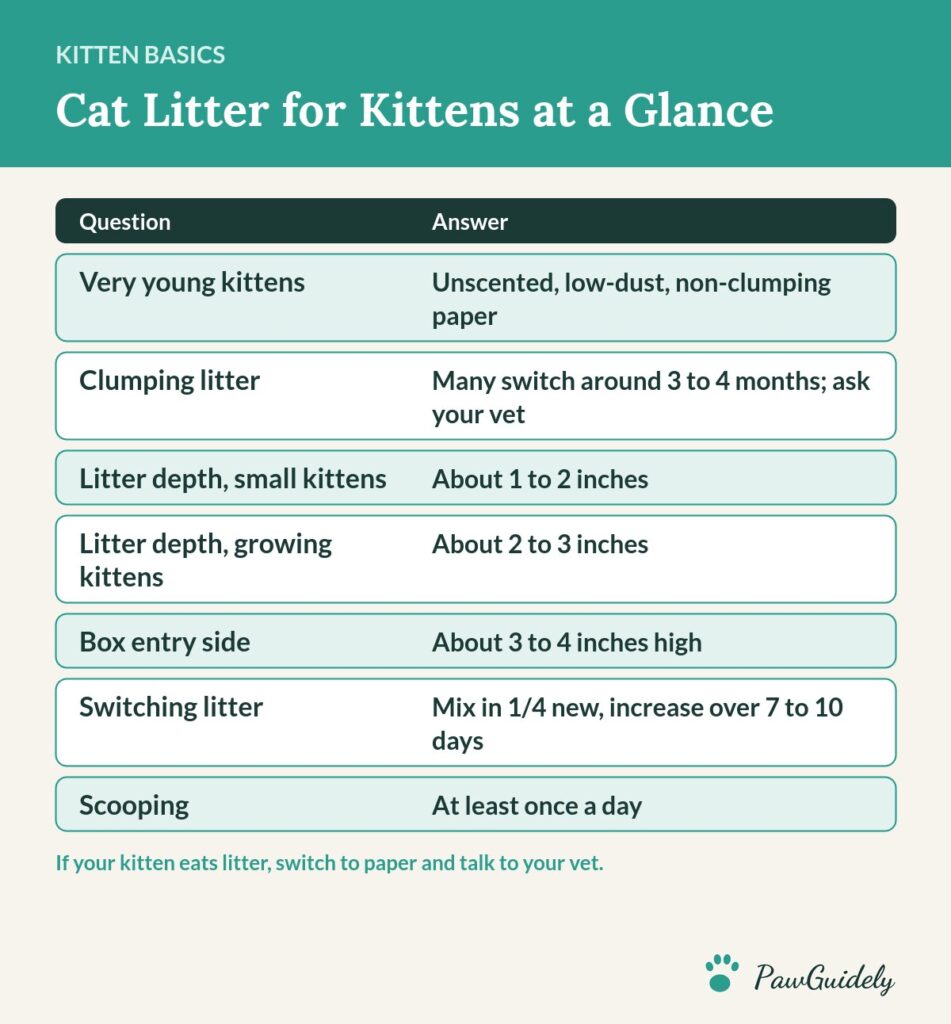
There is no single rule. Many vets and shelters suggest non-clumping litter until kittens are around three to four months old, when they are less likely to eat litter. Others are comfortable with clumping litter earlier as long as the kitten is not eating it. Watch your kitten. If they chew or eat litter, switch to paper pellets and ask your vet.
How to Switch Your Kitten’s Litter
- Start with the litter your kitten used before coming home, if you know it.
- When switching, mix a quarter of the new litter into the old.
- Increase the new litter over 7 to 10 days.
- Keep the box in the same spot during the change.
- If accidents start, slow down or switch back.
Our Verdict
For most kittens, Dr. Elsey’s Kitten Attract is a great training litter. For very young kittens, Yesterday’s News paper pellets are the cautious choice. As your kitten grows, Dr. Elsey’s Ultra Unscented is an easy long-term litter.
Setting Up the Litter Box for a Kitten
- Low entry: a side of about 3 to 4 inches is easy for small kittens to climb.
- Open top: covered boxes can feel dark and trap smell.
- Right size: big enough to turn around and dig, and big enough to grow into.
- Quiet location: away from food, water and noisy appliances.
- Close by: in the room where your kitten spends most time at first.
Scoop at least once a day and change non-clumping litter every few days to once a week. Kittens are more likely to have accidents if the box is dirty or hard to reach. Our guide on how to litter train a kitten covers the full routine.
Signs a Litter Is Not Working for Your Kitten
- Going next to the box instead of in it
- Perching on the edge rather than stepping in
- Shaking paws after using the box
- Sneezing when digging, which can suggest dust
- Eating or chewing the litter
If you see any of these, try a different litter texture in a second box and let your kitten choose. If problems continue, or your kitten shows signs of illness, contact your vet.
Related Guides
- How to Litter Train a Kitten: Easy Steps for New Kitten Owners
- Clumping vs Non-Clumping Cat Litter: Which Is Better?
- Best Cat Litter in 2026: 5 Picks and Every Litter Type Explained
- New Cat Checklist: 20 Essentials to Buy Before You Bring Your Cat Home
Frequently Asked Questions
What litter is safest for kittens?
Many vets suggest unscented, low-dust, non-clumping litter such as paper pellets for very young kittens, especially if they tend to eat litter.
Is clumping litter bad for kittens?
It can be a risk for very young kittens who eat litter. Many owners switch to clumping litter at around three to four months. Ask your vet.
Should kitten litter be scented?
Unscented is usually best. Strong scents can discourage kittens from using the box.
How deep should litter be for a kitten?
About 1 to 2 inches for small kittens, increasing to 2 to 3 inches as they grow.
What if my kitten eats litter?
Switch to a non-clumping paper litter and talk to your vet, especially if your kitten seems unwell.