
This post contains affiliate links. As an Amazon Associate I earn from qualifying purchases. This costs you nothing extra. See our affiliate disclosure for details.
Regular nail trims keep your cat’s claws from getting snagged in carpets and furniture, reduce scratches during play, and help older cats whose nails can overgrow and curl into the paw pads. Learning how to trim cat nails takes a little practice, but most trims take just a few minutes once you and your cat have a routine.
What You Need
| Item | Why |
|---|---|
| Cat nail clippers | Small scissor-style or guillotine clippers designed for cat claws |
| Treats | To reward calm behavior during and after the trim |
| Styptic powder or cornstarch | Stops bleeding if you cut the quick |
| A towel | For gently wrapping a wriggly cat |
| Good lighting | So you can see the quick clearly |
Understanding the Quick
Each claw has a pink area inside called the quick, which contains blood vessels and nerves. Cutting into it hurts and bleeds. In most cats with light-colored claws, the quick is easy to see as a pink triangle. You only want to trim the sharp, clear or white tip beyond it, usually just 1 to 2 millimeters. If your cat has dark claws, trim tiny amounts at a time.

How to Trim Cat Nails Step by Step
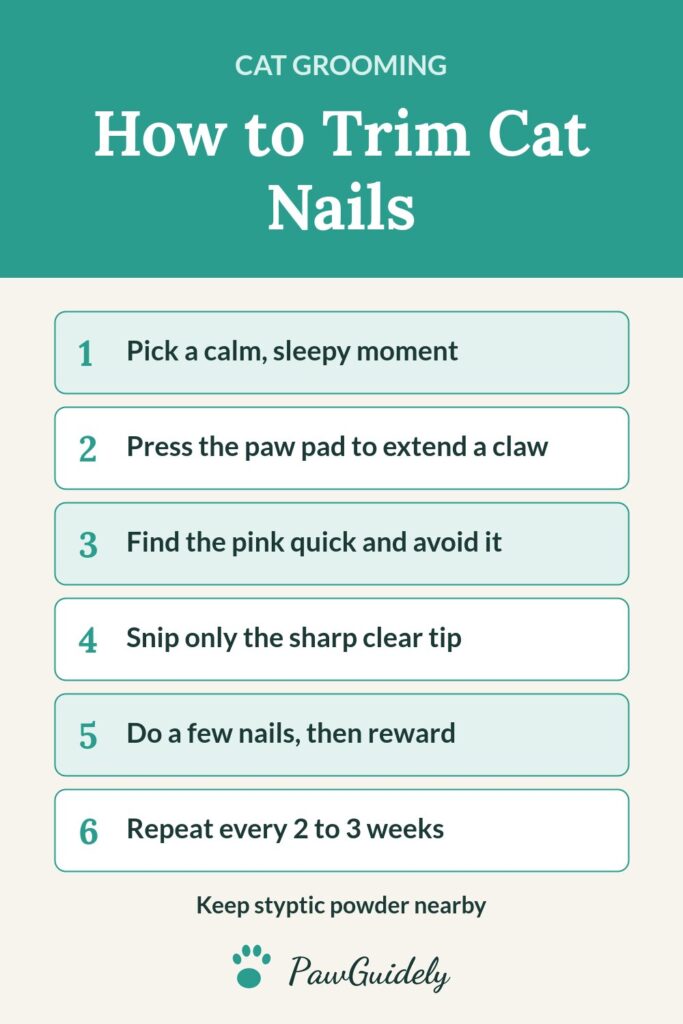
- Choose the right moment. A sleepy, relaxed cat after a meal or nap is ideal. Avoid times when your cat is playful or stressed.
- Get comfortable. Sit with your cat on your lap facing away from you, or on a table at a comfortable height. Some cats relax more wrapped loosely in a towel with one paw out.
- Hold a paw gently. Hold the paw between your thumb and fingers, and press lightly on the top and bottom of a toe to extend the claw.
- Find the quick. Look for the pink area inside the claw. Plan to cut well before it.
- Trim the tip. Snip the sharp tip in one smooth motion, holding the clipper at a slight angle to the claw.
- Do the rest, or stop early. Move to the next claw. Do not forget the dewclaws on the inside of the front legs. If your cat gets restless, stop and finish later.
- Reward. Give a treat and praise after each paw, or even each claw at first.
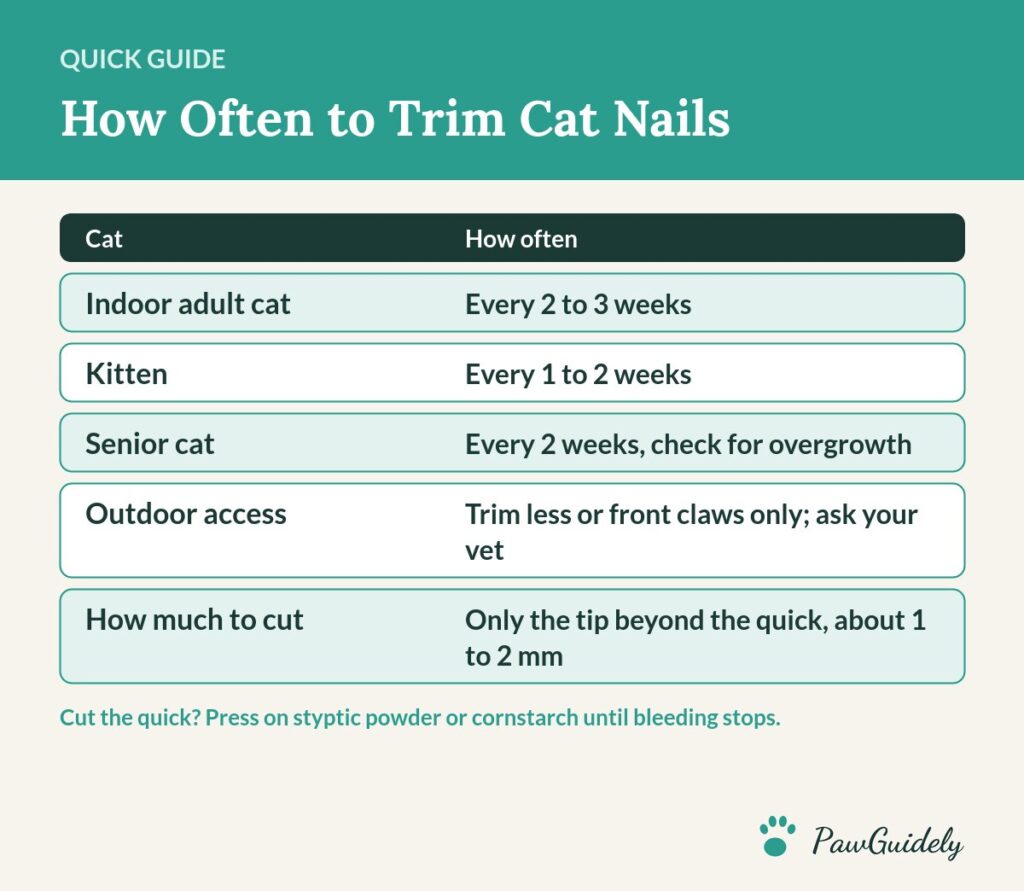
How Often to Trim Cat Nails
| Cat | Typical frequency |
|---|---|
| Indoor adult cat | Every 2 to 3 weeks |
| Kitten | Every 1 to 2 weeks (nails grow fast) |
| Senior cat | Every 2 weeks, and check for overgrown nails |
| Cat with outdoor access | Trim less, or only the front claws, as they need claws for climbing and defense. Ask your vet |
Helping a Nervous Cat Accept Nail Trims
- Handle your cat’s paws gently during calm cuddles, with a treat each time, for a week before trimming.
- Let your cat sniff the clippers and hear them click near them, followed by a treat.
- Trim one or two claws a day instead of all at once.
- Keep sessions short and end on a good note.
- Ask a second person to offer treats or a lick mat while you trim.
If You Cut the Quick
Stay calm. Press a pinch of styptic powder or cornstarch onto the tip of the claw and hold for 30 seconds to a minute until bleeding stops. Give your cat a treat and a break. If bleeding does not stop after several minutes, call your vet.
Mistakes to Avoid
- Using human nail clippers, which can crush or split claws.
- Cutting too much at once.
- Trimming when your cat is agitated.
- Forgetting the dewclaws.
- Restraining your cat too tightly, which increases fear.
When to See the Vet or a Groomer
Ask your vet for help if a claw is growing into the paw pad, the paw is swollen, red or smelly, or your cat is too stressed to trim safely at home. Many vet clinics and groomers offer quick nail trims.
Gear That Helps
1. Pet Republique Cat Nail Clippers — Easiest to Control
Small, scissor-style clippers with a semicircular blade that holds the claw in place while you cut. They are sharp and easy to control, which makes precise trims easier.
- Sharp stainless-steel blades
- Small size suits cat and kitten claws
Worth knowing: Keep the blades clean and replace them if they start to crush rather than cut.
2. Safari Cat Nail Trimmer — Budget Pick
A simple, affordable trimmer designed for cats and kittens, with a small cutting head that suits little claws.
- Affordable
- Designed for small claws
Worth knowing: Take your time to position the claw correctly before each snip.
3. SmartCat Ultimate Scratching Post — Between Trims
A tall, sturdy sisal post gives your cat a place to scratch, stretch and naturally shed the outer layers of their claws between trims.
- Tall enough for a full stretch
- Heavy base that does not wobble
Worth knowing: Place it near where your cat likes to scratch.
The Bottom Line
Use proper cat clippers, trim only the sharp tip beyond the pink quick, and keep sessions short and rewarding. With a calm routine every two to three weeks, most cats learn to tolerate nail trims, and your furniture and arms will thank you.
Related Guides
- How to Trim Dog Nails at Home (Without Cutting the Quick)
- Best Cat Scratching Posts and Scratchers in 2026 (Plus How to Save Your Sofa)
- How to Stop a Cat Scratching Furniture (Without Punishment)
- 3 Best Cat Brushes for Shedding (Long and Short Hair)
- How to Brush a Cat (Even One Who Hates It)
Frequently Asked Questions
How often should I trim my cat’s nails?
Every two to three weeks for most indoor cats. Kittens may need trims more often because their nails grow quickly.
Can I use human nail clippers on my cat?
It is better not to. Human clippers can crush or split a cat’s claw. Use clippers made for cats.
What happens if I cut my cat’s quick?
It will bleed and be sore. Apply styptic powder or cornstarch and pressure until it stops, and call your vet if it does not stop in a few minutes.
Do I need to trim my cat’s back claws?
Back claws grow more slowly and wear down more, so many cats need them trimmed less often. Check them every few weeks.
Is declawing an alternative to nail trims?
Declawing is a surgical amputation and is banned or discouraged in many places. Regular trims, scratching posts and nail caps are humane alternatives.