
This post contains affiliate links. As an Amazon Associate I earn from qualifying purchases. This costs you nothing extra. See our affiliate disclosure for details.
Cats are fastidious, and a dirty litter box is one of the most common reasons they start going elsewhere in the house. Keeping the box clean is not hard once you have a routine: a quick scoop every day, a full litter change every few weeks, and a proper wash when you do. Here is exactly how to do each step, and what to avoid.
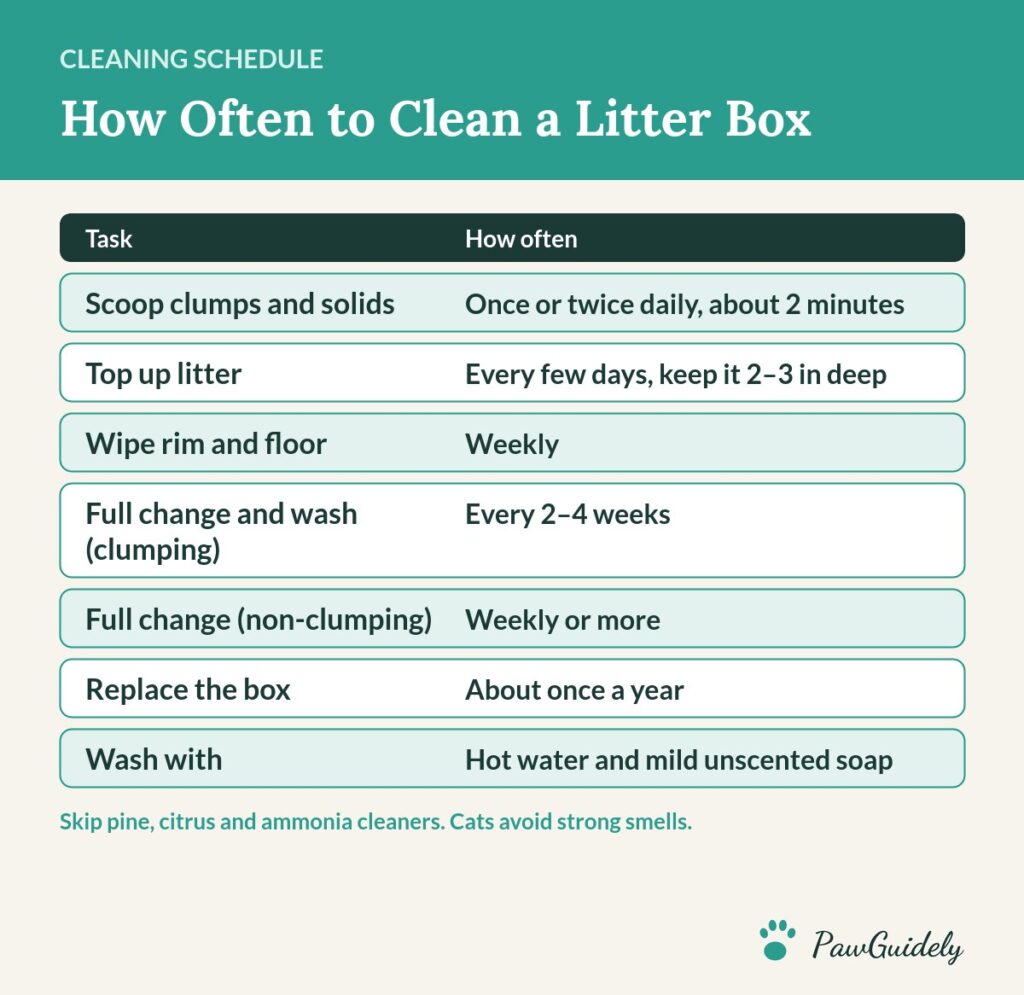
Litter Box Cleaning Schedule
| Task | How often | Time needed |
|---|---|---|
| Scoop clumps and solids | Once or twice daily | 2 minutes |
| Top up litter | Every few days | 1 minute |
| Wipe the rim and floor around the box | Weekly | 3 minutes |
| Full litter change and wash (clumping litter) | Every 2 to 4 weeks | 15 minutes |
| Full change (non-clumping litter) | Weekly or more | 15 minutes |
| Replace the box | About once a year | – |
How to Clean a Litter Box Every Day
- Scoop from the edges in. Use a sturdy slotted scoop and dig under each clump so you lift it out whole. Broken clumps leave wet litter behind, which smells.
- Check the corners and sides. Urine often clumps against the walls of the box. Scrape these off gently.
- Bag the waste. Seal clumps in a bag or a litter disposal system. Do not flush clumping clay litter, as it can block pipes.
- Top up. Keep litter at a depth of about 2 to 3 inches. Too little and clumps stick to the bottom. Too much and litter gets kicked out.
- Tidy up. Sweep or vacuum scattered litter and shake out the mat.
How to Deep Clean a Litter Box
- Empty everything. Pour all the used litter into a large trash bag. Wear gloves if you prefer.
- Rinse the box. Use warm water to loosen stuck-on litter. A spatula or old scoop helps.
- Wash with mild, unscented soap. Dish soap and hot water are enough. Scrub the floor, walls and rim.
- Rinse thoroughly. Leftover soap smell can put cats off.
- Dry completely. Towel dry or let it air dry in the sun. Damp boxes make fresh litter clump to the bottom.
- Refill with fresh litter to a depth of 2 to 3 inches, and put the box back in the same spot.
If you want to sanitize, an enzyme cleaner designed for pet messes is a gentle option. If you use a diluted bleach solution, rinse very thoroughly and let the box dry and air out completely, as cats are sensitive to the smell and residue.
What Not to Use
- Strong-smelling cleaners such as pine or citrus, which can make cats avoid the box.
- Ammonia-based cleaners, which smell similar to urine.
- Undiluted bleach, or mixing bleach with other cleaners, which can release harmful fumes.
- Heavily scented liners and deodorizers if your cat seems hesitant.
Tips to Keep Odor Down
- Use a high-quality clumping, low-dust litter. See our picks for the best cat litter for odor control.
- Scoop twice a day in multi-cat homes and follow the one box per cat, plus one rule.
- Put the box in a spot with some airflow, away from food and water.
- Replace plastic boxes when they get scratched, because scratches trap odor.
- A litter mat catches tracked granules before they spread.
Health Note
Daily scooping is a good time to notice changes. Contact your vet if your cat is peeing much more or less than usual, straining, producing very small clumps often, has blood in the urine, or starts avoiding the box. A male cat straining with little or no urine is an emergency. Pregnant people and anyone with a weakened immune system should ask their doctor about litter box safety and may want someone else to clean the box.
Gear That Helps
1. iPrimio Cat Litter Scooper — Best Scoop
A sturdy metal scoop with a deep shovel and a well-sized slot pattern that sifts clean litter back while holding clumps. It is far easier than flimsy plastic scoops.
- Solid metal, will not bend
- Deep shovel lifts clumps whole
Worth knowing: Very fine litters may sift a little slowly. Shake gently.
2. Dr. Elsey’s Ultra Unscented Clumping Litter — Easy-Scoop Litter
Hard, flat clumps make daily scooping quick and leave less wet litter behind. It is unscented, which most cats accept well.
- Firm clumps
- Unscented and low dust for clay
Worth knowing: Switch gradually if your cat is used to a different litter.
3. Gorilla Grip Litter Mat — Catches Tracking
A textured mat that traps granules from your cat’s paws as they leave the box, so less litter ends up around the house.
- Soft on paws
- Easy to shake out or vacuum
Worth knowing: Pick a size that extends well past the box entrance.
4. Rocco & Roxie Enzyme Stain & Odor Eliminator — For Accidents
An enzyme cleaner for accidents outside the box and for freshening the area around it without harsh fragrances.
- Enzyme formula breaks down urine odor
- Suitable for carpets and floors
Worth knowing: Soak the spot and let it work, rather than wiping it away immediately.
The Bottom Line
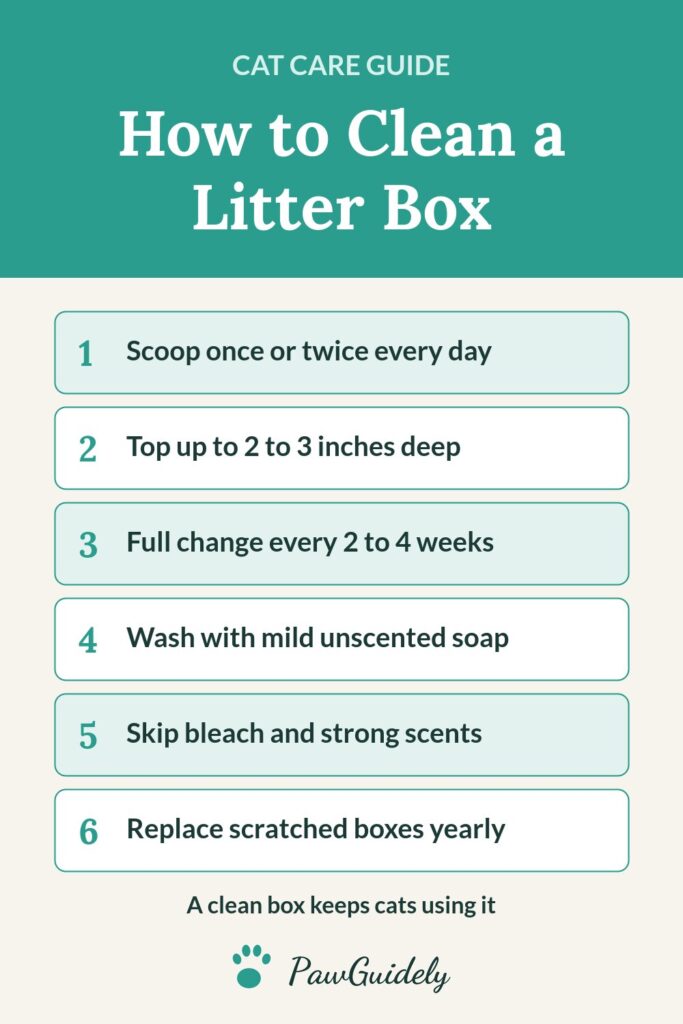
Scoop every day, keep the litter topped up, and do a full change and wash with mild soap every two to four weeks. Avoid harsh smells, replace scratched boxes, and keep an eye on changes in your cat’s habits. A clean box is the simplest way to prevent litter problems.
Related Guides
- How Many Litter Boxes Do You Need Per Cat? (The N+1 Rule Explained)
- 5 Best Cat Litters for Odor Control (That Actually Work)
- 5 Best Cat Litter Boxes in 2026: Open, Covered, High-Sided and Top-Entry
- 6 Best Cat Litters for Multiple Cats (Odor Control That Keeps Up)
- Tidy Cats vs Fresh Step: Which Cat Litter Is Better?
- How to Litter Train a Kitten: Easy Steps for New Kitten Owners
- Litter Box Size Guide: How Big Should a Litter Box Be?
- How to Stop a Cat Peeing Outside the Litter Box: Causes and Fixes
- 3 Best Cat Litter Scoops (Matched to Your Litter Type)
- Modkat vs IRIS Top Entry Litter Box: Which Is Worth It?
Frequently Asked Questions
How often should you clean a litter box?
Scoop at least once a day, ideally twice, and do a full change and wash every two to four weeks with clumping litter, or weekly with non-clumping litter.
What is the best thing to clean a litter box with?
Hot water and mild, unscented dish soap work well. An enzyme cleaner can help with odor. Avoid strong fragrances and ammonia.
Can I use bleach to clean a litter box?
Only diluted, and only if you rinse very thoroughly and let the box air out completely. Never mix bleach with other cleaners.
Why does my litter box still smell after cleaning?
Scratched plastic can hold odor, and the litter may not clump well. Try replacing the box, using a better clumping litter and scooping more often.
Should I flush cat litter?
No. Clumping clay litter can block pipes, and flushing cat waste is not recommended in many areas.
Pingback: Best Cat Litter Scoops: 3 Picks by Litter Type