
This post contains affiliate links. As an Amazon Associate I earn from qualifying purchases. This costs you nothing extra. See our affiliate disclosure for details.
The two most common crate types are wire crates and plastic kennels. Both can work well, but they suit different dogs and different lifestyles. A wire crate is open, bright and folds flat. A plastic crate is enclosed, cozy and built for travel. The right choice depends on your dog’s personality, where the crate will live, and whether you plan to travel with it.
Our Quick Picks
- Best Wire CrateMidWest iCrate with DividerCheck Price on Amazon
- Best Plastic CratePetmate Vari KennelCheck Price on Amazon
Short on time? These are our top choices. Full reviews and comparisons are below.
Wire vs Plastic Dog Crate at a Glance
| Feature | Wire crate | Plastic crate |
|---|---|---|
| Airflow | Excellent, open on all sides | Good, vents on sides and back |
| Privacy | Low unless covered | High, feels like a den |
| Visibility | Dog sees the whole room | Limited view out |
| Travel | Heavy and not airline approved | Light, many sizes meet airline rules |
| Storage | Folds flat | Separates into halves that nest |
| Divider for puppies | Usually included | Rarely available |
| Cleaning | Slide-out tray | Wipe down or hose off |
| Chew resistance | Strong bars, but paws and jaws can catch | Hard shell, but some dogs chew vents |
| Noise | Can rattle | Quiet |
Wire Crates: Pros and Cons
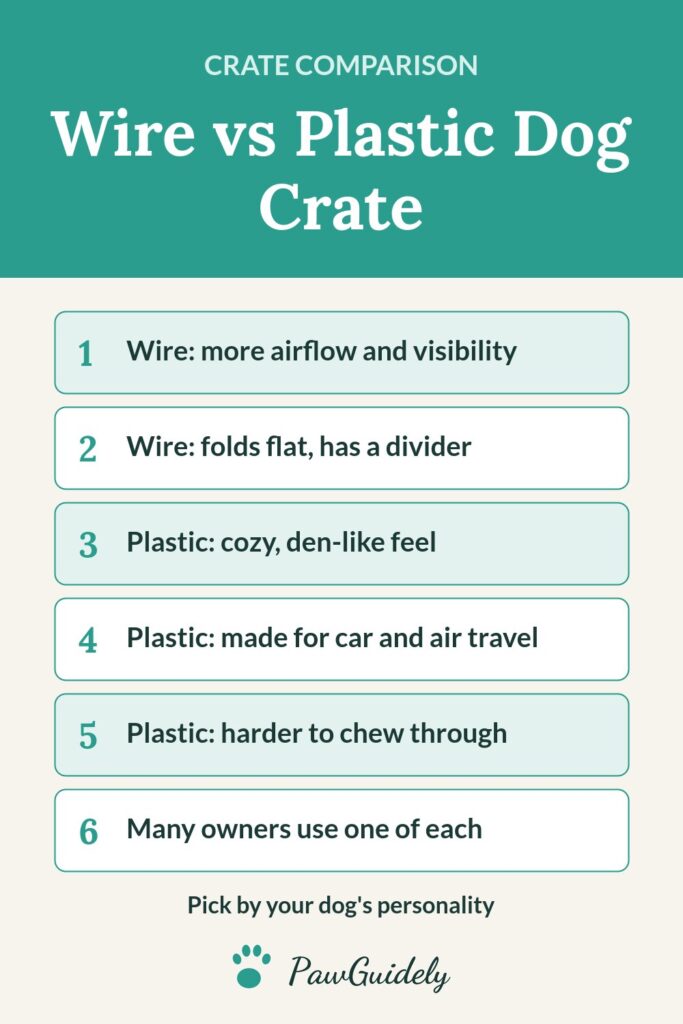
Wire crates are the most popular choice for home use and crate training. They let air move freely, which matters for thick-coated dogs and warm rooms, and they let your dog see what is going on. Most come with a divider panel so you can buy the adult size and make it smaller while your puppy grows.
- Pros: great airflow, divider panels, fold flat in seconds, easy-clean tray, often two doors.
- Cons: heavy to carry, can rattle, feel exposed to some dogs, and not suitable for air travel.
Plastic Crates: Pros and Cons
Plastic kennels have a solid shell with a wire door and side vents. Many anxious or noise-sensitive dogs settle more easily in them because they feel like a den. They are also the standard for car and air travel, and many models meet common airline requirements when set up correctly.
- Pros: cozy and private, lighter, quieter, good for travel, no bars for paws to get stuck in.
- Cons: less airflow, harder to see into, no divider, and the two halves take up more storage space than a folded wire crate.
Our Picks
1. MidWest iCrate with Divider — Best Wire Crate
A popular, well-made wire crate that comes with a divider panel and a leak-resistant plastic tray. It folds flat for storage and is available in sizes from toy to extra large, with single or double door options.
- Divider panel included
- Folds flat with a carry handle
- Wide range of sizes
Worth knowing: Remove your dog’s collar in the crate so tags cannot catch on the wire.
2. Petmate Vari Kennel — Best Plastic Crate
A sturdy plastic kennel with a steel door, ventilation on all sides and a secure latch. It is a long-standing favorite for car travel and is designed with airline travel in mind.
- Den-like feel for anxious dogs
- Strong shell and steel door
- Built with travel in mind
Worth knowing: Airline rules vary. Always check your carrier’s requirements and your dog’s measurements before booking.
Which Crate Is Better for Your Dog?
| If your dog… | Choose |
|---|---|
| Is a growing puppy | Wire, with a divider |
| Gets anxious or overstimulated | Plastic, or wire with a cover |
| Has a thick coat or lives in a warm home | Wire |
| Flies or travels by car often | Plastic |
| Needs to be moved between rooms often | Plastic (lighter) |
| Likes to watch the family | Wire |
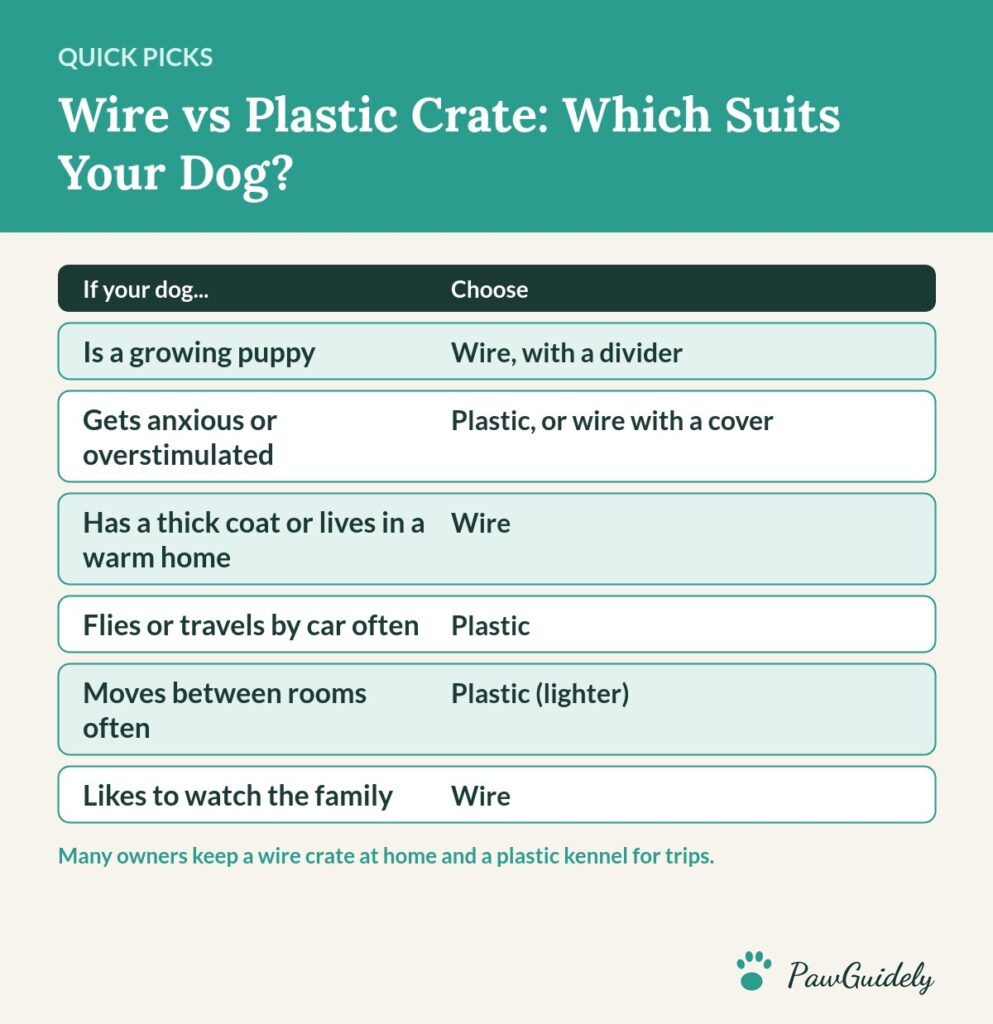
Many owners end up with both: a wire crate in the living room for everyday use, and a plastic kennel for trips and vet visits. If you only buy one, choose based on where your dog will spend most of their crate time.
Sizing Either Crate
Measure your dog from nose to the base of the tail, and from the floor to the top of the head while standing. Add 2 to 4 inches to each. Your dog should be able to stand, turn around and lie down comfortably. For puppies, buy the adult size and use a divider or temporary blocking. Our dog crate size chart lists typical sizes by breed.
Safety Tips
- Remove collars and harnesses during crate time.
- Check wire crates for bent bars or gaps and plastic crates for cracks, especially after travel.
- Keep crates out of direct sun and away from heaters.
- For car travel, secure the crate so it cannot slide or tip.
- If your dog bends bars or chews through plastic in a panic, stop and talk to your vet or a trainer. That can be a sign of anxiety, not a crate problem.
The Bottom Line
Choose a wire crate like the MidWest iCrate for everyday home use, puppies and dogs who like to see the room. Choose a plastic crate like the Petmate Vari Kennel for travel and for dogs who feel safer in a cozy den. Either way, getting the size right and making the crate a positive place matter more than the material.
Related Guides
- 5 Best Dog Crates in 2026: Wire, Plastic, Soft-Sided, and Modular Picks Compared
- Dog Crate Size Chart by Breed & Weight (Plus How to Measure)
- MidWest iCrate vs LifeStages: Which Dog Crate Should You Buy?
- Petmate Sky Kennel vs Vari Kennel: Which Plastic Crate Do You Need?
- Plastic Dog Crate Sizes Chart: Vari Kennel & Sky Kennel Dimensions
Frequently Asked Questions
Is a wire or plastic crate better for crate training?
Both work. Wire crates are more common for home training because of the divider and airflow. Plastic crates can help anxious dogs settle because they feel more enclosed.
Do dogs prefer wire or plastic crates?
It depends on the dog. Confident, social dogs often like being able to see out of a wire crate. Shy or noise-sensitive dogs often prefer the privacy of plastic.
Can I use a wire crate for air travel?
Generally no. Airlines usually require a rigid plastic kennel with specific features. Check your airline’s rules before you fly.
Is a plastic crate too hot for my dog?
Plastic crates have less airflow than wire. Keep them out of the sun and away from heat, and choose wire for thick-coated dogs in warm homes.
Should I cover a wire dog crate?
Many dogs settle better with a breathable cover over a wire crate. Leave one side open for airflow and remove the cover if your dog chews it.