
To clean a dog crate, take everything out, vacuum or shake out loose hair, wash the bedding and cover, then scrub the tray and frame with warm water and mild dish soap. Use an enzymatic cleaner on any urine or poop spots, rinse well and let the crate dry completely before your dog goes back in. A quick daily tidy and a full deep clean about once a month keep most crates fresh.
Below is a step-by-step routine, how to adjust it for wire, plastic and soft-sided crates, and which cleaners to use and avoid.
How Often to Clean a Dog Crate
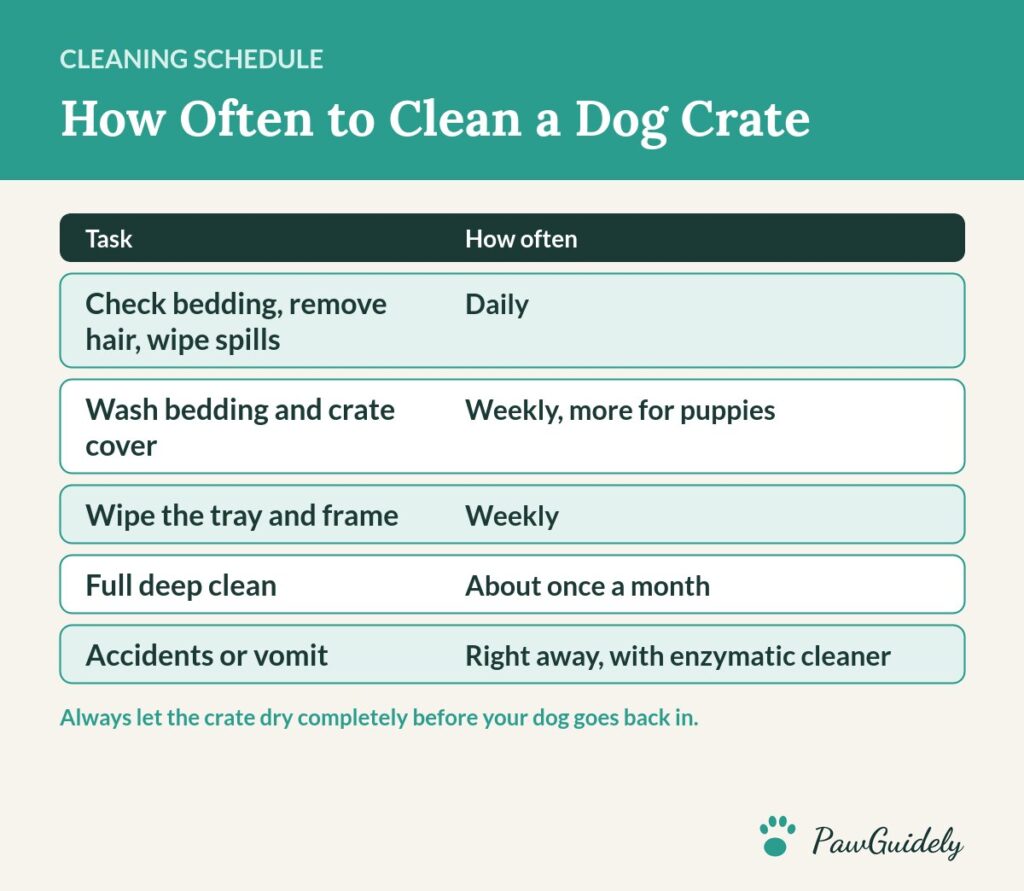
How often depends on your dog’s age, coat and habits. Puppies in house training and heavy shedders need more attention than a tidy adult dog who only naps in the crate. Use this as a starting point:
| Task | How Often |
|---|---|
| Check bedding, remove hair and wipe spills | Daily |
| Wash bedding and crate cover | Weekly (more often for puppies) |
| Wipe the tray and frame | Weekly |
| Full deep clean of the whole crate | About once a month |
| Clean up accidents or vomit | Right away |
What You Need
- Vacuum or lint roller for hair
- Mild, unscented dish soap and warm water
- An enzymatic pet stain and odor cleaner
- A soft brush or old toothbrush for corners and wire joints
- Microfiber cloths or paper towels
- Rubber gloves
- A hose, bathtub or shower for rinsing (optional)
Step-by-Step: How to Deep Clean a Dog Crate
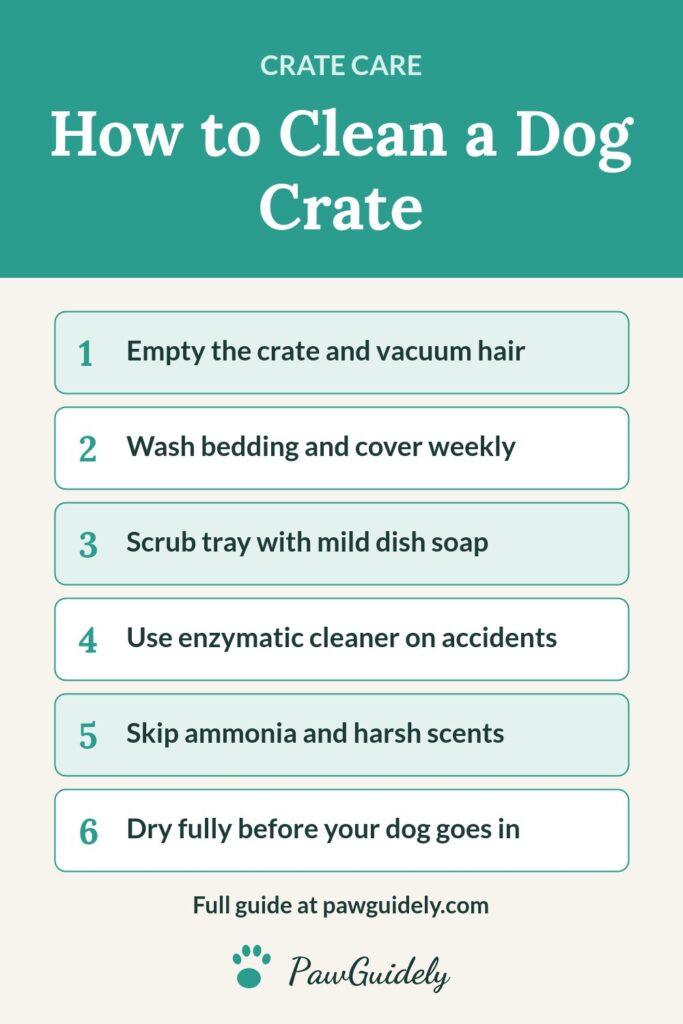
- Take your dog out and empty the crate. Remove bedding, toys, bowls, the cover and the tray if it slides out.
- Remove loose hair and debris. Shake the bedding outside, then vacuum the tray, the crate floor and the corners.
- Wash the bedding and cover. Follow the care label. Most crate pads and covers go in the washing machine on a cool or warm cycle with a mild detergent.
- Treat accident spots. Spray an enzymatic cleaner on any urine, poop or vomit residue and leave it for the time on the label so it can break down the odor.
- Scrub the tray and frame. Use warm water with a little dish soap and a soft brush. Pay attention to wire joints, door latches and the tray edges, where grime builds up.
- Rinse thoroughly. Soap residue can irritate paws and attract dirt. Rinse with clean water or wipe down twice with a damp cloth.
- Dry completely. Towel off, then let the crate air-dry, ideally outside or near an open window. A damp crate can grow mildew and smell musty.
- Reassemble and refresh. Put the dry tray, bedding and cover back, wash the bowls, and give your dog a treat for going back in.
Cleaning by Crate Type
Wire crates
Wire crates are the easiest to clean. The plastic tray slides out for scrubbing, and you can fold the frame flat and rinse it in a tub or outside with a hose. Dry the wire well, especially on older crates, to prevent rust spots.
Plastic crates
Plastic kennels separate into a top and bottom shell. Unscrew or unclip them so you can reach every corner, scrub the inside with soapy water and rinse well. Check the vents and door hinge for trapped hair. If you are not sure which plastic kennel you have, our plastic dog crate sizes chart lists common models.
Soft-sided crates
Check the label first. Some soft crates have a removable, washable cover or floor pad; others are spot-clean only. Vacuum the fabric, spot-clean with mild soap and a damp cloth, and air-dry fully with the zips open. Avoid soaking the frame or putting the whole crate in a washing machine unless the maker says it is safe.
Furniture-style crates
Wood and wood-look crates should not be soaked. Wipe them with a barely damp cloth and mild soap, dry immediately and clean accidents fast so liquid doesn’t soak into the wood. A washable tray or mat underneath makes life much easier.
Washing Crate Bedding and Covers
Bedding is where most of the smell lives, so washing it weekly makes the biggest difference. Use a mild, fragrance-free detergent, shake off hair before it goes in the machine and dry it fully. Having two crate pads lets you swap one in while the other is in the wash. Our crate pad guide covers machine-washable options, and most crate covers can be washed the same way.
Cleaners to Use and Avoid
Good choices: mild dish soap and warm water for routine cleaning, and an enzymatic cleaner for urine, poop and vomit. Enzymatic cleaners break down the proteins behind the smell, which matters because dogs are more likely to soil an area that still smells like an accident. Diluted white vinegar can help with general odors on hard surfaces.
Avoid: ammonia-based cleaners, which smell similar to urine and can encourage repeat accidents; strong scented sprays, which can bother a dog’s nose; and mixing cleaning products, especially bleach with vinegar or ammonia, which can release harmful fumes. If your vet advises disinfecting the crate after an illness, follow their advice and the product label exactly, then rinse and air the crate out completely before your dog uses it.
A Quick Daily Crate Tidy
A two-minute tidy each day means the monthly deep clean is much easier. Make it part of your morning or evening routine:
- Shake out the bedding and pick off loose hair
- Check for damp patches, drool or food crumbs
- Wipe the tray edges and door latch with a damp cloth
- Empty, rinse and refill the water bowl
- Remove any broken or soggy toys
If you notice a smell coming back within a day or two of cleaning, check for a hidden accident under the bedding or in the tray, and treat it with an enzymatic cleaner.
If Your Dog Keeps Soiling the Crate
A crate that needs constant cleaning is often a sign of a bigger issue. Common causes include a crate that is too big (your dog can sleep at one end and go at the other), being left in too long, or a puppy that simply can’t hold it yet. Check our dog crate size chart and crate training schedule. If an adult dog suddenly starts having accidents, talk to your vet, as it can point to a health problem.
Related Guides
- 5 Best Dog Crate Pads and Beds
- 4 Best Dog Crate Covers for a Calmer, Den-Like Crate
- Wire vs Plastic Dog Crate: Which Is Better?
- Plastic Dog Crate Sizes Chart
- Dog Crate Sizes: Size Chart by Breed and Weight
- Crate Training Schedule by Age
- 5 Best Dog Crates Compared
Frequently Asked Questions
What is the best thing to clean a dog crate with?
Warm water and mild, unscented dish soap work for routine cleaning. For urine, poop or vomit, use an enzymatic pet cleaner so the odor is fully broken down.
How do I get the urine smell out of a dog crate?
Remove and wash the bedding, then soak the affected areas of the tray and frame with an enzymatic cleaner for the time on the label. Rinse, dry completely and air the crate out.
Can I hose down a dog crate?
Wire crates and plastic kennel shells can usually be hosed down outside. Soft-sided and wooden crates should not be soaked; spot-clean them instead.
How often should you wash a dog’s crate bedding?
About once a week for most dogs, and more often for puppies in house training, heavy shedders or after any accident.
For accidents linked to illness or sudden changes in toilet habits, check with your vet.