
This post contains affiliate links. As an Amazon Associate I earn from qualifying purchases. This costs you nothing extra. See our affiliate disclosure for details.
Dogs sleep 12 to 14 hours a day, so their bed matters. A bed that is too small, too thin or the wrong shape often gets ignored in favor of the sofa or the floor. Learning how to choose a dog bed comes down to four questions: how big is your dog, how do they sleep, how old are they, and do they chew?
Step 1: Measure Your Dog
Measure your dog while they sleep stretched out, from nose to base of tail. Add 6 to 12 inches to get the bed length. For curlers, measure the curled-up circle and add a few inches. When in doubt, size up. Our dog bed size chart lists typical sizes by weight and breed.
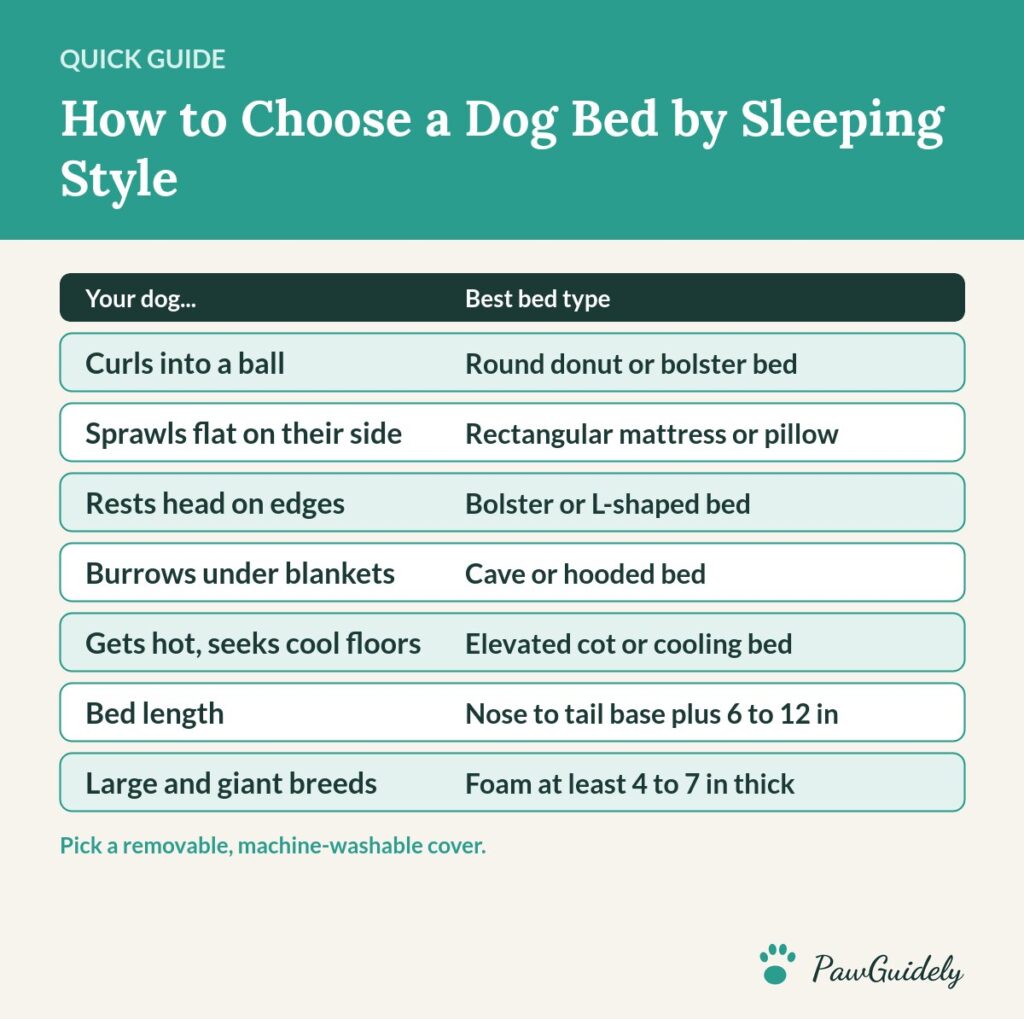
Step 2: Match the Bed to How Your Dog Sleeps
| Sleeping style | Best bed type |
|---|---|
| Curls into a ball | Round donut or bolster bed |
| Sprawls flat on their side | Rectangular mattress or pillow bed |
| Leans against things, rests head on edges | Bolster or L-shaped bed |
| Burrows under blankets | Cave or hooded bed |
| Gets hot, lies on cool floors | Elevated cot or cooling bed |
Step 3: Choose the Right Filling
| Filling | Pros | Cons |
|---|---|---|
| Solid memory foam | Contours to the body, even support | Can retain heat, costs more |
| Orthopedic foam (egg-crate) | Supportive and good value | Can compress under heavy dogs |
| Polyester fiberfill | Soft and cozy | Flattens and clumps over time |
| Shredded foam | Moldable | Shifts, less even support |
| Elevated mesh cot | Cool, airy, easy to clean | Firm, not cozy |
Step 4: Consider Age and Health
- Puppies: choose washable, affordable beds or crate pads. They may chew or have accidents.
- Adult dogs: pick by sleeping style and size.
- Senior dogs: thick, supportive foam with a low entry. Ask your vet if your dog has joint problems.
- Large and giant breeds: foam at least 4 to 7 inches thick so they do not sink to the floor.
Step 5: Think About Cleaning
A removable, machine-washable cover is essential. A waterproof liner between the cover and foam protects against accidents, drool and muddy paws. Check the care label before you buy, as most foam cannot go in the washing machine.
Step 6: Plan for Chewers
If your dog destroys beds, start with a tough, chew-resistant bed or elevated cot with covered edges, and supervise. Chewing beds is often boredom or anxiety, so add exercise and chew toys too. See how to stop a dog chewing furniture for ideas.
Where to Put a Dog Bed
- In a room where the family spends time, not isolated.
- Away from drafts, radiators and direct sun.
- On a non-slip surface, or with a rug underneath on hard floors.
- Consider a second bed in the bedroom for nights.
Beds Worth Considering
1. Big Barker 7-Inch Orthopedic Bed — For Large and Senior Dogs
Thick layered foam built for large and giant breeds, with a low, flat profile that is easy to step onto.
- 7 inches of supportive foam
- Washable cover
Worth knowing: Made for big dogs. Smaller dogs need a smaller bed.
2. Best Friends by Sheri Calming Donut Bed — For Curlers
A round, plush donut bed with a raised rim that many curl-up sleepers love to nestle into.
- Soft, cozy rim
- Machine washable (check size)
Worth knowing: Fiberfill flattens over time and does not suit heavy chewers.
3. Coolaroo Original Elevated Dog Bed — For Hot Sleepers
A raised mesh cot that keeps dogs off hot or cold floors and lets air circulate. Easy to hose down and useful indoors or outdoors.
- Cool and breathable
- Easy to clean
Worth knowing: Firm surface. Add a thin pad for extra comfort if needed.
The Bottom Line
Measure your dog, match the bed shape to how they sleep, choose foam that suits their size and age, and insist on a washable cover. Put the bed where your dog wants to be, and you will have a bed that actually gets used.
How to Choose a Dog Bed: Quick Checklist
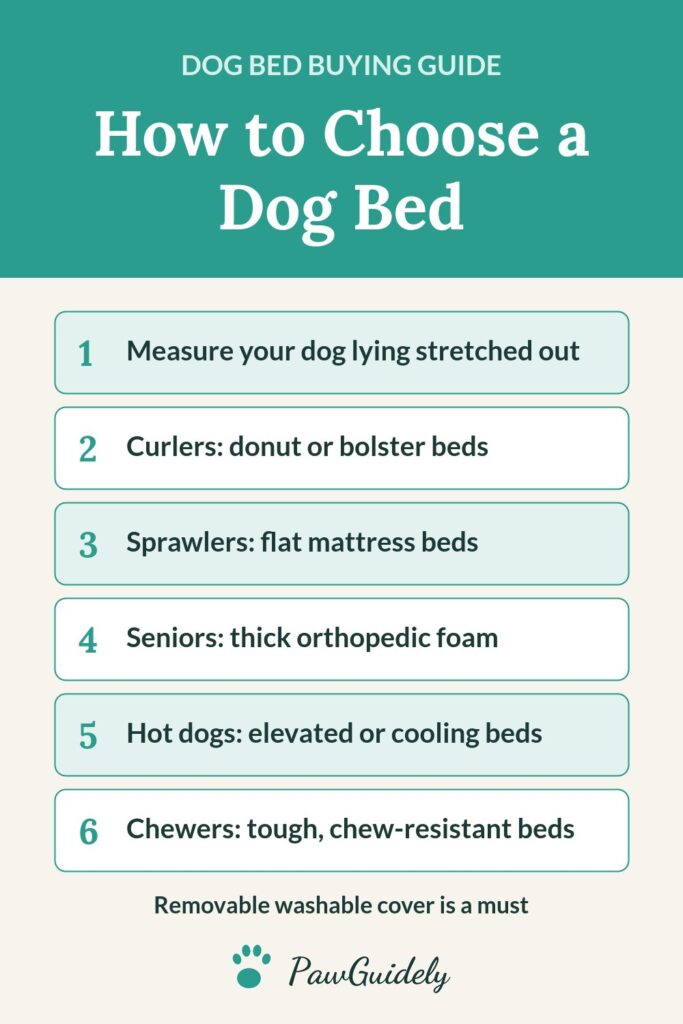
- Measured your dog stretched out and curled up.
- Picked a shape that matches their sleeping style.
- Chosen foam thick enough for their weight.
- Checked for a removable, washable cover.
- Added a waterproof liner for puppies, seniors or droolers.
- Considered chew resistance if needed.
- Planned where the bed will go, away from drafts and heat.
Dog Bed Types at a Glance
| Bed type | Best for | Watch out for |
|---|---|---|
| Orthopedic mattress | Large, senior and stiff dogs | Choose solid foam, not fiberfill |
| Bolster bed | Dogs who lean or rest their head | Bolsters can flatten |
| Donut bed | Curlers and anxious dogs | Fiberfill loses loft |
| Cave bed | Burrowers and small dogs | Can be warm |
| Elevated cot | Hot dogs, outdoor use | Firm surface |
| Crate pad | Crate-trained dogs | Measure crate floor exactly |
Helping Your Dog Love a New Bed
Even the perfect bed can be ignored at first. Place it where your dog already naps, add a blanket or T-shirt that smells like you, and toss a few treats onto it. Praise your dog calmly whenever they lie on it, and use a cue like “bed” so you can send them there later. If you are replacing an old bed, keep the old one next to the new one for a few days before removing it. Some dogs take a week or two to switch, especially seniors who are attached to a familiar spot. Avoid forcing your dog onto the bed, which can make it feel like a place to avoid.
Related Guides
- Dog Bed Size Chart: How to Measure Your Dog for the Right Bed
- 5 Best Orthopedic Dog Beds in 2026 for Large and Senior Dogs
- 4 Best Elevated Dog Beds for Cooling, Chewers and Outdoors
Frequently Asked Questions
What size bed should I get for my dog?
Measure your dog stretched out from nose to tail base and add 6 to 12 inches. If they curl up, a round bed slightly larger than their curled size works well.
Is memory foam good for dogs?
Yes, solid memory foam spreads weight evenly and suits many dogs, especially large and senior dogs.
Why won’t my dog use their new bed?
It may be the wrong shape, size or location. Put it where your dog already likes to rest, add a worn T-shirt, and reward them for using it.
How often should I wash my dog’s bed?
Wash the cover every one to two weeks, or right away after accidents.
How often should I replace a dog bed?
When it no longer springs back or your dog’s hips touch the floor through it, usually every one to three years depending on quality.