
This post contains affiliate links. As an Amazon Associate I earn from qualifying purchases. This costs you nothing extra. See our affiliate disclosure for details.
To calm a dog during fireworks, give it a safe, dark hiding spot, close windows and curtains, play steady background noise, and stay home and relaxed so your dog can come to you for comfort. Walk your dog well before dark, check its ID tag, and offer a long-lasting chew to help it settle. For dogs with real panic, start sound training weeks ahead and talk to your vet early, because fireworks fear tends to get worse without help.
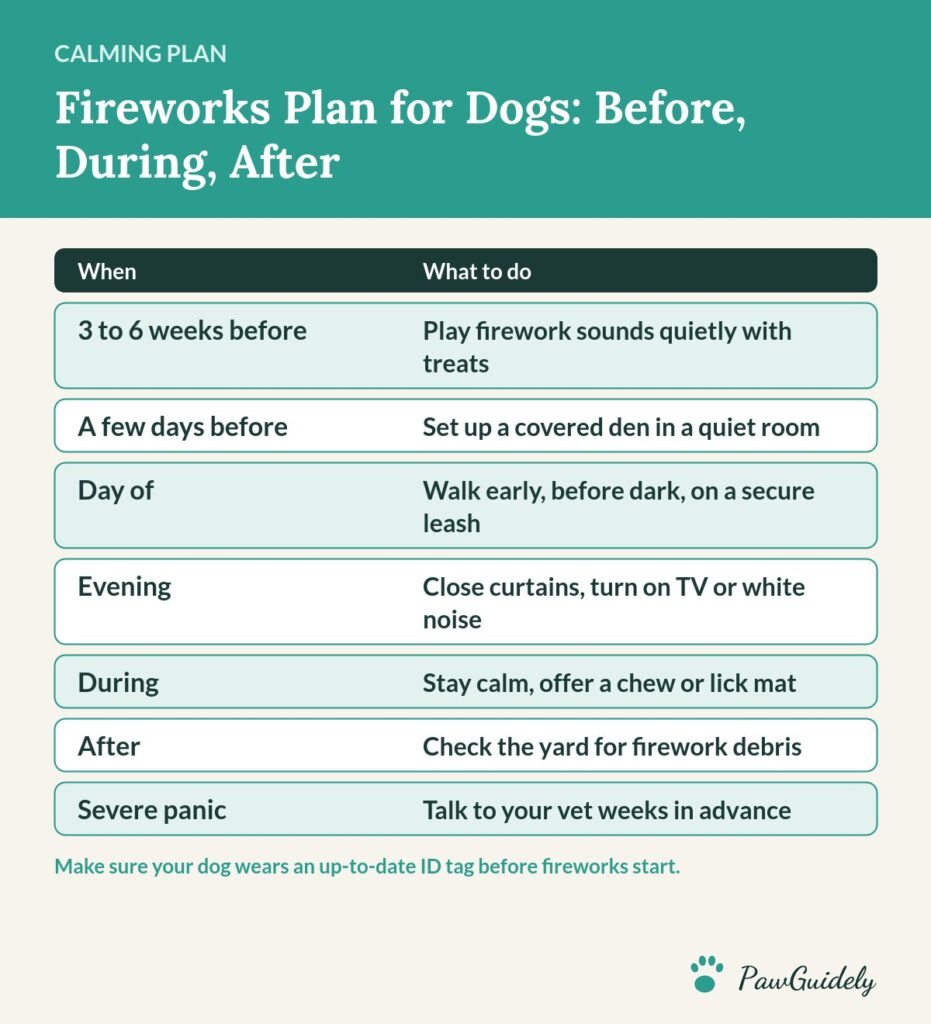
Fireworks Calming Plan at a Glance
| When | What to Do | Why It Helps |
|---|---|---|
| 3 to 6 weeks before | Play firework sounds at low volume with treats | Builds a calmer response over time |
| A few days before | Set up a covered den in a quiet room | Gives your dog a place to hide |
| Day of | Walk early, before dark, on a secure leash | Avoids panic and escapes outdoors |
| Evening | Close curtains and windows, turn on TV or white noise | Muffles flashes and bangs |
| During | Stay home, stay calm, offer a chew or lick mat | Licking and chewing help dogs settle |
| After | Check the yard for debris before letting your dog out | Spent fireworks can be harmful if chewed |
Why Fireworks Scare Dogs
Fireworks are loud, sudden and unpredictable, and they come with flashes and smells your dog cannot explain. Dogs hear a wider range of sounds than people do, so the noise can feel even bigger to them. Some dogs only startle, while others pant, pace, tremble, drool, hide, bark, try to escape or have accidents in the house. A fear of fireworks often spreads to other sudden noises, such as thunder or car backfires, if it is not addressed.
Before Fireworks Season: Prepare Early
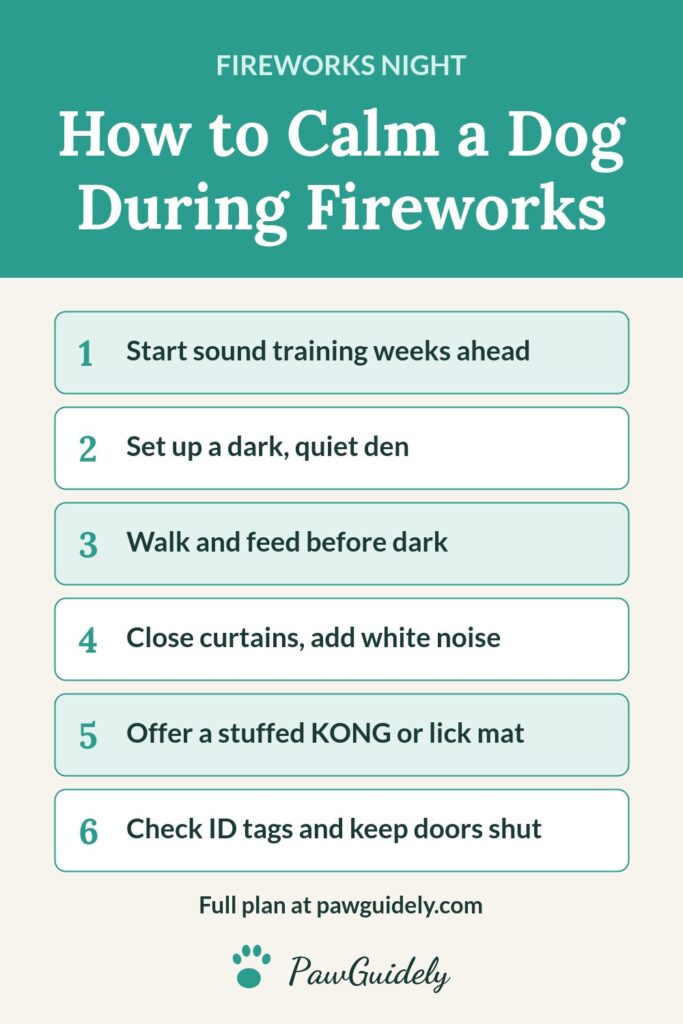
Start sound training weeks ahead
Desensitization means getting your dog used to firework sounds slowly, at a volume low enough that it stays relaxed. Play a recording of fireworks very quietly while your dog eats or plays, then turn it off. Over days and weeks, raise the volume a tiny bit at a time. If your dog stops eating, looks worried or leaves the room, you went too fast, so turn it down. This takes patience but can make a real difference by the next big night.
Build a safe den
Pick an inner room with few windows, such as a bathroom, closet or laundry room, or use your dog’s crate. Add a familiar bed, a blanket that smells like home and a water bowl. If your dog uses a crate, a fitted cover makes it darker and quieter. Leave the door open so your dog can go in and out freely, and let it get used to the space before fireworks start.
Check ID and secure the house
More dogs go missing around fireworks than at almost any other time, because frightened dogs bolt. Make sure your dog wears a collar with an up-to-date ID tag, check that the microchip details are current, and look for gaps in fences and gates.
Talk to your vet if your dog panics
If your dog trembles, tries to escape, hurts itself or cannot settle for hours, book a vet visit a few weeks before the holiday. Your vet can check for other problems and talk you through options, including medication for noise anxiety. Never give your dog human medication or a sedative without your vet’s advice.
On the Night: How to Calm Your Dog
- Walk your dog early. Go out in daylight and use a well-fitted harness and leash. Even dogs who never pull can slip a collar when a bang goes off.
- Feed dinner before dark. Many anxious dogs will not eat once the noise starts.
- Close windows, curtains and blinds. This reduces both the flashes and the noise.
- Add steady background sound. TV, the radio, a fan or white noise helps cover sudden bangs.
- Stay home if you can. Dogs cope better with a calm person nearby. If you must go out, arrange for someone your dog knows to stay with it.
- Let your dog choose. If it wants to hide under the bed or in its den, let it. If it wants to be near you, that is fine too.
- Offer something to lick or chew. A stuffed KONG or a lick mat spread with something tasty gives your dog a calming job.
- Keep doors closed and leashes on. Use a gate or keep your dog in another room when opening the front door.
Is It OK to Comfort a Scared Dog?
Yes. Comforting your dog will not make it more afraid. Fear is an emotion, not a trick you are rewarding. Speak calmly, offer gentle petting if your dog wants it, and try to act normal. What does not help is punishing your dog for barking or hiding, or forcing it out of its hiding spot to face the noise.
Gear That Can Help
No product stops fireworks fear on its own, but the right gear can make your plan easier to follow.
1. KONG Classic — Best Long-Lasting Distraction
Stuff a KONG with your dog’s food mixed with something soft, then freeze it the day before. Working the food out keeps many dogs busy and chewing is naturally calming.
- Durable natural rubber
- Easy to stuff and freeze
- Wide size range
- Useful all year
Worth knowing: Pick a size your dog cannot fit fully in its mouth. Strong chewers may need the black KONG Extreme.
2. LickiMat Classic Buddy — Best for Licking to Settle
A textured lick mat spread with wet food, plain yogurt or a little dog-safe spread gives your dog a slow, repetitive activity that many dogs find soothing during noisy evenings.
- Textured pattern holds food
- Freezer and dishwasher safe
- Light and easy to store
- Several sizes
Worth knowing: It is not a chew toy. Pick it up once your dog finishes.
3. MidWest Homes for Pets Crate Cover — Best for a Darker Den
A fitted fabric cover turns a wire crate into a darker, quieter den, which helps many dogs feel safer when there are flashes outside.
- Fits MidWest wire crates
- Roll-up side panels
- Machine washable
- Blocks light and movement
Worth knowing: Buy the size that matches your crate and leave the door open so your dog can come and go.
4. ThunderShirt Classic — Best Pressure Wrap
A ThunderShirt is a snug vest that applies gentle, constant pressure around your dog’s body, a bit like swaddling. Some dogs relax noticeably while wearing one and others show little change, so it works best as one part of a wider plan. Let your dog wear it for short, happy sessions before fireworks night so it does not link the vest with fear.
- Gentle, even pressure
- Adjustable fit in many sizes
- No medication involved
- Reusable for storms and car rides
Worth knowing: Measure your dog’s chest before ordering, and do not leave it on unsupervised for long periods.
After the Fireworks
Before letting your dog into the yard the next morning, walk around and pick up any spent fireworks, sticks or debris that may have landed. Used fireworks can contain chemicals that are harmful if chewed or swallowed. Keep an eye on your dog’s behavior for a day or two, and give it some quiet time to recover. If your dog ate something or seems unwell, call your vet.
Further reading: Further reading from a trusted animal-welfare source: ASPCA: Managing Pet Anxiety During Fireworks and Other Festivities. This guide is general information, not veterinary advice, so ask your vet about your own pet.
Related Guides
- 4 Best Dog Crate Covers for a Calmer, Den-Like Crate
- 5 Best Dog Crates in 2026: Wire, Plastic, Soft-Sided, and Modular Picks Compared
- 4 Best Escape-Proof Dog Crates for Strong Dogs and Escape Artists
- 5 Best Dog Puzzle Toys in 2026, From Beginner to Genius Level
- 4 Best Snuffle Mats for Dogs (and How to Use Them)
- 4 Best Dog Gates in 2026: Walk-Through, Extra Tall, Extra Wide and Freestanding
- 4 Best No-Pull Dog Harnesses in 2026 (and How to Fit One Properly)
- Halloween Safety Tips for Dogs and Cats
Frequently Asked Questions
How can I calm my dog during fireworks fast?
Bring your dog inside, close curtains and windows, turn on the TV or white noise, and let it hide in a quiet den. Stay calm and nearby, and offer a stuffed KONG or lick mat.
Should I leave my dog alone during fireworks?
It is best not to. Dogs usually cope better with a calm person nearby. If you have to go out, ask someone your dog knows to stay with it.
Do ThunderShirts work for fireworks?
Some dogs relax while wearing one and others do not. A ThunderShirt works best alongside a safe den, background noise and early sound training.
Can I give my dog something to calm down for fireworks?
Only give medication your vet has prescribed for your dog. Talk to your vet a few weeks before fireworks season if your dog panics, so there is time to plan.
How long does fireworks anxiety last in dogs?
Many dogs settle within an hour or so after the noise stops, but some stay unsettled into the next day. If your dog takes a long time to recover, talk to your vet.
This guide is general information, not veterinary advice. Talk to your vet if your dog shows severe fear or panic.