
This post contains affiliate links. As an Amazon Associate I earn from qualifying purchases. This costs you nothing extra. See our affiliate disclosure for details.
For some dogs, the car means adventure. For others, it means drooling, trembling, whining or refusing to jump in. Car anxiety often starts because the only car rides a dog takes end at the vet, or because early trips made them feel sick. Learning how to get a dog used to the car is about changing that association, one small, positive step at a time.
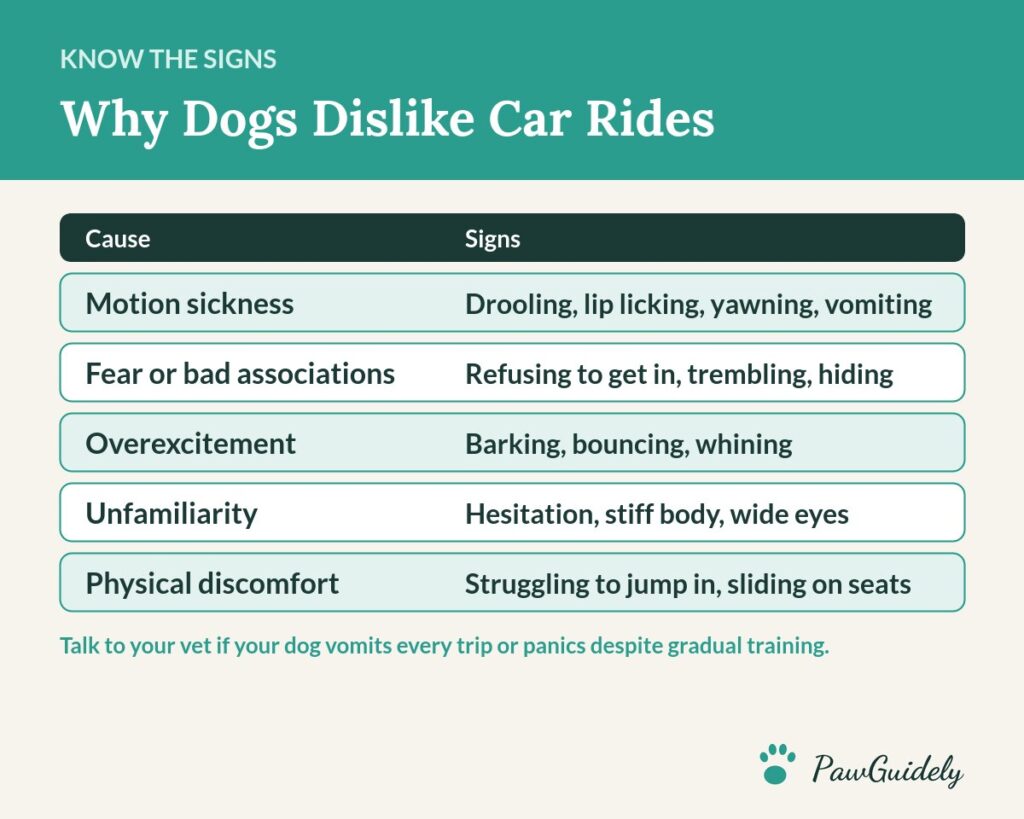
Why Dogs Dislike Car Rides
| Cause | Signs |
|---|---|
| Motion sickness | Drooling, lip licking, yawning, vomiting |
| Fear or bad associations | Refusing to get in, trembling, hiding |
| Overexcitement | Barking, bouncing, whining |
| Unfamiliarity | Hesitation, stiff body, wide eyes |
| Physical discomfort | Struggling to jump in, sliding on seats |
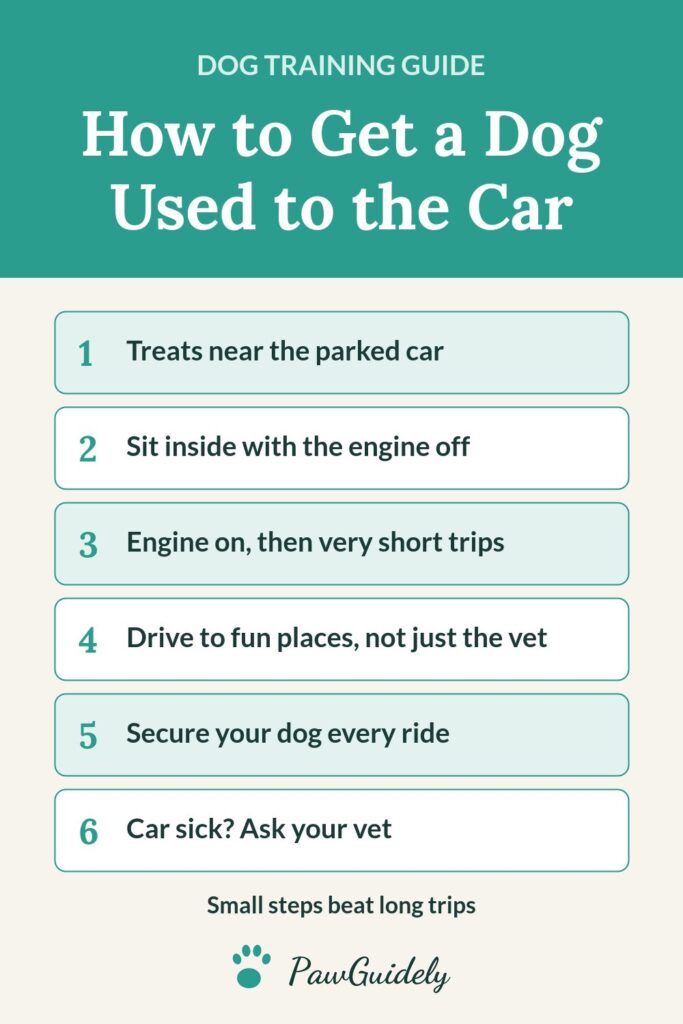
How to Get a Dog Used to the Car in 8 Steps
- Start with the parked car. Walk your dog near the car and reward calm behavior. Do this several times.
- Open the doors and add treats. Toss treats onto the seat or into the crate. Let your dog choose to hop in.
- Sit together with the engine off. Spend a few minutes inside giving treats or a chew, then get out before your dog gets restless.
- Add the engine. Turn the engine on for a few seconds, reward, then turn it off. Build up gradually.
- Take tiny trips. Drive to the end of the driveway or around the block, then home.
- Drive to fun places. Go to a park, a favorite walk or a friend’s house so the car predicts good things.
- Increase distance gradually. Only move on when your dog is relaxed at the current step.
- Keep every trip safe and comfortable. Use a secured crate or car harness, a non-slip surface and good ventilation.
Helping a Car-Sick Dog
- Skip food for a few hours before the trip, but offer water. Ask your vet about timing for your dog.
- Face your dog forward and let them see out if they are calmer that way. Some dogs prefer a covered crate.
- Crack a window for fresh air.
- Drive smoothly and avoid sudden braking.
- Take breaks on longer trips.
- Ask your vet about options for motion sickness. Many puppies grow out of it.
Keeping Your Dog Safe in the Car
An unrestrained dog can be hurt in a sudden stop and can distract the driver. Use a secured crate, a car harness with a tether, or a booster seat for small dogs, always in the back seat. Never let your dog ride in the front seat with an active airbag, and never leave a dog in a parked car, even for a few minutes, in warm or cold weather.
Mistakes to Avoid
- Only using the car for vet visits.
- Forcing a scared dog into the car.
- Starting with long drives.
- Letting your dog hang their head out of the window.
- Scolding whining or drooling, which comes from stress.
When to Get Help
If your dog is extremely fearful, vomits every trip or panics despite gradual training, talk to your vet. They can check for medical causes, discuss motion sickness treatment and refer you to a trainer or behaviorist.
Gear That Helps
1. Kurgo Rover Hammock Seat Cover — Comfort and Grip
A hammock-style seat cover protects your seats and gives your dog a stable, non-slip surface, which helps nervous dogs feel more secure.
- Protects seats
- Stops dogs slipping into the footwell
Worth knowing: Use with a harness and tether for restraint.
2. Kurgo Tru-Fit Enhanced Strength Harness — Car Harness
A sturdy harness with an included seat belt tether, so your dog stays in place on the back seat.
- Seat belt tether included
- Steel buckles
Worth knowing: Always attach tethers to a harness, not a collar.
3. KONG Classic — Positive Distraction
A stuffed KONG makes sitting in the parked car a treat during early training steps.
- Long-lasting when frozen
- Durable rubber
Worth knowing: Save food toys for short trips if your dog gets car sick.
The Bottom Line
To get a dog used to the car, start with the parked car, pair every step with treats, move to tiny trips, and drive to places your dog loves. Keep them safely restrained and comfortable, handle car sickness with your vet’s help, and be patient. Most dogs learn that the car can mean fun.
Road Trip Checklist for Dogs
- Water and a collapsible bowl.
- A familiar blanket or bed.
- Poop bags and a spare leash.
- A secured crate, car harness or booster seat.
- Treats and a chew for rest stops.
- Copies of vaccination records for longer trips.
- Your vet’s number and the nearest emergency clinic along your route.
Plan stops every two to three hours for a drink, a potty break and a short walk. Always clip the leash on before opening the car door so your dog cannot bolt into traffic.
Getting Big or Senior Dogs Into the Car
Some dogs dislike the car simply because jumping in is hard or painful. Large breeds, older dogs and dogs with joint problems may hesitate at the tailgate. A ramp or pet steps can make getting in much easier and protect their joints, and teaching the ramp with treats on the ground first builds confidence. If your dog used to jump in happily and has started refusing, mention it to your vet, since reluctance can be an early sign of pain. Our guide to the best dog ramps compares options for different vehicles.
Related Guides
- 5 Best Dog Crates for Car Travel: Safer, Calmer Road Trips
- Best Crash-Tested Dog Car Harnesses in 2026: 3 Safer Ways to Travel
- 5 Best Dog Car Seat Covers and Hammocks in 2026 (Waterproof, Scratch-Resistant)
- 5 Best Dog Car Seats for Small Dogs (Booster Seats Compared)
Frequently Asked Questions
How long does it take to get a dog used to the car?
Some dogs relax in a few days, while fearful dogs may take several weeks of short, positive practice.
Why does my dog shake in the car?
Fear, excitement or nausea. Watch for drooling and lip licking, which can mean motion sickness.
Do puppies grow out of car sickness?
Many do as their inner ear develops. Short, positive trips help too.
Should my dog sit in the front seat?
No. The back seat is safer, and airbags can seriously injure dogs.
Can I give my dog something for car anxiety?
Only with advice from your vet, who can recommend safe options for your dog.