
This post contains affiliate links. As an Amazon Associate I earn from qualifying purchases. This costs you nothing extra. See our affiliate disclosure for details.
Good news for new kitten owners: litter training is usually easy. Kittens have a natural instinct to dig and bury their waste, and many have already learned from their mother by the time they come home at eight to twelve weeks. Your job is to make the box easy to find, easy to use and pleasant. This guide explains how to litter train a kitten step by step, and what to do if accidents happen.
What You Need
| Item | What to look for |
|---|---|
| Litter box | Low entry side (about 3 to 4 inches), open top, big enough to grow into |
| Litter | Unscented, low dust. Many owners start with a kitten-friendly or non-clumping litter for very young kittens |
| Scoop | Sturdy metal scoop |
| Enzyme cleaner | For accidents outside the box |
| Litter mat | Catches scattered litter |
How to Litter Train a Kitten in 7 Steps
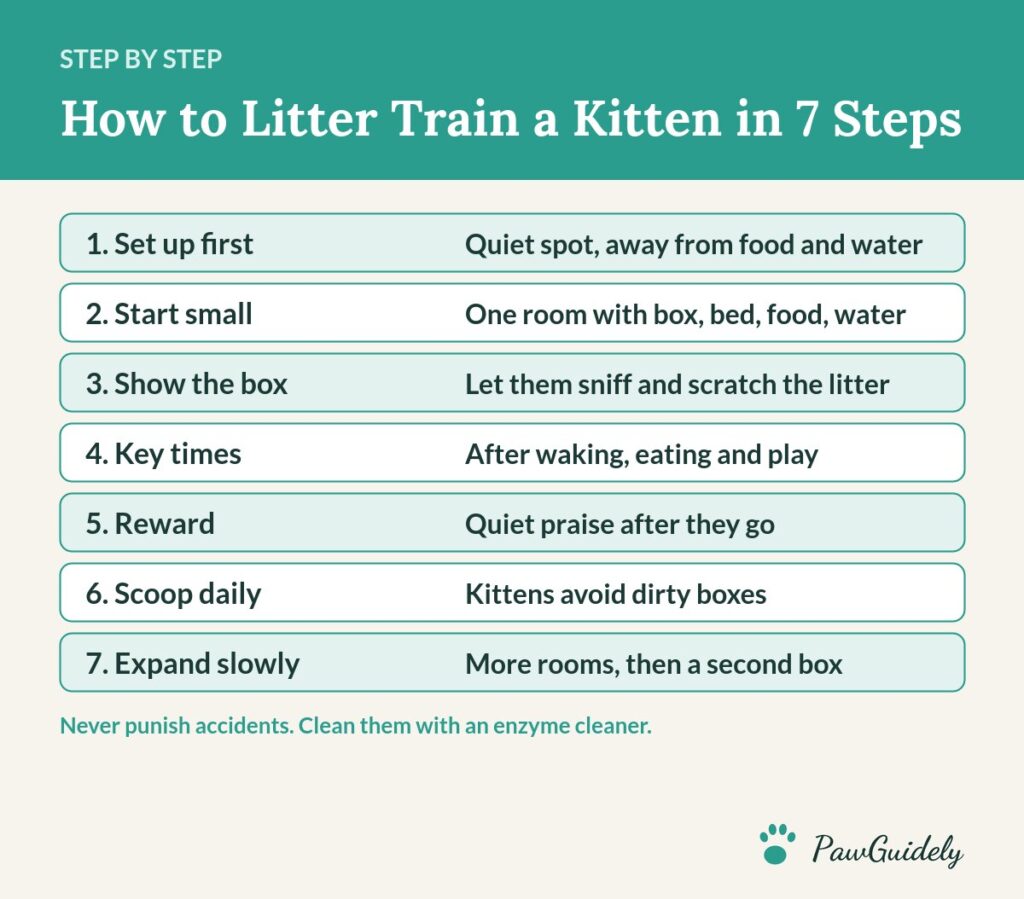
- Set up the box before your kitten arrives. Put it in a quiet, easy-to-reach spot away from food and water, and away from noisy appliances.
- Keep your kitten in a small area at first. A single room with the box, bed, food and water helps them learn where the box is.
- Show them the box. When your kitten arrives, gently place them in the box and let them sniff. You can lightly scratch the litter with your finger to show them.
- Place them in the box at key times. After waking up, after eating, and after play. Kittens often need to go within 15 minutes of eating.
- Reward success. Quiet praise or a gentle stroke after they use the box. Do not make a fuss mid-go.
- Scoop daily. Kittens, like adult cats, avoid dirty boxes. Leave a little used litter at first only if your kitten seems unsure, then keep it clean.
- Expand their space slowly. As your kitten reliably uses the box, give access to more rooms. In a larger home, add a second box.
How Long Does It Take?
Many kittens use the box from the first day. Others take a week or two to be completely reliable, especially if they were very young when separated from their mother or came from outdoors. Consistency matters more than speed.
Choosing Litter for Kittens
Very young kittens sometimes eat litter while exploring. Because of this, many vets and shelters suggest a non-clumping or kitten-specific litter for kittens under about three to four months, then switching to an unscented clumping litter as they grow. Ask your vet what they recommend. Avoid heavily scented litter, which can put kittens off the box.
Handling Accidents
- Never punish. Scolding or rubbing their nose in it creates fear and more accidents.
- Clean with an enzyme cleaner. It removes odor that would draw your kitten back to the same spot.
- Move a little waste to the box. Placing a small amount in the litter helps show your kitten where to go.
- Look at the setup. Is the box too far away, too high, too dirty, or in a scary spot?
- Add another box near the accident area if it keeps happening.
Common Mistakes
- A box with high sides that a kitten cannot climb into.
- Covered boxes that trap smell and feel dark to a small kitten.
- Putting the box next to food bowls.
- Moving the box often.
- Using scented litter or strong cleaners around the box.
When to See the Vet
Talk to your vet if your kitten has diarrhea, strains, cries in the box, has blood in urine or stool, or suddenly stops using the box after doing well. Kittens can dehydrate quickly, and these can be signs of parasites, infection or other health problems.
Gear That Helps
1. Dr. Elsey’s Kitten Attract Litter — Best Training Litter
A kitten litter with a natural herbal attractant designed to draw kittens to the box. Useful for kittens who are slow to catch on or who came from outdoors.
- Designed for training kittens
- Low dust
Worth knowing: Ask your vet about litter choice for very young kittens.
2. Petmate Hi-Back Litter Pan — Kitten-Friendly Box
An open litter pan with a lower front for easy entry and a high back to keep litter in. A good first box that still works as your kitten grows.
- Easy entry for small kittens
- High back reduces scatter
Worth knowing: Very tiny kittens may need a temporary shallow tray first.
3. Rocco & Roxie Enzyme Stain & Odor Eliminator — For Accidents
An enzyme cleaner that breaks down urine odor so your kitten is not drawn back to the same spot.
- Enzyme formula
- Safe for most carpets and floors
Worth knowing: Spot-test fabrics and let it soak in.
The Bottom Line
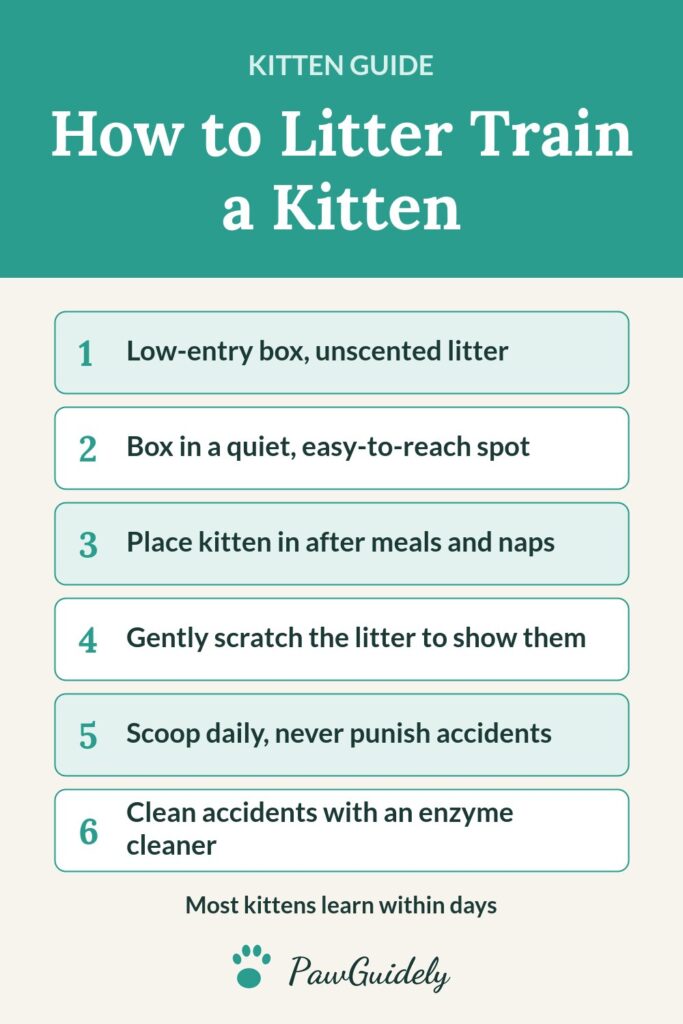
To litter train a kitten, give them an easy-to-reach, low-entry box with unscented litter in a quiet spot, put them in it after meals, naps and play, keep it clean and never punish accidents. Most kittens learn within days, and the rest get there with patience.
Related Guides
- New Cat Checklist: 20 Essentials to Buy Before You Bring Your Cat Home
- How to Clean a Litter Box: Daily, Weekly and Deep-Clean Routine
- How Many Litter Boxes Do You Need Per Cat? (The N+1 Rule Explained)
- 5 Best Cat Litter Boxes in 2026: Open, Covered, High-Sided and Top-Entry
- Clumping vs Non-Clumping Cat Litter: Which Is Better?
- 5 Best Cat Litters for Kittens (Safe, Low-Dust and Easy to Learn)
Frequently Asked Questions
At what age can kittens use a litter box?
Kittens usually start using a litter box at around three to four weeks old, often learning from their mother.
How long does it take to litter train a kitten?
Many kittens are reliable within a few days. Some need one to two weeks.
Should kittens use clumping litter?
Some vets suggest non-clumping or kitten-specific litter for kittens under about three to four months, since young kittens may eat litter. Ask your vet.
Why is my kitten peeing outside the litter box?
The box may be too far, too dirty, too high or in a stressful spot. Medical issues are also possible, so see your vet if it continues.
How many litter boxes does a kitten need?
Start with one in their room. As they get the run of the house, follow the one box per cat plus one guideline.