
This post contains affiliate links. As an Amazon Associate, PawGuidely earns from qualifying purchases at no extra cost to you. See our affiliate disclosure for details.
Scratching is not bad behavior. Cats scratch to stretch, keep their claws healthy, and leave scent and visual marks that say “this is my home.” You cannot stop a cat from scratching, and you shouldn’t try. What you can do is stop your cat scratching furniture by giving them something better to scratch in the right place. Below is a step-by-step plan that works with your cat’s instincts, plus the scratchers cats actually use.
Why Cats Scratch Furniture
| Reason | What It Tells You |
|---|---|
| Claw care | Scratching removes old claw sheaths |
| Stretching | Cats love a full-body stretch, so posts must be tall and sturdy |
| Marking territory | Paw glands leave scent, so cats scratch prominent spots near doors and sofas |
| Excitement or greeting | Many cats scratch when you come home or after naps |
| The sofa is simply the best option | It is tall, stable, textured and in a key location |
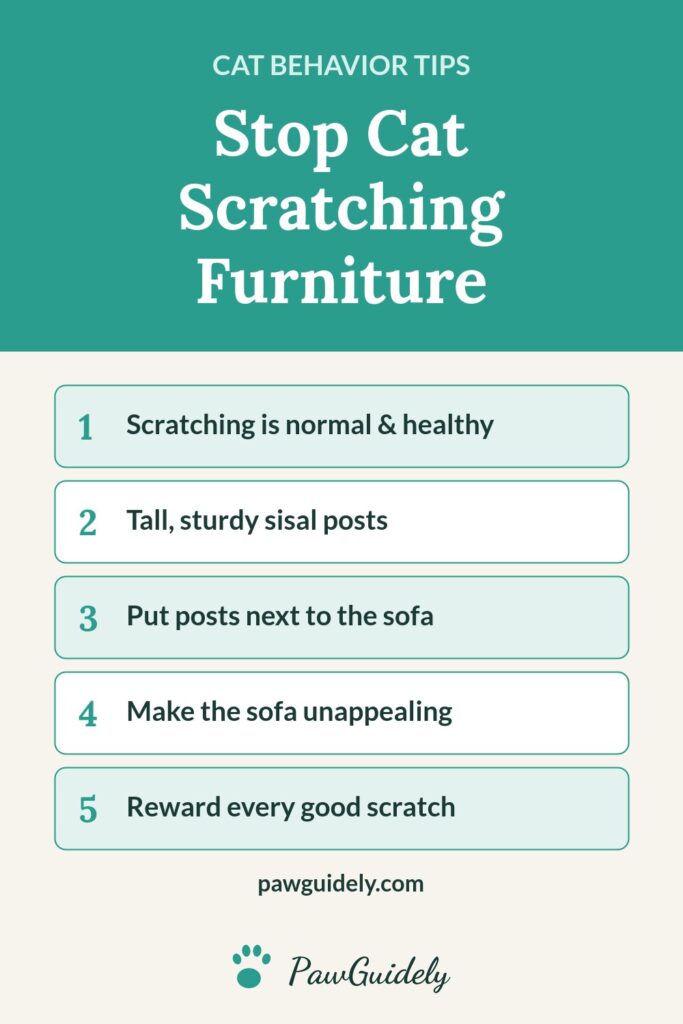
How to Stop a Cat Scratching Furniture: Step by Step
- Watch how your cat scratches. Vertical stretcher (sofa arms, door frames) or horizontal scratcher (rugs, carpet)? Buy a scratcher that matches.
- Choose a tall, sturdy post. It should be at least 30 inches tall and not wobble. Cats abandon posts that tip or are too short to stretch on.
- Pick the right texture. Sisal rope or sisal fabric is a favorite; many cats also love cardboard for horizontal scratching.
- Place scratchers right next to the furniture they target, and near where they sleep and the entrance to the room.
- Make the furniture less appealing for a few weeks with a throw, double-sided sticky tape on the arms, or a furniture guard.
- Make the post irresistible: rub catnip or silver vine on it, drag a wand toy across it, and give treats when your cat uses it.
- Redirect gently. If your cat scratches the sofa, calmly pick them up or lure them with a toy to the post. Never shout or spray water.
- Keep claws trimmed every two to three weeks to reduce damage while habits change.
What Not to Do
- Don’t punish, shout or use spray bottles. Your cat will scratch when you’re not around and may become fearful.
- Don’t move the post to a back room. Scratching is partly social marking, so posts belong in the main living areas.
- Don’t throw out a worn post too soon. Cats often prefer a well-scratched post.
- Don’t declaw. Declawing is an amputation of the end of each toe and is banned or strongly discouraged in many places. Talk to your vet about humane alternatives.
How Many Scratchers Does a Cat Need?
Aim for at least one vertical post and one horizontal scratcher per cat, placed in different rooms. In multi-cat homes, add more so every cat has a choice without competition. A cat tree counts as a vertical scratcher and adds climbing and perching space too.
Scratchers Cats Actually Use
1. SmartCat Ultimate Scratching Post — Tall Vertical Post
At about 32 inches with a heavy base and sisal fabric, the SmartCat is tall and stable enough for a full stretch, which is why it is so often recommended to fix sofa scratching. Place it right beside the sofa arm your cat targets. More options in our scratching posts guide.
2. PetFusion Ultimate Cat Scratch Lounge — Horizontal Scratcher
For cats that scratch rugs and carpet, a curved cardboard lounge gives a satisfying horizontal surface they can also nap on. It is a good second scratcher for most cats.
3. Feandrea Small Cat Tower — Scratch and Climb
A compact cat tree adds scratching posts plus a perch and hideaway, ideal for apartments. See our cat trees for small spaces or, for big cats, cat trees for large cats.
The Bottom Line
You can’t stop a cat scratching, but you can stop your cat scratching furniture. Offer a tall, sturdy sisal post and a horizontal scratcher right where your cat already scratches, make the sofa temporarily unappealing, and reward every scratch in the right place. Most cats switch within a few weeks. New to cats? See our new cat checklist.
How to Protect Your Furniture While Your Cat Learns
- Throws and slipcovers: a washable throw over the sofa arm changes the texture and is easy to remove later.
- Clear furniture guards: self-adhesive plastic sheets on sofa corners are almost invisible and very effective.
- Double-sided tape: most cats dislike sticky paws; use a pet-safe tape on the spots your cat targets.
- Soft nail caps: small vinyl caps glued over the claws can protect furniture for a few weeks; ask your vet or groomer to show you how to apply them.
- Block access briefly: close doors to rooms with precious furniture while the new habit forms.
Remove these deterrents gradually once your cat reliably uses the scratcher, starting with the ones farthest from the post.
Scratching in Multi-Cat Homes
When several cats share a home, scratching can increase because each cat is marking territory. Give every cat access to its own vertical and horizontal scratchers in different rooms, especially near doorways, windows and sleeping spots. More resources mean less competition. If scratching suddenly increases or your cat starts spraying, stress may be the cause, and a chat with your vet is worthwhile.
Clipping Claws at Home
Trimming only the sharp tip of each claw every two to three weeks makes scratching far less destructive. Use small, sharp cat clippers, press gently on the toe pad to extend the claw, and cut only the clear tip, well away from the pink quick. Start with one or two claws per session and reward with a treat. If your cat resists, your vet or a groomer can trim them quickly.
Related Guides
- Best Cat Scratching Posts and Scratchers in 2026 (Plus How to Save Your Sofa)
- 3 Best Cat Trees for Small Spaces and Apartments
- 4 Best Cat Trees for Large Cats in 2026: Sturdy, Tall and Compact Picks
- New Cat Checklist: 20 Essentials to Buy Before You Bring Your Cat Home
Frequently Asked Questions
Why does my cat scratch the sofa and not the post?
The post may be too short, wobbly, the wrong texture or in the wrong place. Cats need a tall, stable post placed right next to the sofa.
Does double-sided tape stop cats scratching furniture?
Many cats dislike the sticky feel, so tape on sofa arms can help while you teach them to use a post. Always offer an alternative scratcher nearby.
How long does it take to stop a cat scratching furniture?
Most cats switch to a good scratcher within two to four weeks when it is placed well and rewarded consistently.
Does trimming claws help?
Yes. Trimming claws every two to three weeks reduces damage, though it does not stop the urge to scratch.
Should I declaw my cat to stop scratching?
No. Declawing is a painful amputation that is banned or discouraged in many places. Use scratchers, deterrents and nail trims instead, and ask your vet for advice.