
This post contains affiliate links. As an Amazon Associate I earn from qualifying purchases. This costs you nothing extra. See our affiliate disclosure for details.
For most dogs, the best collar is a simple adjustable flat collar with a sturdy buckle and a solid D-ring for ID tags, while dogs that pull do their leash walking on a harness. The Lupine Original is the durable everyday pick, the GoTags Personalized Collar puts your phone number right on the webbing, and the PetSafe KeepSafe Break-Away Collar is the safer choice for dogs that wear a collar at home or play rough with other dogs.
Start With the Job the Collar Has to Do
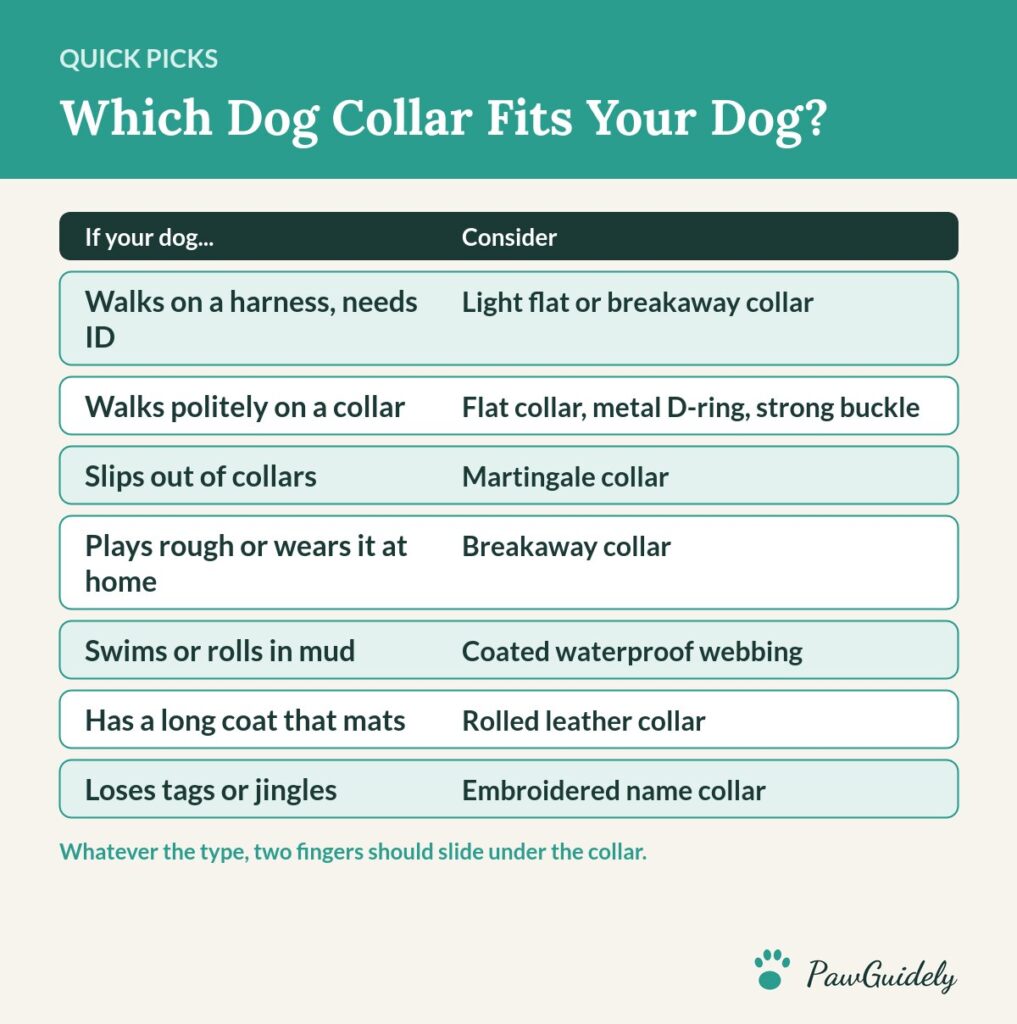
Most collar regrets come from buying for looks and then using the collar for something it was not built for. Match the collar to how your dog actually lives:
- ID only, leash goes on a harness: a light flat collar or a breakaway collar is all you need.
- Leash clips to the collar and your dog walks politely: a flat collar with a welded metal D-ring and a strong buckle.
- Narrow head that slips out of collars (greyhounds, whippets, some nervous dogs): a martingale, which tightens a limited amount when pulled.
- Wears a collar around the house or wrestles with other dogs: a breakaway collar that releases if it snags.
- Swims or rolls in mud: coated waterproof webbing that wipes clean, not leather.
Collar Materials Compared
| Material | Strengths | Downsides | Good for |
|---|---|---|---|
| Nylon webbing | Light, washable, huge size range | Holds odour when wet; frays if chewed | Everyday wear |
| Flat leather | Softens with age, classic look | Not for swimmers; needs conditioning | Dry-weather walkers |
| Rolled leather | Less rubbing of long fur | Narrow contact area, fewer sizes | Long-coated breeds |
| Coated waterproof webbing | Wipes clean, resists smell | Stiffer, fewer styles | Swimmers and farm dogs |
| Padded (neoprene-lined) | Soft on short coats | Padding is slow to dry | Short coats, sensitive skin |
1. Lupine Original Collar — Best Everyday Nylon Collar
Lupine’s Original collar comes in 1/2, 3/4 and 1 inch widths, with adjustable sizes running from a 6–9 inch neck up to 25–31 inches, so it covers everything from toy breeds to giant dogs. It uses a side-release buckle and a welded steel D-ring, and the patterns are woven into the webbing rather than printed on. The standout is Lupine’s guarantee: the company replaces Lupine gear that has been accidentally damaged, and that explicitly includes chewing.
- Replacement guarantee covers chewed collars
- Welded steel D-ring for tags and leash
- Wide spread of widths and neck sizes
- Woven patterns that do not rub off
Worth knowing: the buckle is plastic rather than metal, and nylon can hold a smell after swims or muddy walks. For a dog that pulls hard, clip the leash to a harness and let the collar carry ID.
2. GoTags Personalized Dog Collar — Best for ID
GoTags embroiders your dog’s name and your phone number into the nylon, so contact details stay with the dog even if a tag snaps off. Sizes run Small (11–16 in neck, 5/8 in wide), Medium (14–20 in, 3/4 in) and Large (18–26 in, 1 in), and there is a reflective version for walks after dark. For owners bothered by jingling tags, it removes the need for a hanging ID tag.
- Phone number visible at a glance
- No jingling ID tag
- Reflective version available
- Three widths for small to large dogs
Worth knowing: the details cannot be changed, so a new phone number or address means a new collar. Your area may still require a licence or rabies tag, and a collar is never a substitute for a microchip.
3. PetSafe KeepSafe Break-Away Collar — Best Safety Collar
The KeepSafe uses a patented buckle that separates when enough pressure is applied, so if the collar catches on a fence, a crate, a heating vent, a branch or another dog’s jaw during play, it pops open instead of tightening. PetSafe sells it in Small (10–14 in neck), Medium (14–20 in) and Large (18–28 in), in 3/4 and 1 inch widths. It is a sensible collar for dogs that keep a collar on around the house, in multi-dog homes and at daycare.
- Releases if it snags
- Suits multi-dog homes and daycare
- Three sizes up to a 28 in neck
- Fade-resistant prints
Worth knowing: because it is designed to come apart, read the instructions on how to attach a leash, and consider keeping a separate harness for walks. A dog that sheds its collar also sheds its ID, so a microchip matters even more.
Dog Collar Size Chart
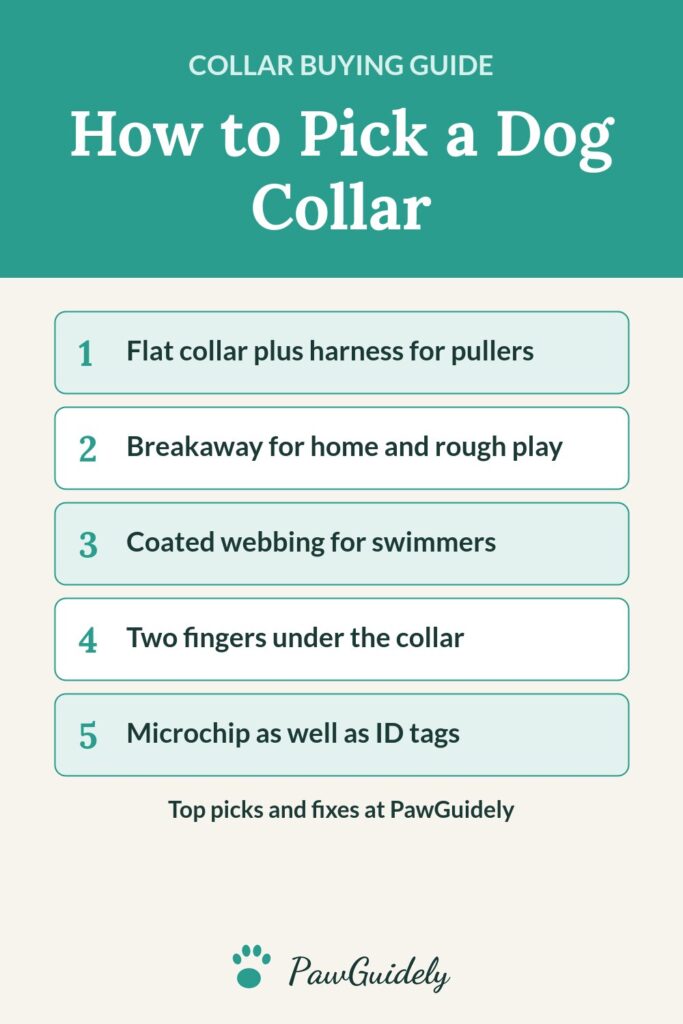
Measure around the middle of your dog’s neck with a soft tape, then add about 2 in. You should be able to slide two flat fingers under a fitted collar.
| Collar size | Neck range | Typical width | Example dogs |
|---|---|---|---|
| XS | 8–12 in | 3/8–1/2 in | Chihuahua, Yorkie |
| S | 10–14 in | 1/2–5/8 in | Shih Tzu, Dachshund |
| M | 14–20 in | 3/4–1 in | Beagle, Border Collie |
| L | 18–26 in | 1 in | Labrador, Boxer |
| XL | 22–30 in | 1–1.5 in | German Shepherd, Rottweiler |
For Night Walks: Reflective or Light-Up?
Choose by where you walk after dark:
- Streetlit pavement: a reflective collar and leash are enough, because headlights do the work.
- Unlit lanes, dawn and dusk runs: add an LED collar or necklace so you are seen before a headlight reaches you.
- Dark yard or off-leash field: light-up comes first; a 360° glow lets you track your dog from any angle.
- Dogs that swim or roll in wet grass: keep a reflective collar as the everyday piece and use LED gear for the walk only, since most is water-resistant rather than waterproof.
| Option | Type | Neck range |
|---|---|---|
| Ruffwear Crag | Reflective webbing, no battery | 11–26 in (3 sizes) |
| Nite Ize NiteHowl Rechargeable | 360° LED necklace, USB-C | 12–27 in, cut to fit |
| Blazin’ Safety LED Collar | LED strip collar, USB | About 8–27 in (4 sizes) |
| Illumiseen LED Collar | LED strip collar, USB | About 8.5–27.5 in (6 sizes) |
Buckle Types: Which Holds Up Best
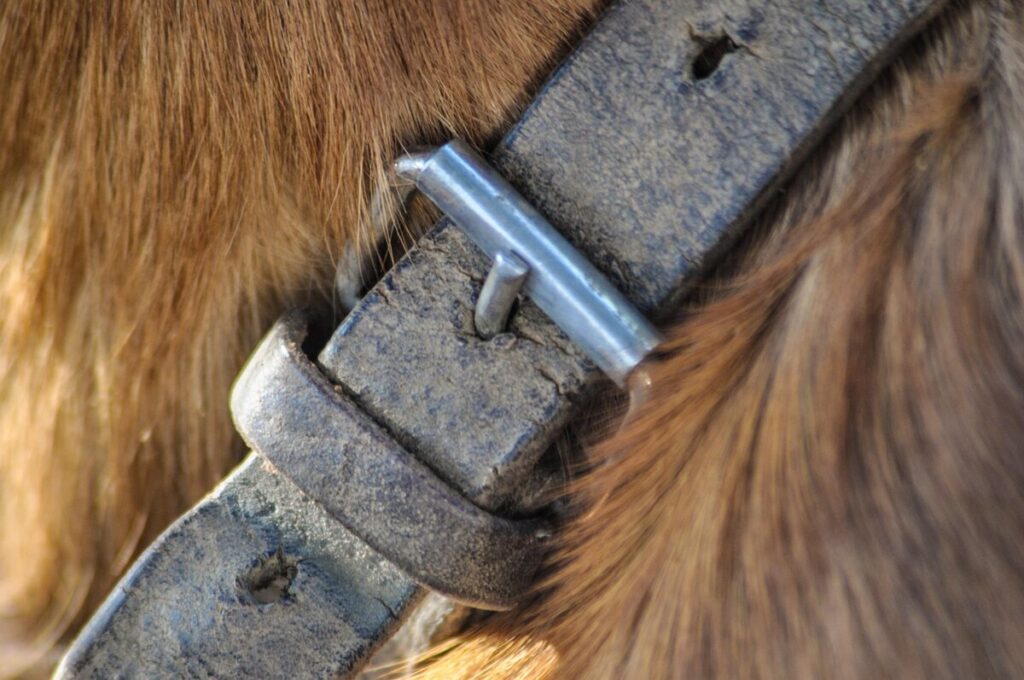
The buckle is the part most likely to fail, so it is worth a closer look before you buy.
- Plastic side-release: quick to open and close, and fine for most dogs. Replace the collar if the plastic cracks or the clips stop clicking firmly.
- Metal tongue buckle: the strongest option, and it holds its size exactly. Slower to put on, and holes in leather can stretch over time.
- Breakaway: opens under pressure as a safety feature. Ideal for home wear, but not designed to take a pulling dog’s weight on its own.
- Martingale (often no buckle): slips over the head and tightens a little when pulled. A walking collar, not one to leave on all day.
Collar Problems and Quick Fixes
- Tags jingle all night: use a slide-on tag that sits flat against the webbing, a tag silencer, or an embroidered collar.
- Rubbed or matted fur under the collar: a collar that is too loose moves and rubs; one that is too tight presses. Recheck the two-finger fit, and consider a rolled leather collar for long coats.
- Collar smells: wash nylon in warm soapy water and let it dry fully. For dogs that swim often, switch to coated webbing.
- Dog backs out of the collar on walks: move the leash to a harness or a martingale rather than tightening a flat collar.
- Red or irritated skin: take the collar off at night to let the skin breathe and ask your vet if it does not clear up.
- Buckle opens by itself: the clip is worn. Replace the collar rather than trying to repair it.
Safety Habits Worth Keeping
- Take collars and tags off in the crate, where they can catch on wire bars, or use a breakaway collar.
- Remove collars during rough play between dogs, when a jaw or paw can get caught.
- Check the fit monthly for adult dogs and weekly for growing puppies.
- Keep both an ID tag or embroidered collar and a registered microchip, and update the chip details when you move.
Related Guides
- Dog Harness vs Collar: Which Is Better?
- 5 Best Dog Leashes for Everyday Walks
- Best GPS Dog Trackers
- How to Stop Your Dog Pulling on the Leash
- 4 Best No-Pull Dog Harnesses
- 4 Best Harnesses for Small Dogs
- New Puppy Checklist: 25 Essentials
Frequently Asked Questions
What type of collar is best for most dogs?
An adjustable flat collar with a sturdy buckle and a metal D-ring suits most dogs. Add a harness for walks if your dog pulls, and choose a breakaway collar if it wears one around the house.
Is leather or nylon better for a dog collar?
Nylon is lighter, cheaper and washable, which suits active dogs. Leather lasts well and softens with age but should stay dry, so it is a poor choice for dogs that swim.
Should my dog wear a collar in its crate?
Many trainers recommend taking it off, because collars and tags can catch on crate bars. If you prefer to leave ID on, use a breakaway collar.
How often should I replace my dog’s collar?
Replace it when the webbing frays, the buckle cracks or stops clicking firmly, or the D-ring is bent. Growing puppies will also need new sizes as they grow.