
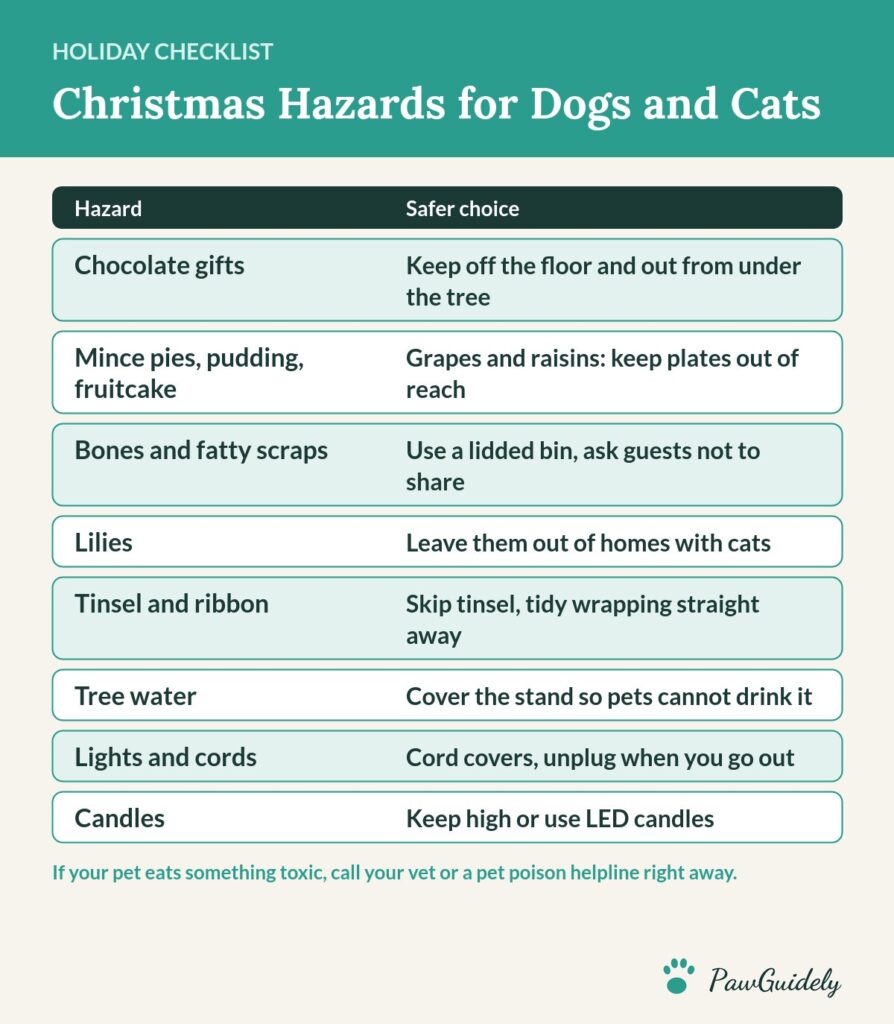
The biggest Christmas dangers for pets are rich or toxic foods like chocolate, grapes and raisins, cooked bones, plants such as lilies, and decorations like tinsel, ribbon and light cords. Most of them are easy to manage once you know what to look for. This guide covers the main hazards for dogs and cats, safer swaps for each, and what to do if your pet gets into something it should not.
Christmas Hazards for Pets at a Glance
| Hazard | Why it is a risk | Safer choice |
|---|---|---|
| Chocolate | Toxic to dogs and cats; dark and baking chocolate are the most dangerous | Keep chocolate gifts off the floor and away from the tree |
| Grapes, raisins, currants | Can cause kidney damage in dogs; found in mince pies, Christmas pudding and fruitcake | Keep plates and leftovers out of reach |
| Xylitol | A sweetener in some sugar-free sweets, gum and baked goods; very dangerous to dogs | Check labels and keep handbags zipped and off the floor |
| Onions, garlic, leeks | Toxic to dogs and cats; common in stuffing and gravy | No table scraps with stuffing or gravy |
| Cooked bones and fatty trimmings | Bones can splinter; rich, fatty food can cause stomach upset and is linked to pancreatitis | Use a bin with a secure lid |
| Alcohol | Dangerous for pets even in small amounts | Clear glasses away quickly |
| Lilies | Can cause kidney failure in cats, even from small amounts or pollen | Choose cat-safe flowers |
| Tinsel, ribbon, string | Cats especially may swallow it, which can cause serious gut blockages | Skip tinsel and tidy wrapping straight away |
| Lights and cords | Chewing can cause burns or electric shock | Use cord covers and unplug when you go out |
Christmas Food Safety for Dogs and Cats
Christmas dinner is where most holiday vet visits start. Busy kitchens, plates left on low tables and guests who sneak a treat under the table all add up. The safest rule is simple: no scraps from the festive table.
- Keep chocolate, sweets and gifts that contain food off the floor and out from under the tree. Dogs can sniff out wrapped chocolate.
- Watch for grapes, raisins and currants in mince pies, Christmas pudding, stollen and fruitcake.
- Do not give cooked bones from turkey, ham or chicken. Put the carcass straight into a bin with a secure lid or outside.
- Avoid fatty skin, trimmings, gravy and stuffing, which often contains onion and garlic.
- Clear away drinks, especially at parties, as pets may lap up spilled or unattended glasses.
- Ask guests, especially children, not to feed your pet, and give them pet treats to share instead if you like.
If you want your pet to join in, a little plain, cooked, boneless and skinless turkey breast is a far safer treat than anything from the serving dishes.
Keeping Pets Safe Around the Christmas Tree
A tree is a climbing frame for cats and a chew toy for curious puppies, so set it up with pets in mind.
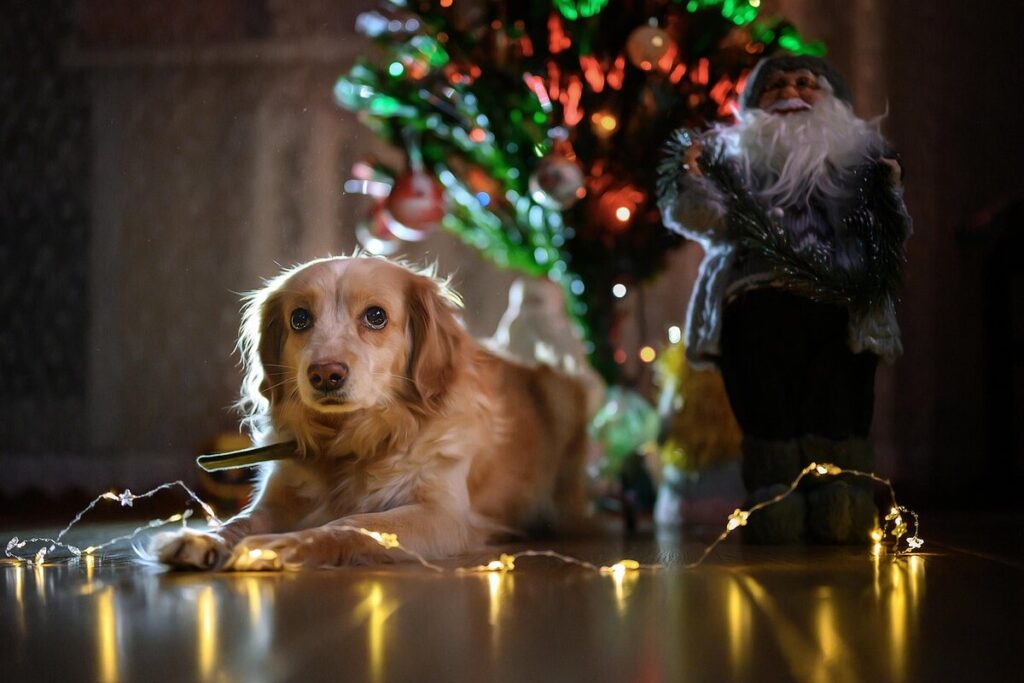
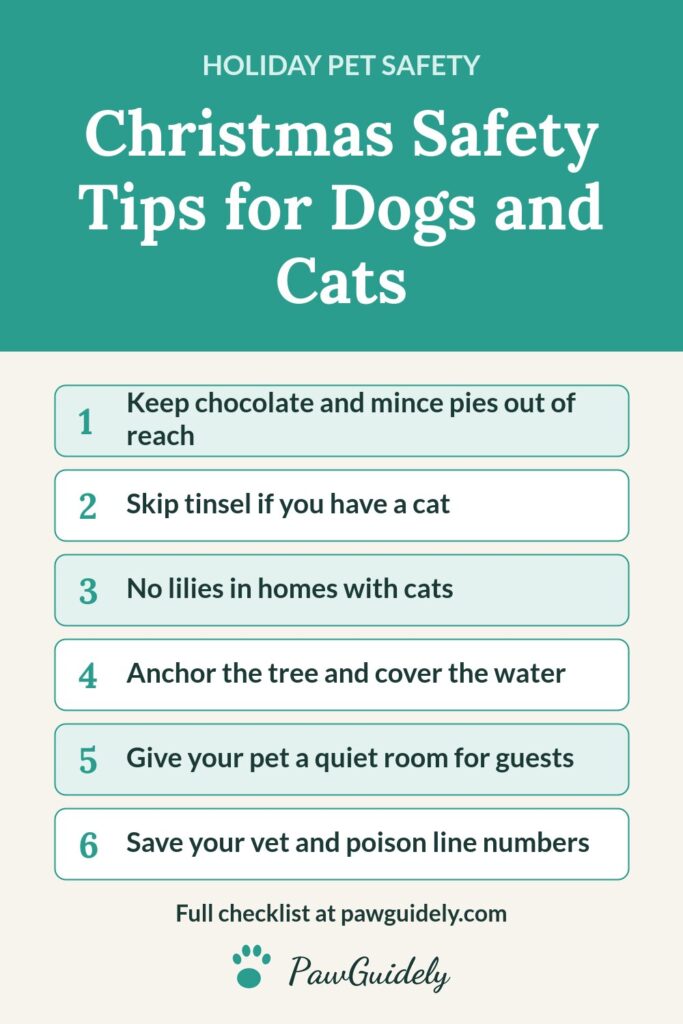
- Secure the tree with a heavy, stable stand, and anchor tall trees to a wall or ceiling hook so they cannot tip over.
- Cover the water reservoir. Tree water can contain fertilizers or preservatives and can grow bacteria if it sits.
- Hang glass and fragile ornaments high, and use shatterproof ones on the lower branches.
- Avoid edible decorations such as chocolate ornaments or popcorn strings within reach.
- Skip tinsel and angel hair if you have a cat.
- Sweep up pine needles regularly, as they can irritate the mouth and stomach if eaten.
- Tuck light cords out of sight or use cord protectors, and turn the lights off when nobody is home.
Cat owners have extra work here. Our guide on keeping your cat out of the Christmas tree covers deterrents and setup in detail.
Christmas Plants and Flowers
Several festive plants can cause problems. Lilies are the most serious for cats: every part of the plant, including the pollen and the water in the vase, can cause kidney failure, so it is best to keep them out of homes with cats altogether. Watch for lilies in Christmas bouquets and gift arrangements.
Poinsettias usually cause only mild mouth and stomach irritation, but it is still best to keep them out of reach. Holly and mistletoe can cause vomiting and diarrhea, and larger amounts can be more serious, so hang mistletoe well out of reach and do not let berries fall to the floor. Amaryllis bulbs are also toxic to dogs and cats.
Gifts, Wrapping and New Toys
- Clear up ribbon, string, bows and wrapping paper as presents are opened.
- Keep button batteries and small batteries for new gadgets away from pets, as swallowing them can cause serious internal burns.
- Keep small toys, puzzle pieces and craft items off the floor if your dog chews.
- Check new pet toys for small parts that could come off, and supervise the first few play sessions.
Looking for pet gifts that keep them busy safely? A sturdy chew or puzzle toy is a good choice. See our dog puzzle toy picks and interactive cat toys.
Guests, Noise and Routine
Visitors, doorbells and late nights can be stressful, especially for shy pets.
- Set up a quiet room with your pet’s bed, water and a toy, where it can get away from the noise.
- Watch the front door. With guests coming and going, it is easy for a pet to slip out, so make sure ID tags and microchip details are up to date.
- Use a dog gate to keep dogs out of the kitchen while you cook.
- Keep meal times, walks and bedtime as close to normal as you can.
- Ask guests to keep medications in their bags and those bags off the floor.
What to Do If Your Pet Eats Something Toxic
- Stay calm and move your pet away from whatever it ate.
- Call your vet or an emergency vet straight away, even if your pet seems fine. Some poisonings take hours to show signs.
- If you cannot reach a vet, call a pet poison hotline such as the ASPCA Animal Poison Control Center (888-426-4435) or Pet Poison Helpline (855-764-7661). Both may charge a consultation fee.
- Do not try to make your pet vomit unless a vet tells you to.
- Keep the packaging or a sample, and note roughly how much was eaten and when.
It helps to save your vet’s number and your nearest emergency clinic’s holiday opening hours before Christmas Day.
Further reading: Further reading from a trusted animal-welfare source: ASPCA: Holiday Safety Tips. This guide is general information, not veterinary advice, so ask your vet about your own pet.
Related Guides
- New Puppy Checklist: 25 Essentials to Buy Before You Bring Your Puppy Home
- New Cat Checklist: 20 Essentials to Buy Before You Bring Your Cat Home
- 4 Best Dog Gates in 2026: Walk-Through, Extra Tall, Extra Wide and Freestanding
- 4 Best Dog Playpens and Exercise Pens in 2026 (Indoor and Outdoor)
- 5 Best Dog Puzzle Toys in 2026, From Beginner to Genius Level
- 4 Best Interactive Cat Toys in 2026 for Bored Indoor Cats
- 5 Best Chew Toys for Aggressive Chewers in 2026 (Tough but Tooth-Safe)
- How to Keep Your Cat Out of the Christmas Tree
- Best Dog Advent Calendars: 6 Picks for a Safe Christmas Countdown
- How to Calm a Dog During Fireworks: A Before, During and After Plan
- Halloween Safety Tips for Dogs and Cats
Frequently Asked Questions
Are poinsettias poisonous to cats and dogs?
Poinsettias are only mildly toxic. Eating them can cause drooling, mouth irritation and sometimes vomiting, but serious poisoning is rare. Keep them out of reach anyway.
Can dogs eat Christmas turkey?
A small amount of plain, cooked, boneless and skinless turkey breast is generally fine. Avoid the skin, fat, bones, gravy and stuffing.
Is tinsel dangerous for cats?
Yes. Cats love to play with tinsel, and if they swallow it, it can tangle in the intestines and may need surgery. It is best to skip tinsel in homes with cats.
Is Christmas tree water bad for pets?
It can be. Tree water may contain fertilizers or preservatives and can grow bacteria. Cover the stand so pets cannot drink from it.
What should I do if my dog ate chocolate?
Call your vet or a pet poison hotline right away. Tell them your dog’s weight, the type of chocolate and roughly how much was eaten, as dark and baking chocolate are the most dangerous.
This guide is general information, not veterinary advice. If you think your pet has eaten something harmful, contact your vet or an emergency clinic immediately.