
This post contains affiliate links. As an Amazon Associate I earn from qualifying purchases. This costs you nothing extra. See our affiliate disclosure for details.
Not every dog is built for winter. A Husky or Newfoundland may be happiest in the snow, while a Greyhound, Chihuahua or elderly dog can get cold very quickly. Knowing how to keep your dog warm in winter comes down to three things: protecting them on walks, giving them a warm place to rest, and spotting the early signs that they are too cold.
Which Dogs Feel the Cold Most?
| Higher risk | Why |
|---|---|
| Small and toy breeds | Lose body heat quickly and are close to cold ground |
| Short or thin coats (Greyhounds, Whippets, Boxers) | Little insulation |
| Puppies | Cannot regulate temperature as well |
| Senior dogs | Less able to keep warm, often stiffer in the cold |
| Lean dogs | Less body fat for insulation |
| Dogs with health conditions | Ask your vet for specific advice |
How to Keep Your Dog Warm in Winter: 10 Tips
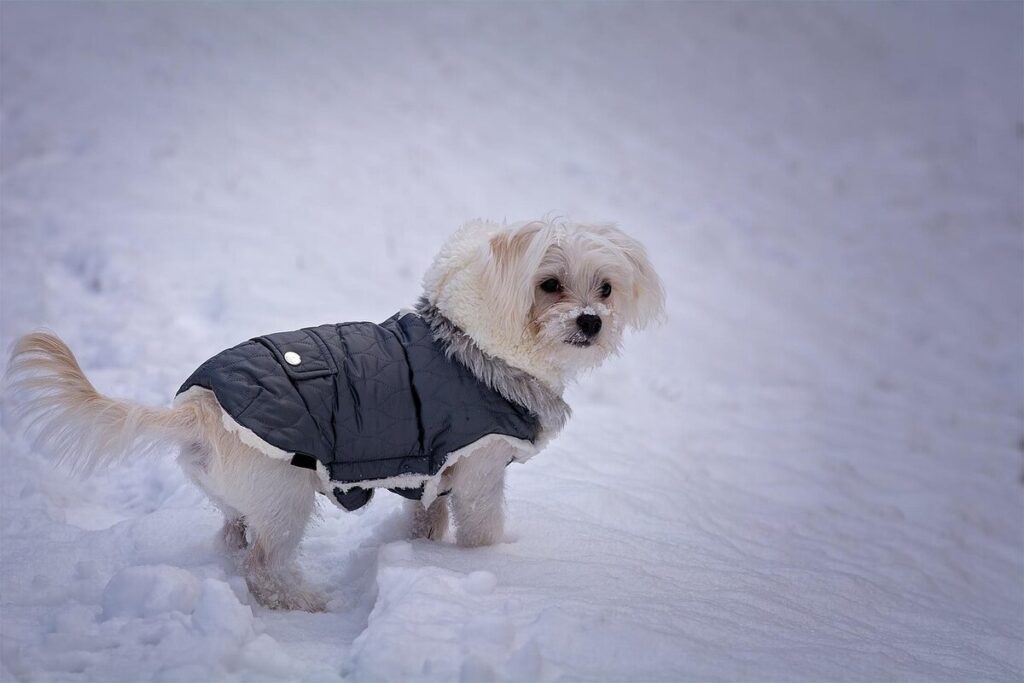
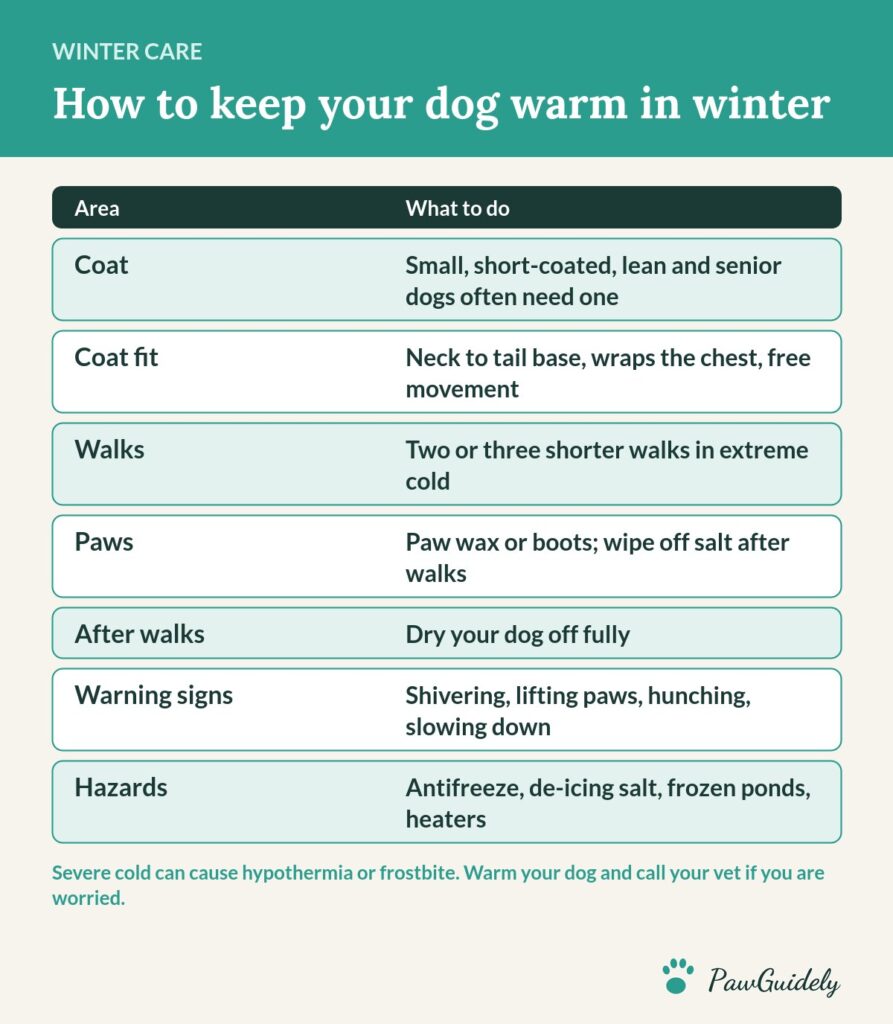
- Use a coat for dogs who need one. Short-coated, small, senior and lean dogs often benefit from a well-fitted, water-resistant coat on cold walks.
- Choose the right fit. A coat should cover the back from neck to tail base and wrap the chest without restricting movement.
- Shorten walks in extreme cold. Two or three shorter walks are better than one long one.
- Protect paws. Ice, snow and road salt can crack pads. Use paw wax or dog boots, and wipe paws after every walk.
- Dry your dog off. A wet coat loses its insulation. Towel dry after snow or rain.
- Raise the bed off cold floors. A thick bed or an elevated bed avoids cold tile and drafts.
- Keep the bed away from drafts. Avoid spots near doors and single-pane windows.
- Offer blankets. Many dogs love burrowing into a soft blanket.
- Use heated pet products safely. Low-voltage pet heating pads designed for animals can help older dogs. Never use human heating pads.
- Keep indoor exercise going. Puzzle toys and training games burn energy when it is too cold outside.
Signs Your Dog Is Too Cold
- Shivering or trembling
- Holding up paws or refusing to walk
- Hunched posture with tail tucked
- Whining or seeking shelter
- Slowing down, seeming weak or sleepy
- Cold ears, feet or tail
If your dog shows these signs, head inside and warm them up with dry towels and blankets. Severe cold exposure can lead to hypothermia or frostbite, especially on ears, tails and toes. If your dog is very lethargic, weak or has pale or gray skin on the extremities, contact your vet straight away.
Winter Hazards to Watch
- Antifreeze: it tastes sweet and is highly toxic. Clean spills immediately and store it securely.
- De-icing salt: irritates paws and can upset stomachs if licked. Wipe paws after walks.
- Frozen ponds: keep dogs on leash near ice.
- Space heaters and fireplaces: use guards and never leave dogs unattended near them.
- Cars: cars can get dangerously cold in winter, just as they get hot in summer.
Gear That Helps
1. Kurgo Loft Dog Jacket — Best Winter Coat
A reversible, water-resistant insulated jacket with reflective trim and a harness opening. It is warm without being bulky and easy to put on.
- Water-resistant and insulated
- Harness access
- Reflective trim for dark evenings
Worth knowing: Measure your dog’s back length and chest before choosing a size.
2. Musher’s Secret Paw Wax — Best Paw Protection
A popular wax-based paw balm that forms a protective layer against snow, ice and salt, and helps keep pads moisturized.
- Easy alternative to boots
- Also useful in summer
Worth knowing: Apply before walks and wipe paws afterward.
3. Ruffwear Grip Trex Dog Boots — Best Dog Boots
Rugged boots with grippy soles that protect paws from ice, salt and rough ground. They suit dogs who walk on salted sidewalks often.
- Grippy rubber soles
- Secure strap closure
Worth knowing: Most dogs need a little practice indoors before they walk normally in boots.
4. K&H Lectro-Soft Heated Pad — Best Warm Bed
A low-voltage heated pad that warms to around your dog’s body temperature when they lie on it, great for older dogs on cold nights.
- Warms only to body temperature
- Orthopedic foam base
Worth knowing: Check the cord regularly and follow the safety instructions.
The Bottom Line
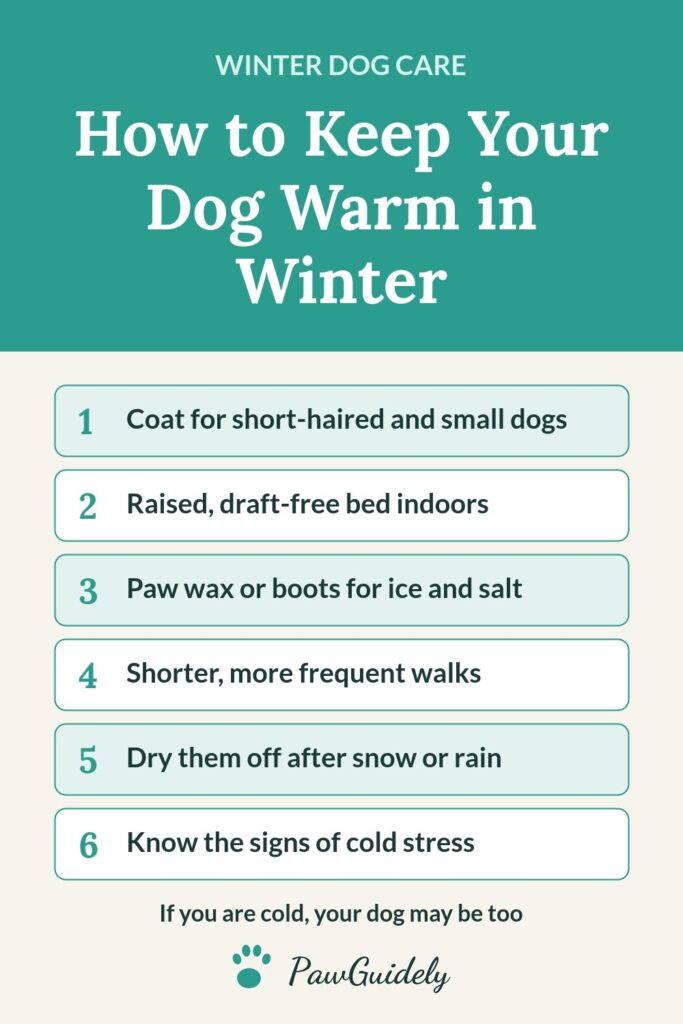
Keep your dog warm in winter by matching protection to your dog: a coat for thin-coated, small and older dogs, paw care for ice and salt, shorter walks in extreme cold, and a warm, raised bed at home. Watch for shivering and reluctance to walk, and head inside early.
Winter Grooming Tips
- Keep brushing. A clean, tangle-free coat traps warm air better than a matted one.
- Do not shave double coats for winter. The undercoat is natural insulation.
- Trim hair between the paw pads. Long fur there collects ice balls that hurt to walk on.
- Bathe less often. Frequent baths can dry the skin in dry indoor air. If you do bathe, dry your dog fully before going outside.
- Moisturize dry noses and pads with a dog-safe balm if they crack.
Further reading: Further reading from a trusted animal-welfare source: ASPCA: Winter Weather Safety for Pets. This guide is general information, not veterinary advice, so ask your vet about your own pet.
Related Guides
- How to Keep Your Dog Cool in Summer: 12 Practical Tips
- 4 Best Heated Dog Beds for Cold Nights and Senior Dogs
- 4 Best Dog Raincoats to Keep Walks Dry and Visible
- 5 Best Orthopedic Dog Beds in 2026 for Large and Senior Dogs
- 6 Best Winter Coats for Dogs: Warm Jackets, Vests and Sweaters
Frequently Asked Questions
Do dogs need coats in winter?
Many do. Small, short-haired, lean, young and senior dogs usually benefit from a coat in cold weather. Thick double-coated breeds often do not need one.
How cold is too cold for a dog?
It depends on the dog. Many small or thin-coated dogs are uncomfortable below about 45F (7C), and most dogs need extra care below freezing. Watch your dog for signs of cold.
Should I put boots on my dog in winter?
Boots help on salted or icy sidewalks and for dogs with sensitive paws. Paw wax is an easier alternative for many dogs.
Is it safe to use a heating pad for my dog?
Only use heating pads designed for pets, which stay at a safe temperature. Never use a human heating pad.
How do I exercise my dog when it is too cold?
Use shorter walks plus indoor games, puzzle toys and training sessions.