
This post contains affiliate links. As an Amazon Associate I earn from qualifying purchases. This costs you nothing extra. See our affiliate disclosure for details.
Cats are territorial, and a stranger appearing in their home can feel like a threat. Many problems between cats start with a rushed first meeting. A slow introduction lets them get used to each other’s scent and sounds before they meet face to face, which gives the best chance of a calm, lasting relationship. This guide covers how to introduce cats step by step and how long it usually takes.
What to Prepare Before the New Cat Arrives
| Item | Why |
|---|---|
| A separate room | A safe base for the new cat with a door that closes |
| Extra litter box | One box per cat plus one, so no one has to share |
| Separate food and water bowls | Avoids competition at meals |
| Hiding spots and a bed | Helps the new cat feel secure |
| A scratching post | Lets the new cat mark the room as theirs |
| A pet gate or screen door | For the see-but-not-touch stage |
| Wand toys and treats | For positive shared experiences |
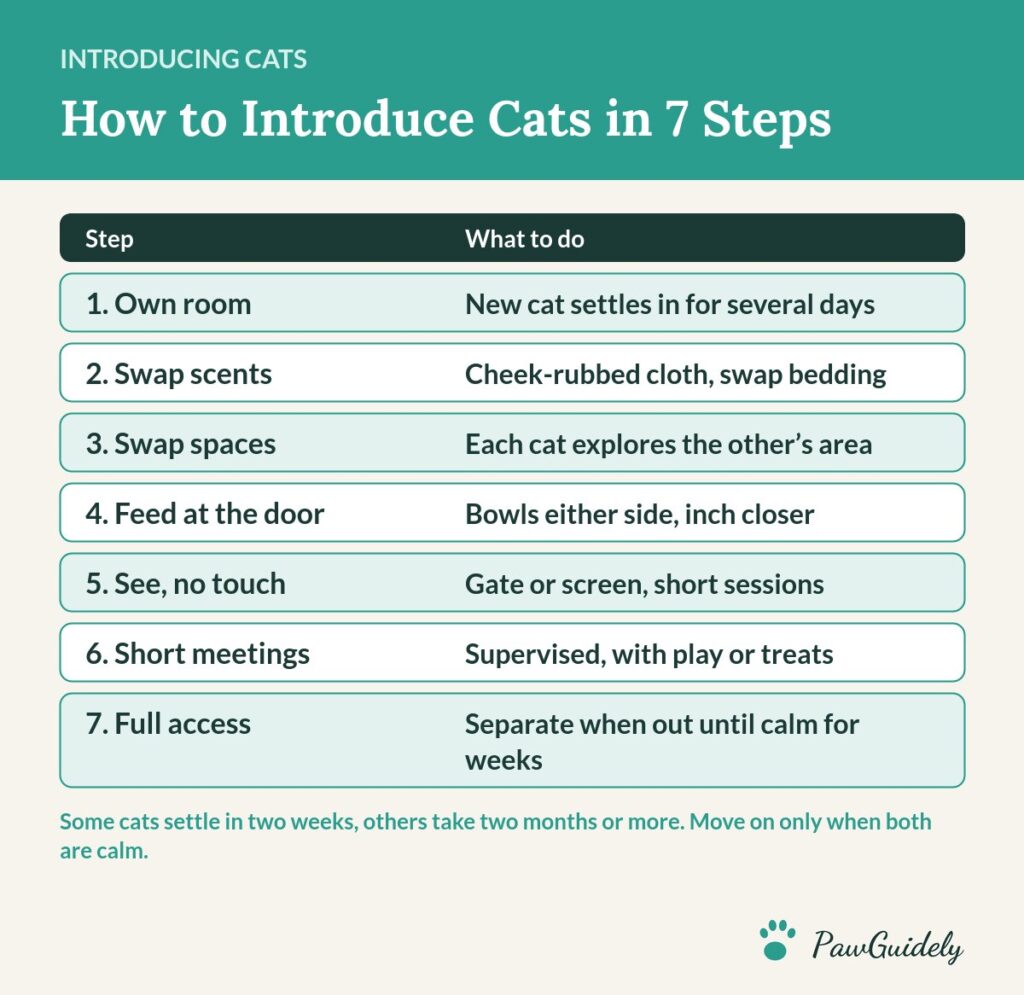
How to Introduce Cats in 7 Steps
- Set up the new cat in their own room. Give them everything they need: litter box, food, water, bed and places to hide. Let them settle for several days. Your resident cat keeps the rest of the house as normal.
- Swap scents. Rub a soft cloth on each cat’s cheeks and place it near the other cat’s food bowl. Swap bedding every day or two. Reward calm sniffing with treats.
- Swap spaces. Once both cats seem relaxed about the scent, let the new cat explore the house while the resident cat spends time in the new cat’s room. This spreads scents and lets the newcomer learn the layout.
- Feed on either side of the door. Place bowls a few feet from the closed door so both cats eat while aware of each other. Move the bowls a little closer over several days as long as both keep eating calmly.
- Allow visual contact. Replace the closed door with a tall pet gate, a cracked door with a doorstop, or a screen. Keep sessions short and positive with treats and play. End before anyone gets tense.
- Supervise short meetings. When both cats are relaxed at the gate, let them share a room for a few minutes while you play with a wand toy or offer treats. Gradually increase the time.
- Give full access gradually. Keep separating them when you are out until they have been calm together for a couple of weeks. Keep multiple litter boxes, feeding spots and high perches so neither cat has to compete.
How Long Does It Take?
Some cats accept each other within two weeks. Others need two months or more. Kittens and younger cats often adapt faster, while older or very territorial cats may need more time. Move to the next step only when both cats are calm at the current one. Rushing is the most common reason introductions fail.

Signs It Is Going Well vs Signs to Slow Down
| Going well | Slow down |
|---|---|
| Eating normally near the door | Refusing food |
| Relaxed body, slow blinks | Flattened ears, puffed tail |
| Curious sniffing | Hissing, growling or swatting |
| Playing or grooming nearby | Hiding for long periods |
| Using the litter box normally | Going outside the box |
A little hissing early on is normal. If it continues or escalates, go back to the previous step for a few days.
If a Fight Breaks Out
- Never use your hands to separate fighting cats.
- Make a loud noise, or slide a pillow, board or blanket between them.
- Separate them into their own rooms and let them calm down for several hours.
- Restart the introduction from the scent-swapping stage.
- Check both cats for bites or scratches, which can become infected, and see your vet if you find any.
Common Mistakes
- Putting both cats in the same room straight away.
- Holding one cat up to meet the other.
- Making cats share a litter box or food bowl.
- Punishing hissing, which increases stress.
- Giving the new cat less attention or the resident cat less attention. Keep routines steady for both.
When to Get Help
If your cats are still fighting after several weeks of slow work, if one cat stops eating or hides constantly, or if either cat starts going outside the litter box, talk to your vet. They can check for medical issues and may suggest a feline behaviorist.
Gear That Helps
1. Regalo Easy Step Extra Wide Gate — For See-Not-Touch
A walk-through gate lets cats see and smell each other safely during the middle stage of the introduction. Stack two gates or add a tall barrier for jumpers.
- Extra wide for large doorways
- Walk-through door for you
Worth knowing: Most cats can jump a single gate. Use it with supervision or stack two.
2. Petmate Hi-Back Litter Pan — Extra Litter Box
An open, high-sided box for the new cat’s room. High sides keep litter in, while the open design suits cats who dislike covered boxes.
- High back reduces scatter
- Open design many cats prefer
Worth knowing: Keep one box per cat plus one, in different areas.
3. GoCat Da Bird Wand Toy — For Shared Play
A feather wand toy that most cats find hard to resist. Playing with both cats in the same room, at a distance, helps them link each other with good things.
- Realistic fluttering motion
- Replaceable feather attachments
Worth knowing: Put wand toys away after play so cats cannot chew the string.
The Bottom Line
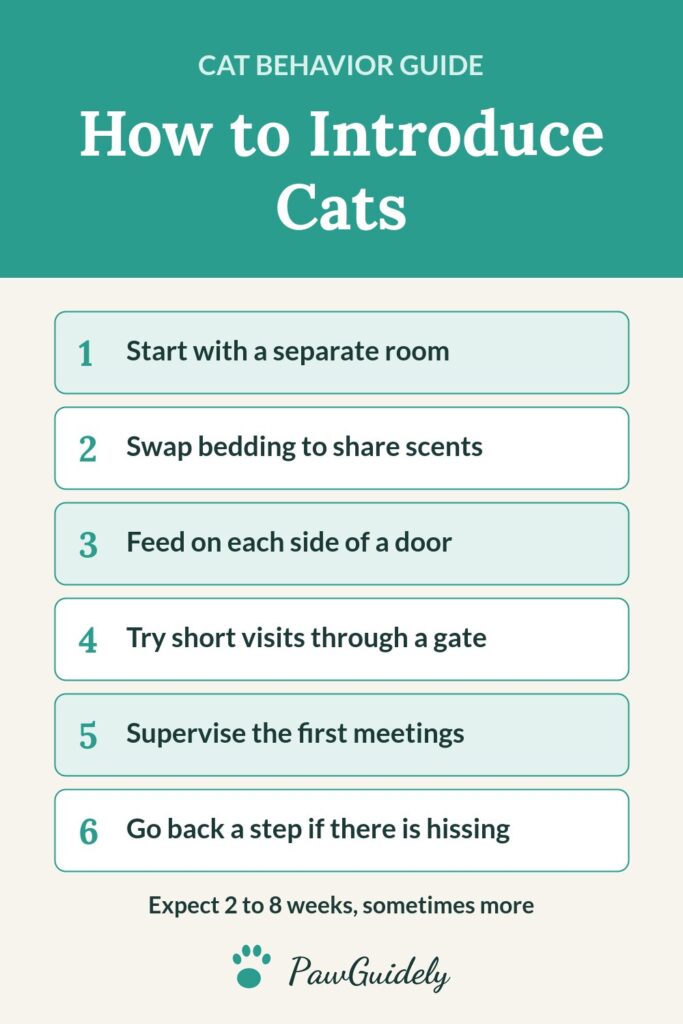
The key to introducing cats is patience. Start with separate spaces, let scent do the early work, pair each step with food and play, and move forward only when both cats are relaxed. A slow introduction takes longer at the start but saves months of tension later.
Related Guides
- New Cat Checklist: 20 Essentials to Buy Before You Bring Your Cat Home
- How Many Litter Boxes Do You Need Per Cat? (The N+1 Rule Explained)
- 4 Best Interactive Cat Toys in 2026 for Bored Indoor Cats
- 3 Best Cat Trees for Small Spaces and Apartments
Frequently Asked Questions
How long does it take for cats to get used to each other?
Anywhere from two weeks to two months or more. Some cats become friends, while others learn to share the home peacefully without being close.
Is hissing normal when introducing cats?
Some hissing at the start is normal. If it continues or turns into swatting or fighting, slow down and go back a step.
Can I introduce cats in one day?
It is not recommended. Rushed introductions often lead to fighting and stress that can take much longer to fix.
Should cats share a litter box?
No. Provide one box per cat plus one, in different parts of the home.
Is it easier to introduce a kitten to an adult cat?
Often, yes, because kittens are less threatening. Still follow the same slow steps and give your adult cat places to escape a playful kitten.